

 Česky (CZK)
 Slovensky (EUR)
 Deutsch (EUR)
 Austria
 Belgium
 Bulgaria
 Croatia
 Denmark
 Estonia
 Finland
 France
 Germany
 Greece
 Hungary
 Italy
Italy Latvia
 Lithuania
 Luxembourg
 Netherlands
 Poland
 Portugal
 Romania
 Slovenia
 Spain
Spain Sweden










Black rice vinegar and brown rice vinegar
🍶 Black rice vinegar and brown rice vinegar: two styles of acidity that taste completely different
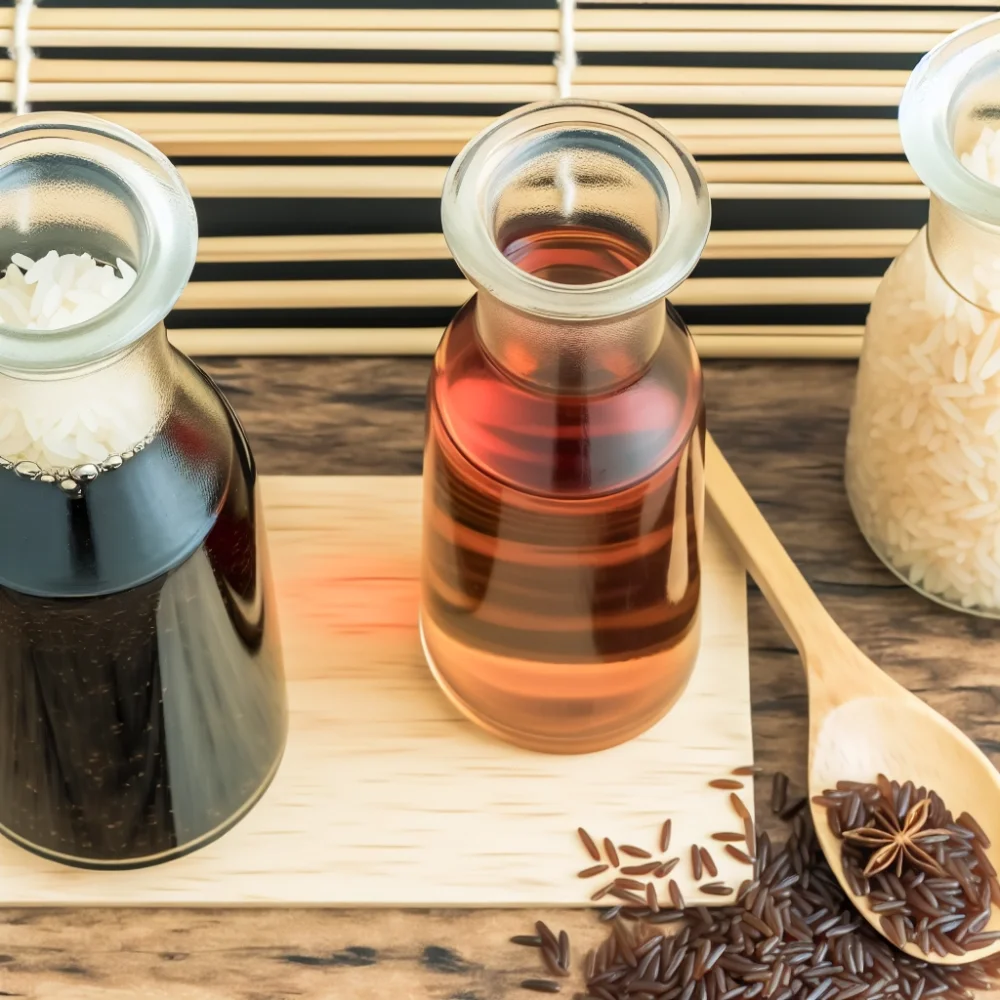
They may both be vinegar, but they work like two different tools. Black rice vinegar is darker, deeper, gently sweet and noticeably umami. It shines in Chinese dips, sauces and salads. Brown rice vinegar is milder, rounder and cleaner. It’s great for dressings, bowls and rice when you want lightness.
For a quick overview, browse Vinegars
💡 Tip: When a dish tastes flat, more salt isn’t always the answer. A few drops of the right vinegar often are
Shop Asian pantry essentials at Asian Food Shop
🕰️ History and origin
Rice vinegars naturally developed where rice is a staple. Across East Asia, different styles emerged based on ingredients, fermentation and aging. Chinese cooking often uses darker, more mature vinegars with deeper aroma, while milder rice vinegars including brown rice vinegar are used for clean, light seasoning that lifts a dish without taking over.
🧪 How they’re made and common types
Black rice vinegar
- dark in colour with a deeper, rounder taste
- often gently sweet with a clear umami note
- builds sauce flavour, not just sharpness
Brown rice vinegar
- typically milder, cleaner and rounded
- ideal for dressings and bowls when you want gentle acidity
- also works well for quick pickles
👃 Flavour profile
Black rice vinegar
- 🖤 deeper, darker, more umami
- 🍯 often lightly sweet
- 🥟 perfect for dips, dumplings, salads and bold sauces
Brown rice vinegar
- 🤍 mild, clean, rounded
- 🥗 great for dressings and bowls
- 🍚 ideal when you want acidity without dominance
✅ Tip: With black rice vinegar, small amounts go a long way. A teaspoon can make a sauce taste finished
🍳 How to use them
🥟 Dips and sauces
Black rice vinegar is excellent in a simple dip with Soy sauces and a touch of sugar. It’s great with dumplings and spring rolls, and it can become a fast noodle sauce.
🥗 Salads and crunchy sides
Use black rice vinegar when you want a more pronounced flavour in cucumber salads and quick pickles. Use brown rice vinegar for a lighter, cleaner dressing that lets the vegetables shine.
🍚 Bowls and rice
Brown rice vinegar is perfect for rice bowls because it seasons without overpowering. It pairs nicely with Oils and the savoury backbone of Soy sauces.
🔥 Hot dishes
Black rice vinegar also works in warm sauces. Add it near the end to keep the aroma.
🫶 Everyday note
Think of both vinegars mainly as flavour tools. They can help dishes taste fuller with less salt. If you’re sensitive to acidity, start small and adjust to taste.
✅ How to choose the right one
- 🖤 want depth and umami for dips and sauces: choose black rice vinegar
- 🤍 want gentle acidity for dressings, bowls and rice: choose brown rice vinegar
- 🍜 in hot cooking, add vinegar closer to the end
- 🥗 for cold dishes, both work, the key difference is intensity
🛒 Our picks
- Jumbo Rice vinegar black 550 ml for deep, dark acidity in dips, salads and sauces
- Otoki brown rice vinegar 500 ml a milder, rounded vinegar for bowls, dressings and rice
- Heng Shun Rice vinegar 250 ml a handy smaller bottle as an everyday rice vinegar
🥒 Recipe: Sichuan smashed cucumbers with black rice vinegar
A simple, authentic side dish. Crunchy cucumber, garlic, chilli and a bold dressing where black rice vinegar does the magic.
Ingredients
- cucumber 2
- garlic 2 to 3 cloves
- black rice vinegar 2 tbsp
- brown rice vinegar 1 tbsp
- soy sauce 1 and a half tbsp
- sugar 1 tsp
- oil 1 and a half tbsp
- chili sauce 1 tsp optional
- sesame to finish optional
- salt a pinch
Method
- Lightly smash cucumbers with the flat side of a knife and tear into larger rustic pieces.
- Salt lightly and rest for 10 minutes, then drain off excess liquid.
- Mix black rice vinegar, brown rice vinegar, soy sauce, sugar and oil.
- Add crushed garlic and chili sauce to taste.
- Toss cucumbers with the dressing and rest for 5 to 10 minutes.
- Finish with sesame if you like and serve as a side for rice or noodles.
✅ Tip: Combining black and brown rice vinegar works beautifully. Black adds depth, brown rice vinegar softens and rounds it out

Recommended products2
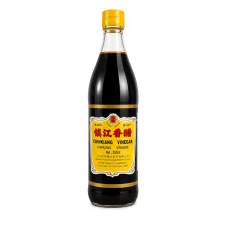

Jumbo Rice vinegar black 550 ml

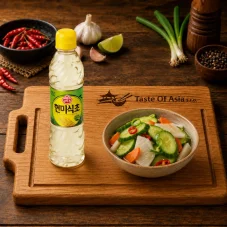
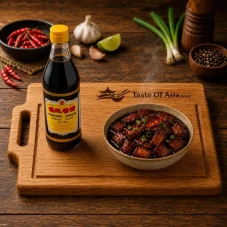
Otoki brown rice vinegar 500 ml
Read next
If you want to continue with the same topic, here are more related articles to explore: