

 Česky (CZK)
 Slovensky (EUR)
 Deutsch (EUR)
 Austria
 Belgium
 Bulgaria
 Croatia
 Denmark
 Estonia
 Finland
 France
 Germany
 Greece
 Hungary
 Italy
Italy Latvia
 Lithuania
 Luxembourg
 Netherlands
 Poland
 Portugal
 Romania
 Slovenia
 Spain
Spain Sweden










Taiwanese Cuisine Guide

This guide category focuses on Taiwanese cuisine, bringing together reading that helps you understand its core flavours, common ingredients, and how everyday dishes fit into the wider landscape of Asian cooking.
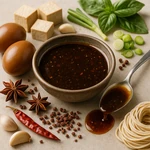
Taiwanese street food: why night markets are the heart of the cuisine and what makes sense to taste there
Taiwanese street food is not just a few 'grab-and-go' dishes and bubble tea. In Taiwan, street food meets bowls of broth, rice, noodles, small portions, and above all an emphasis on texture and precise final seasoning. When you know how to read this world, Taiwanese night markets will make much more sense to you – even if you don't experience them live.
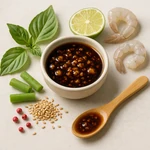
Typical Taiwanese Ingredients: What Shapes the Island's Flavor (And How to Start Using Them at Home)
Taiwanese cuisine is not just bubble tea and night markets. It is an independent and vibrant culinary world where local cooking meets various Chinese regional influences, a distinctive Hakka layer, indigenous traditions, Japanese heritage, and modern urban food culture. That's why it makes sense to start with the ingredients: how they taste, their role in the dish, and how to recognize if you've chosen the right type.
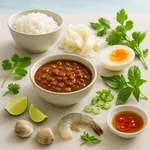
Typical Taiwanese dishes: what to taste and how to recognize them
Taiwanese cuisine is often simplified to bubble tea and night markets, but in reality, it is a distinct and very vibrant culinary world. Typical Taiwanese dishes often rely on rice, noodles, and broths, on small portions and snacking – and especially on texture: delicate vs. crunchy, slippery vs. elastic, starchy vs. broth-based. In this article, you will find an overview of the most famous dishes, how they taste, what makes them typical, and how to practically navigate them.
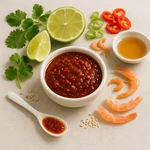
How to start with Taiwanese cuisine: first dishes, flavor logic, and mistakes that unnecessarily hold you back
Taiwanese cuisine is not just bubble tea and night markets. It is an independent, vibrant, and surprisingly diverse world where several layers of influences meet – and that's exactly why you can enter it smartly and step by step. In this guide, you will clarify what is typical for Taiwanese food, what the "Taiwanese taste" looks like in practice, and which first steps make the most sense at home without having to "cook the whole Taiwan" right away.
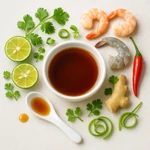
The taste of Taiwanese cuisine: delicate, broth-based, and surprisingly "textured"
Taiwanese cuisine is not just bubble tea and night markets. It is a distinct, lively, and very diverse world where local styles meet various Chinese regional influences, a prominent Hakka layer, indigenous traditions, Japanese heritage, and modern urban food culture. If you really want to understand the Taiwanese taste, it pays to focus less on "spices" and more on broth, precise seasoning, and especially texture.
To compare Taiwanese cooking with nearby traditions, you may also want to read the guides to Chinese Cuisine and Japanese Cuisine , or broaden the context with Regional Styles of Asia .