

 Česky (CZK)
 Slovensky (EUR)
 Deutsch (EUR)
 Austria
 Belgium
 Bulgaria
 Croatia
 Denmark
 Estonia
 Finland
 France
 Germany
 Greece
 Hungary
 Italy
Italy Latvia
 Lithuania
 Luxembourg
 Netherlands
 Poland
 Portugal
 Romania
 Slovenia
 Spain
Spain Sweden










Singaporean Cuisine: dishes, flavours and influences

This guide gathers articles that explain what defines Singaporean cuisine, from its mix of culinary influences to the flavour profiles and everyday dishes readers are likely to encounter. Expect clear context on how meals are typically structured, what makes the style distinctive, and how Singapore fits within the wider food cultures of Southeast and East Asia.
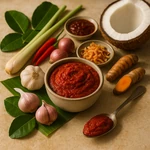
Singaporean street food: how to understand it through hawker culture, iconic dishes, and flavor logic
Singaporean street food is not just "fast food from the street." It is an urban system of dining and cooking that grew out of the multicultural environment of a port city – and it is best understood through hawker centers, specialized stalls, and several iconic dishes. In the article, we will clarify what is typical for Singapore, why Chinese, Malay, Indian, and Peranakan influences meet here, and how to take a practical guide from it: what to taste first and how to tackle Singaporean flavors at home without unnecessary mistakes.
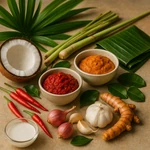
Typical Singaporean ingredients: what makes laksa, nasi lemak, and hawker dishes flavorful
Singaporean cuisine originated in a port city where different communities and their techniques have long met. Therefore, you won't find a single "national" pantry here, but a functional mix: rice and noodles, coconut, chili and sambal, soy and fish umami seasonings, aromatics like garlic and ginger – alongside ready-made pastes that have a clear role in specific dishes. In the article, you'll sort out what is typical for Singapore, what the main variants are, and how to start with these ingredients at home without unnecessary mistakes.
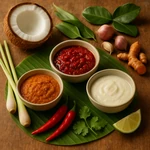
Typical Singaporean dishes: what to taste and how to understand them
Singaporean cuisine is not a "single national cuisine" in the traditional sense. It is an urban, port, and multicultural gastronomy that arose from the meeting of Chinese, Malay, Indian, Peranakan, and other influences – and is best understood through specific dishes and the environment where they are eaten every day. This guide features iconic Singaporean dishes, explanations of what makes them typical, and practical tips on how to approach them at home without unnecessary mistakes.
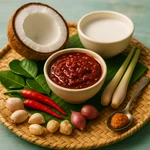
How to start with Singaporean cuisine: from hawker logic to your first meals at home
Singaporean cuisine is best understood as an urban, port “crossroads of flavors”: Chinese, Malay, Indian and other influences live side by side and create dishes with a clear identity. If you want to start at home, the goal is not to cook “all of Singapore,” but to pick a few typical hawker specialties, understand the role of rice and noodles, broth and coconut components, and learn to work with chilli dips (sambal) and table-seasonings.
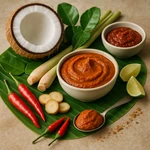
Taste of Singaporean cuisine: hawker energy, layers of umami, and final seasoning at the table
Singaporean cuisine is hard to summarize in one sentence – and that is exactly what makes it typical. It is a port, urban, and multicultural cuisine: Chinese, Malay, Indian, and Peranakan influences coexist side by side, but in practice, you recognize it best by how it works with sauces, broths, chili, coconut, and the "final touch" at the table. In the article, we will break down its flavor layers based on specific dishes (chicken rice, laksa, chili crab) and show how to bring this logic home without complicated recipes.
To place Singapore in a wider regional context, you can also explore Malaysian Cuisine , compare neighbouring flavours in Indonesian Cuisine , or zoom out to broader patterns in Regional Styles of Asia .