


 Česky (CZK)
 Slovensky (EUR)
 Deutsch (EUR)
 Austria
 Belgium
 Bulgaria
 Croatia
 Denmark
 Estonia
 Finland
 France
 Germany
 Greece
 Hungary
 Italy
Italy Latvia
 Lithuania
 Luxembourg
 Netherlands
 Poland
 Portugal
 Romania
 Slovenia
 Spain
Spain Sweden










The Taste of Thai Cuisine: How to Understand It and Build It at Home (Without Common Mistakes)
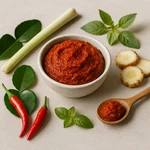
Thai food can taste “very bold”, but its strength is rarely one dominant flavour. What’s typical is layering: first you build an aromatic base (often with pastes), then you season gradually (for example with soy sauce), and only at the end you fine-tune heat and top aromas. When these steps get swapped or pushed too hard, the result is often just spicy, over-salty, or oddly flat. This guide gives you a practical framework for building Thai flavour at home step by step—and for fixing the most common problems.
Why Thai dishes often don’t work out at home
The most common issue usually isn’t that you’re missing one “magic” ingredient. More often, one of these happens:
- You mix up the roles of seasonings (for example, you use a hot chilli sauce as the main flavour base).
- You add everything at once—and lose the ability to steer the taste as you go.
- You oversalt the dish (because several salty ingredients stack up).
- You don’t “wake up” the aroma (you stir paste into liquid and expect it to do the work on its own).
Thai flavour is usually built gradually: first you create fragrance and body, then you lock in saltiness and depth, and only at the end you deal with “heat” and the final aromatic lift. Keep that order, and even simple home cooking will taste cleaner and more intentional.
Definition & quick orientation: 3 layers that give Thai food its character
For home cooking, it helps to think about Thai flavour as three connected layers:
- Aromatic base – gives the dish its direction and identity. This is typically where pastes come in.
- Gradual seasoning – mainly saltiness and umami (fullness). In practice: add in small amounts and taste as you go, so you don’t oversalt.
- Final adjustment – heat and top aromas (what you notice “on top” and as the last impression).
The key point: these layers are not interchangeable. If you push a very spicy component too early, it can easily overpower the base aroma—and you usually won’t be able to “win it back” later.
Main variants & differences: what does what in Thai flavour
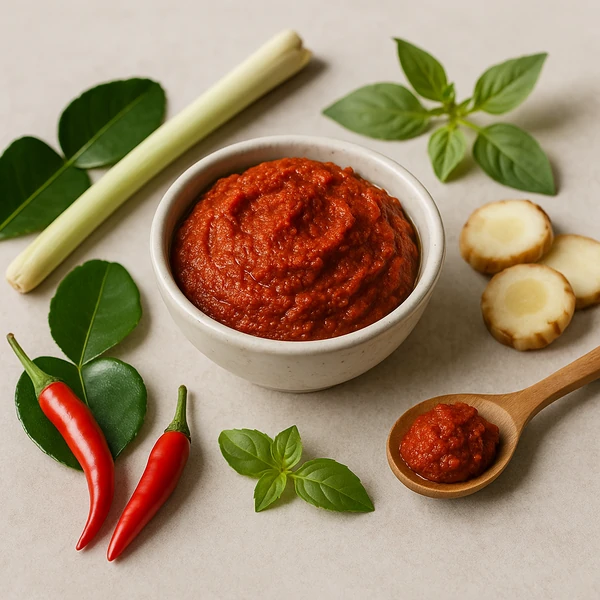
👃 1) Curry pastes as the aromatic engine (example: red curry paste)
Curry paste is a classic flavour “starter”: it’s a base that opens up with heat. If you want to understand layering, it’s practical to start with one paste and learn how to dose it.
You can see this difference more clearly on these ingredients and products: Cock Brand Red curry paste 400 g
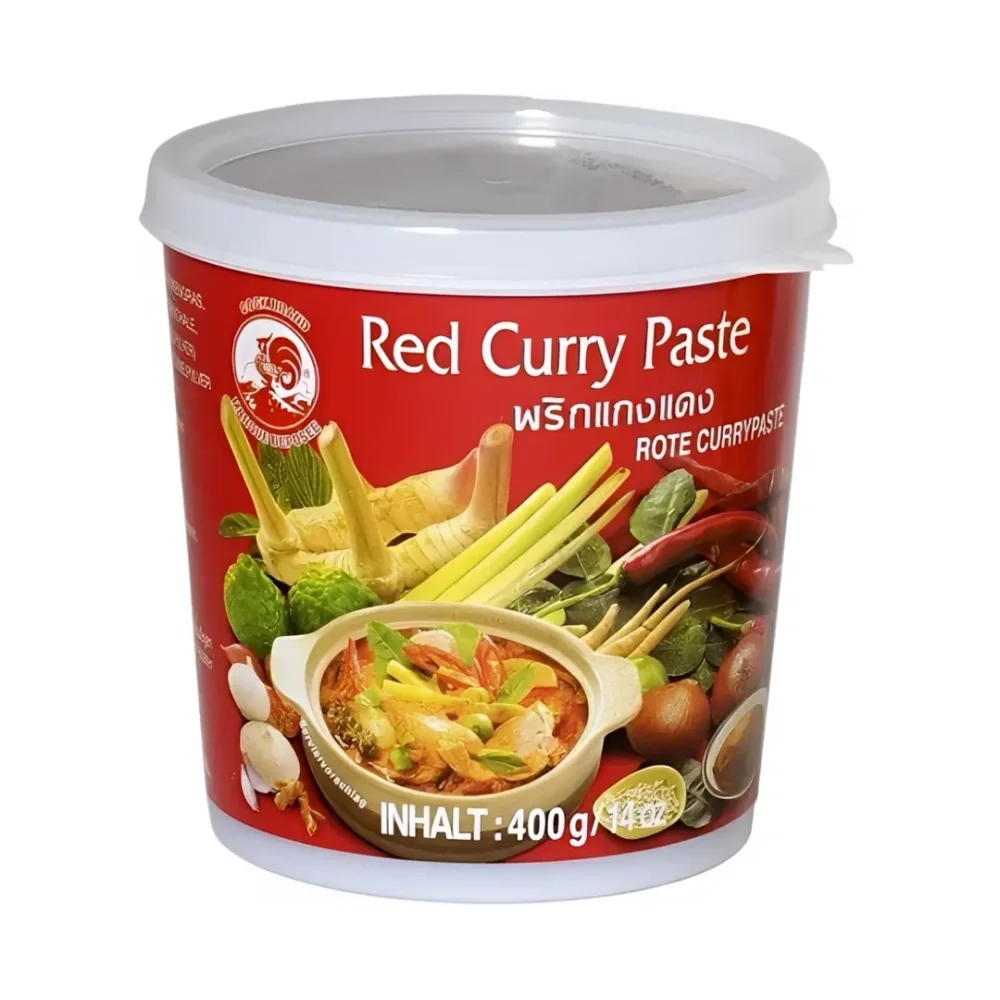
A concrete example is Cock Brand Red curry paste 400 g. In everyday cooking, don’t treat it as a ready-made sauce—think of it as a concentrated base that you typically add in small amounts and then build the whole dish around.
2) Soup pastes (Tom Ka) are a different kind of base than curry
Besides curry pastes, there are pastes designed specifically for a particular soup style. A typical example is Tom Ka—and it helps to approach it as a ready-made flavour direction, not as “another thing to throw into curry”.
You can see this difference more clearly on these ingredients and products: Lobo Pasta for Tom Ka soup 50 g, Lobo Soup paste Tom Ka 400 g
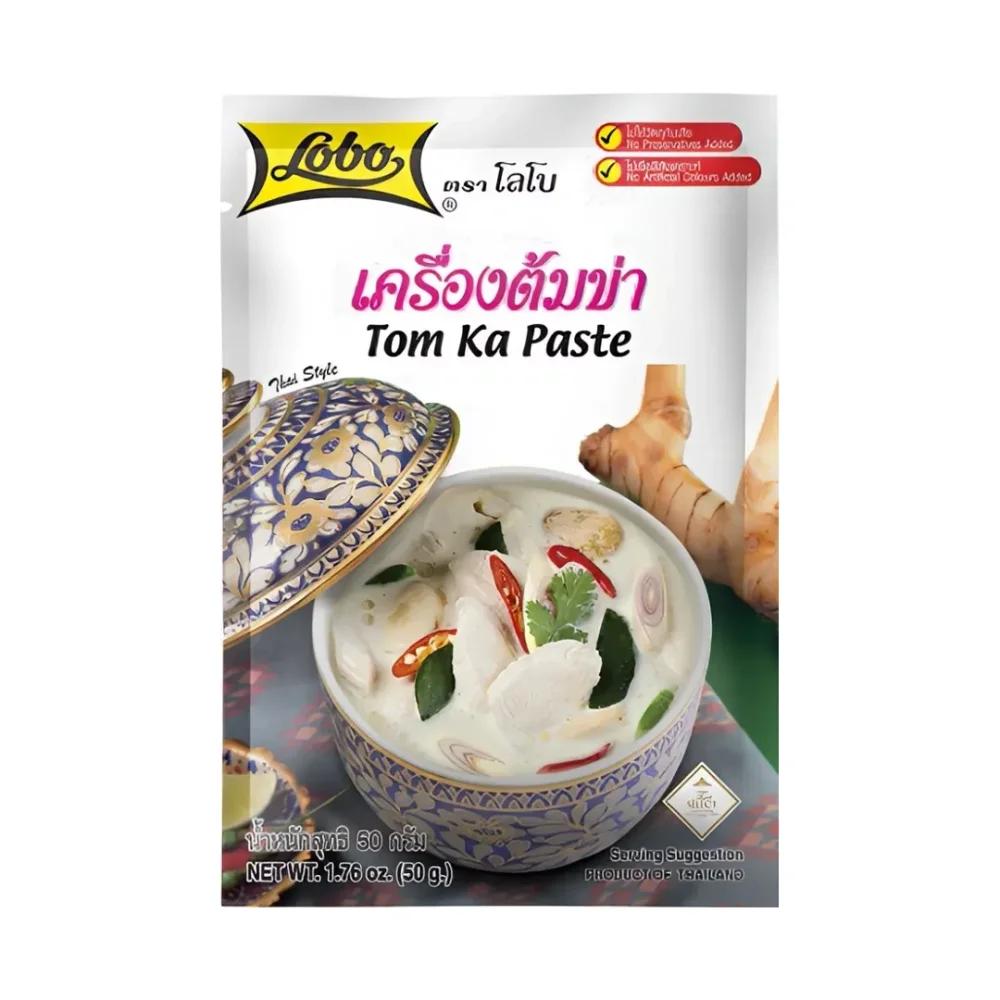
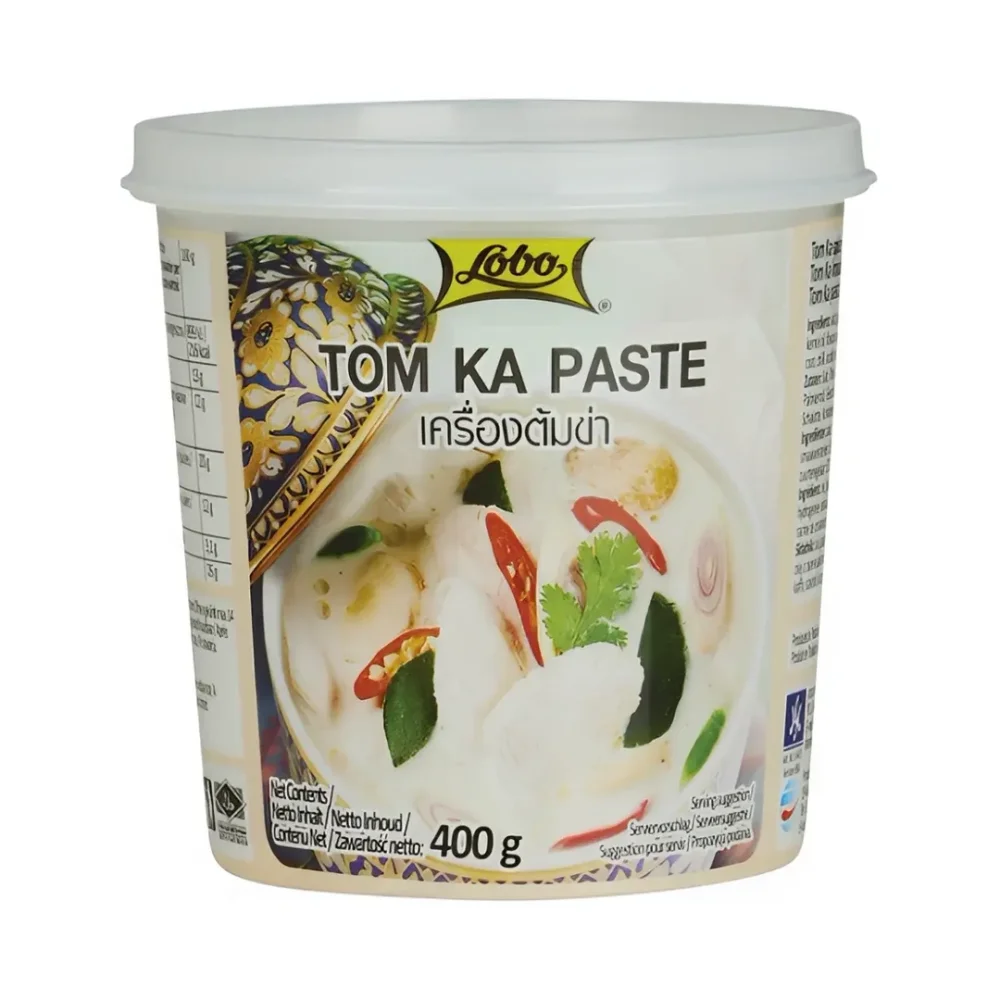
For small-batch experimenting, Lobo Pasta for Tom Ka soup 50 g is convenient. If you already know you’ll cook this style often, Lobo Soup paste Tom Ka 400 g is the same idea in a larger format.
Practical difference vs. curry: with a soup paste, you usually don’t want to “change the topic” by adding another strong paste. It’s much better to keep one main paste and adjust later through seasoning and the final finish.
3) Shrimp paste (kapi) as an umami booster: use carefully
Shrimp paste (often called kapi) is an intensely flavoured ingredient. Because it’s salty by nature, it adds both depth and saltiness. In practice, it makes sense as a small “extra gear” in the aromatic base when you want a fuller taste.
You can see this difference more clearly on these ingredients and products: Maepranom Kapi Shrimp paste 100 g
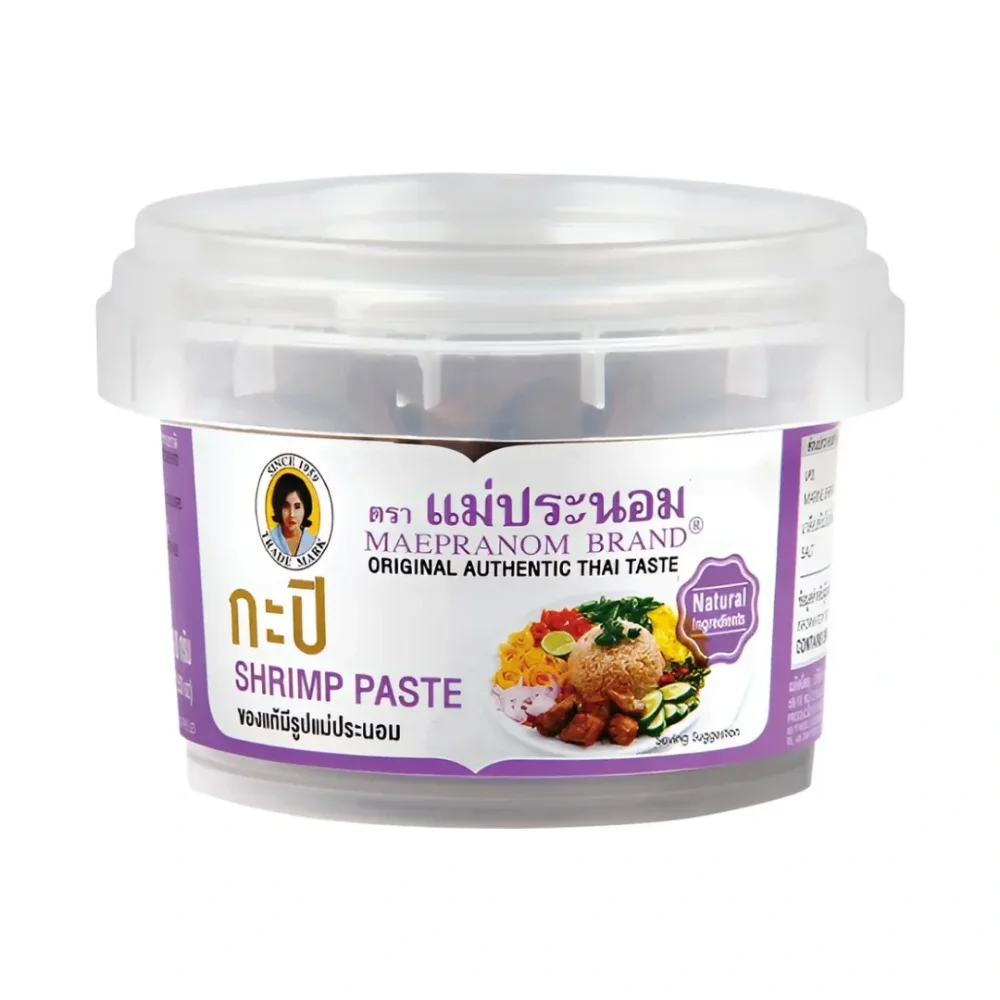
If you’re new to it, treat it like a spice: a tiny amount is enough, and it’s always easier to add later than to fix an excess.
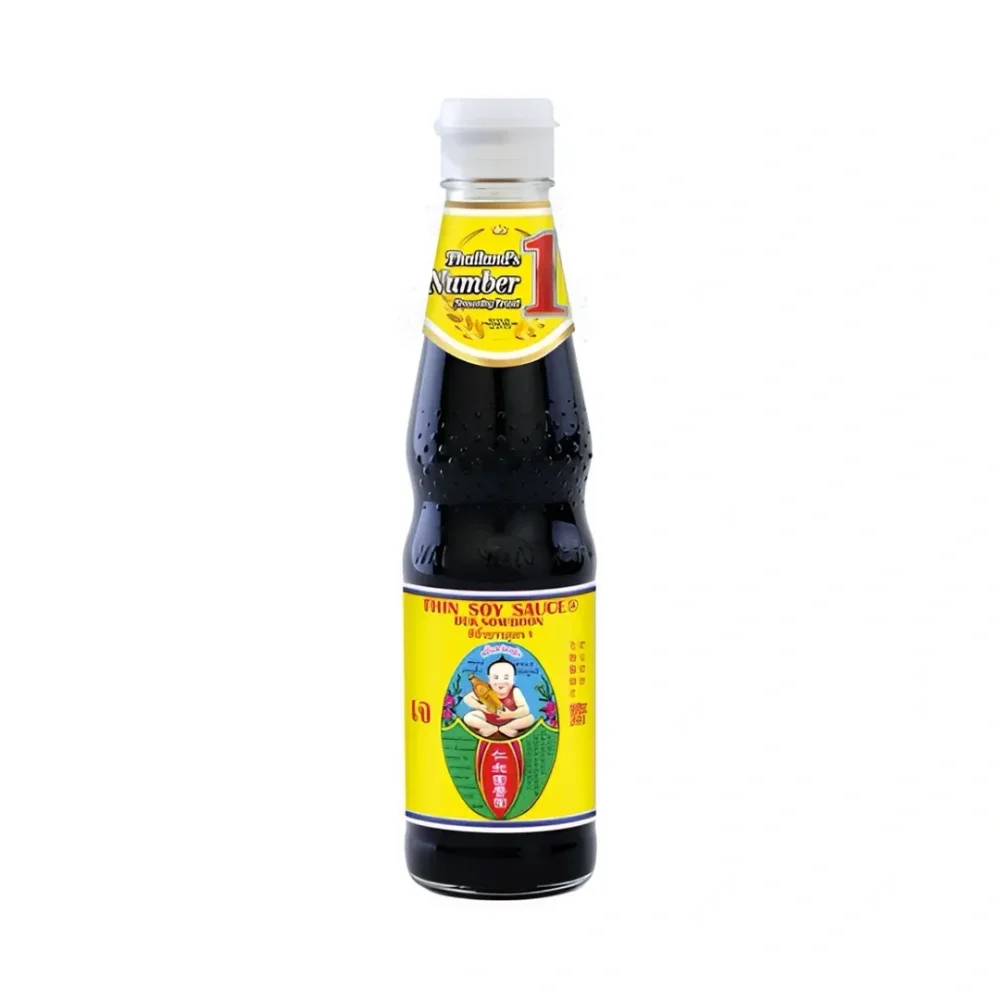
4) Soy sauce as your salt-control tool (so it doesn’t end up too salty)
In the “gradual seasoning” layer, a salty component plays a big role. The advantage of seasoning with soy sauce is control: you can add it step by step and keep tasting as you go.
You can see this difference more clearly on these ingredients and products: Dek Som Boon Soy sauce light 300 ml
5) Sriracha: heat and table-style finishing (typically at the very end)
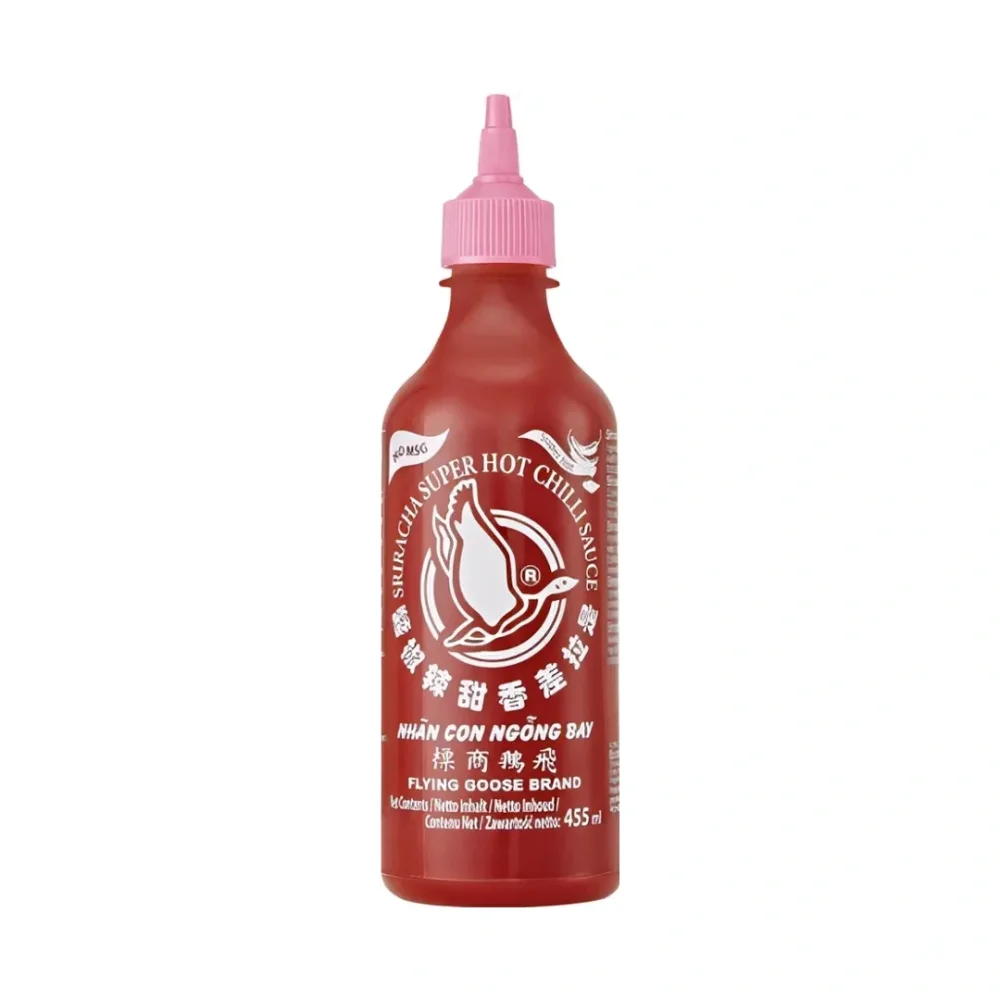
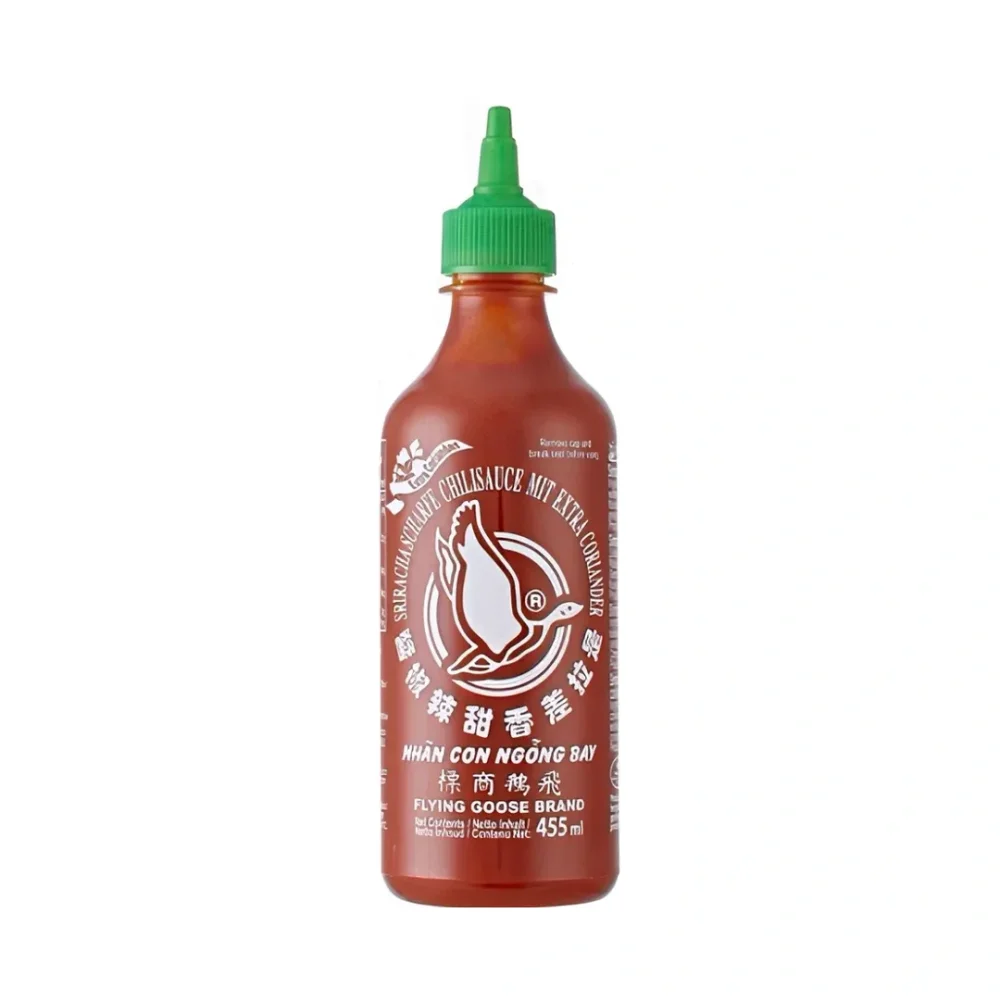
Sriracha is a chilli sauce commonly used to fine-tune heat and flavour at the end—or even at the table. This timing matters: sriracha can be great, but if you use it as the main base instead of an aromatic paste, the dish can easily become simply hot without depth.
You can see this difference more clearly on these ingredients and products: Flying Goose Sriracha chili sauce extra hot without MSG 455 ml, Flying Goose Sriracha chili sauce with coriander 455 ml
👃 6) Curry leaves: an aromatic “final touch” (and a frequent misunderstanding)
Curry leaves are best understood as “extra aroma”—something that highlights fragrance, but won’t replace curry paste or chilli. They do a different job.
You can see this difference more clearly on these ingredients and products: Mehek Curry leaves 30 g
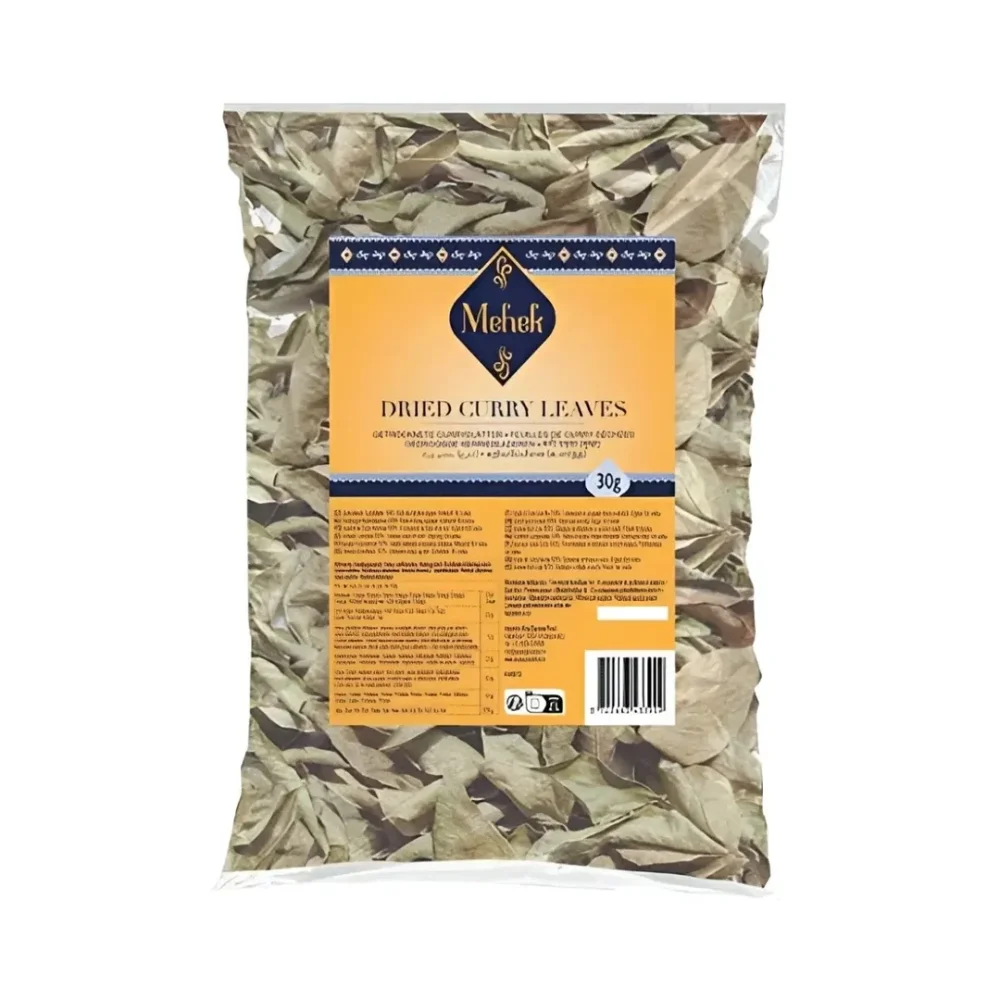
Watch out for a common mix-up: curry leaves are not the same thing as “curry powder”, and definitely not the same as curry paste. They’re a different ingredient with a different purpose.
🌶️ 🍳 How to build Thai flavour at home (not a full recipe): a concrete process and starting doses
You can use the framework below for a quick curry as well as for a soup. Think of it as a practical workflow that protects you from the most common missteps. The amounts are starting points for home cooking—meant to give you something solid to begin with, then you adjust to taste.
👃 Step 1: Choose one aromatic base (not two)
- For a “curry style”, choose a curry paste (for example red curry).
- For a “Tom Ka style”, choose a Tom Ka soup paste.
Tip: if you’re still learning, don’t mix curry paste and Tom Ka paste in one dish. It makes the flavour direction confusing and it becomes much harder to understand what each ingredient is doing.
👃 Step 2: Activate the aroma with heat (briefly, but deliberately)
Pastes work best when they’re heated briefly. In practice: add a small amount of fat to a pan/pot, stir in the paste, and warm it just long enough for it to become fragrant. This step often decides whether a dish will taste “flat” or have real depth.
Starting doses:
- Curry paste: start at about 1 teaspoon per serving, or 1 tablespoon for a small family pot. Then increase in half-teaspoon steps.
- Tom Ka paste: start at about 1 teaspoon per 250–300 ml of liquid and adjust in small additions.
🍜 Step 3: Add main ingredients and liquid, then simmer briefly
Once the base is fragrant, add what you’ll actually eat (vegetables, protein) and the liquid that will carry the flavour. Don’t aim for “perfect” yet. The goal is to let everything come together so you have a stable base to taste and adjust.
🍳 Step 4: Season saltiness gradually (and track how many salty ingredients you’re stacking)
Be careful with saltiness because it can accumulate from multiple sources. If you use soy sauce, add it in small doses and taste again each time.
Starting dose for soy sauce: try 1 teaspoon per serving, stir, simmer briefly, and taste. Only then decide whether to add another half to 1 teaspoon.
If you also add shrimp paste (kapi): start truly small (for example, “the tip of a teaspoon” up to 1/4 teaspoon for the whole pot). Dissolve it into the hot base first, and only then fine-tune with soy sauce. Otherwise it’s easy to oversalt the dish.
👃 Step 5: Adjust heat and top aroma only at the end (✅ better control)
Once the dish is “done” in the sense that it has a clear base and reasonable saltiness, it makes sense to fine-tune heat and the final aromatic lift:
- Sriracha – add in small amounts (for example 1/2 teaspoon), stir, and taste. Hotter versions require extra caution.
- Curry leaves – you can warm them briefly in the base to release aroma. With dried leaves, starting smaller and adding later is usually safer than overdoing it and covering other aromas.
Most common mistakes—and how to fix them fast
Mistake #1: “It’s just spicy”
Why it happens: sriracha (or another hot component) is used as the base instead of an aromatic paste, or it’s added too early and in a large amount.
How to fix it:
- Go back to the aromatic base: add a small amount of curry/Tom Ka paste and simmer briefly.
- Dilute the volume (add liquid) and then rebalance saltiness carefully.
- Don’t add more heat; fix the “body” of the flavour first.
Mistake #2: “It’s too salty”
Why it happens: saltiness adds up (soy sauce + shrimp paste and other salty components).
How to fix it:
- The basic rescue is dilution (add liquid, or remove part and replace with unsalted liquid).
- Let it simmer briefly and taste again; sometimes the flavour settles better than if you start throwing more ingredients in immediately.
- Next time, add soy sauce in smaller increments and treat shrimp paste like a spice, not like “a sauce”.
Mistake #3: “It’s flat, it barely smells of anything”
Why it happens: the paste is only stirred into liquid and never gets a chance to develop aroma.
How to fix it:
- If possible, remove part of the liquid, heat the paste briefly on its own, then add it back.
- Add a small extra amount of paste and give it time to simmer.
- Adjust top aroma at the end (for example, sriracha in small amounts or curry leaves in small additions).
Mistake #4: “I added everything and it tastes confused”
Why it happens: you mix multiple strong bases (curry paste + Tom Ka paste) and then add other bold seasonings on top. The result has no clear direction.
How to fix it: next time, keep one paste as the main base and use everything else only for adjustment (saltiness gradually, heat at the end).
Mistake #5: “I expected curry leaves to taste like curry sauce”
Clarification: curry leaves are an aromatic herb ingredient (fragrance, a citrus/herbal tone). They won’t replace curry paste and they don’t play the same role as chilli or soy sauce.
What to take away
- Thai flavour is usually not one dominant ingredient, but layering: base → seasoning → final adjustment.
- Choose one aromatic base (curry paste or Tom Ka paste) and don’t mix strong pastes until you understand them.
- Handle saltiness deliberately: add it gradually and taste often—especially if you also use shrimp paste.
- Use sriracha mainly to fine-tune heat (ideally at the end), not as a replacement for an aromatic paste.
- If something goes wrong, fix the “body” of the flavour first (base + saltiness), and only then deal with more heat and extra aroma.
Gallery
Read next
If you want to explore this topic further, continue with these related blog guides and articles:
