


 Česky (CZK)
 Slovensky (EUR)
 Deutsch (EUR)
 Austria
 Belgium
 Bulgaria
 Croatia
 Denmark
 Estonia
 Finland
 France
 Germany
 Greece
 Hungary
 Italy
Italy Latvia
 Lithuania
 Luxembourg
 Netherlands
 Poland
 Portugal
 Romania
 Slovenia
 Spain
Spain Sweden










Rendang, korma, vindaloo: why they are not "just curry" and how to understand saucy dishes
Rendang, korma, vindaloo, Thai curry or Japanese curry are often lumped together under one category "curry" in our country. But this label is rather indicative – and if you take it literally, you might easily pick the wrong base, season the sauce poorly, or expect a different taste and consistency. In this article, we clarify what is meant by "curry" (and related saucy dishes) in different parts of Asia, what the main families are, and how to start practically at home without unnecessary mistakes.
What "curry" means and why it is important especially for saucy dishes
The word curry/curry in Western usage is often taken as "spiced sauce", but in real kitchens it is a much broader and less precise term. According to Britannica, the term curry in Western understanding is used for a dish with a sauce (sauce or gravy) flavored with a blend of ground spices and its origin is usually connected with the Tamil word kari. However, it is also true that in traditional Indian cuisine there is no single universal model of "curry sauce" – regions have their own profiles and blends.
For home cooking, a practical thing follows from this: when a recipe or restaurant says "curry", it does not by itself guarantee either the type of base (paste vs. dry spices vs. roux), nor the texture (creamy, thin, reduced), nor the taste logic (coconut vs. tomato/yogurt vs. "thick" sweeter sauce). And especially for saucy dishes (rendang/korma/vindaloo and the like), this decides the result more than the choice of meat or vegetables.
Rendang, korma, vindaloo and the like: different "worlds" of saucy dishes
For orientation, it is useful to divide curry and related saucy dishes into several main families. It is not an academic category – it is a tool to quickly arrange, what type of base to look for and how the sauce will be constructed.
👃 1) South Asian curry (India, Sri Lanka and wider surroundings): base of aromatics and spices
South Asian saucy dishes typically work with an onion, garlic and ginger basewith whole and ground spices and the fact that the sauce is often built slowlydepending on the region, tomato, yogurt, or coconut milk may play a roleAn important tool is masala – i.e., a blend (or also a layering method) of spices that gives the sauce its character.
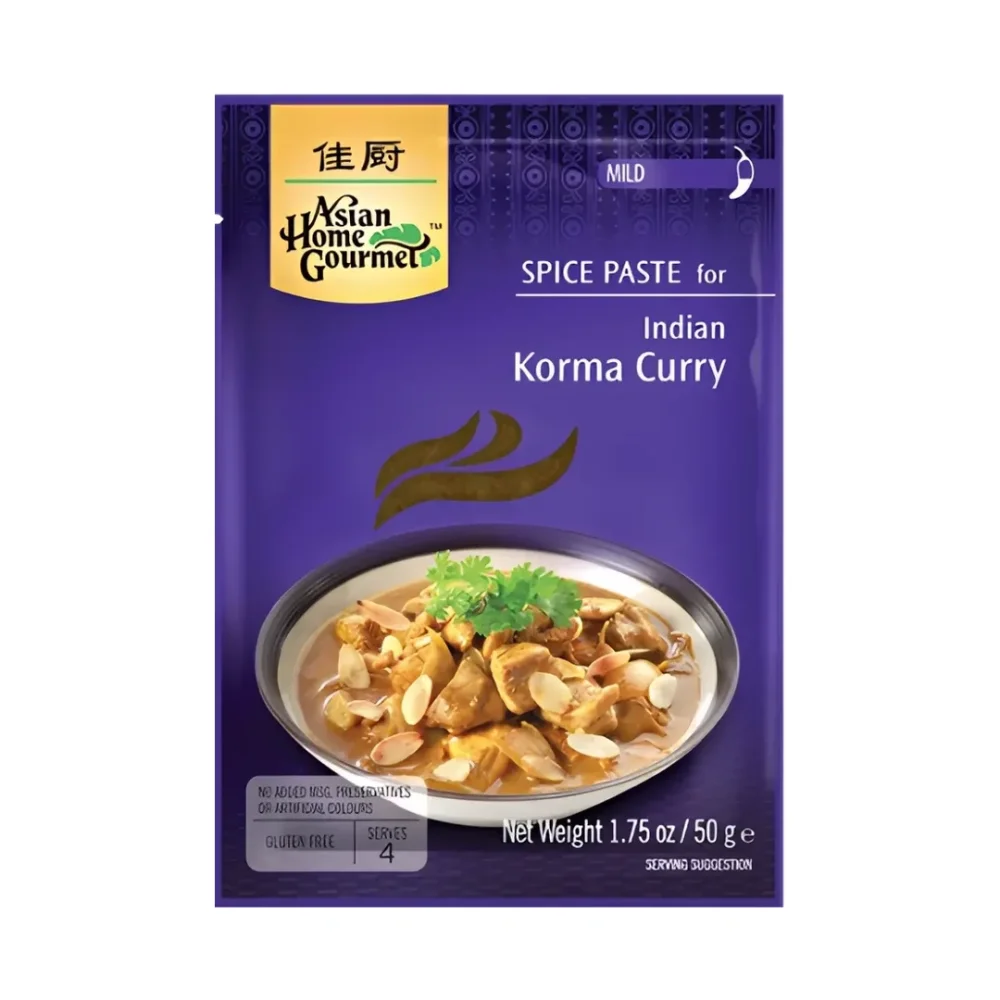
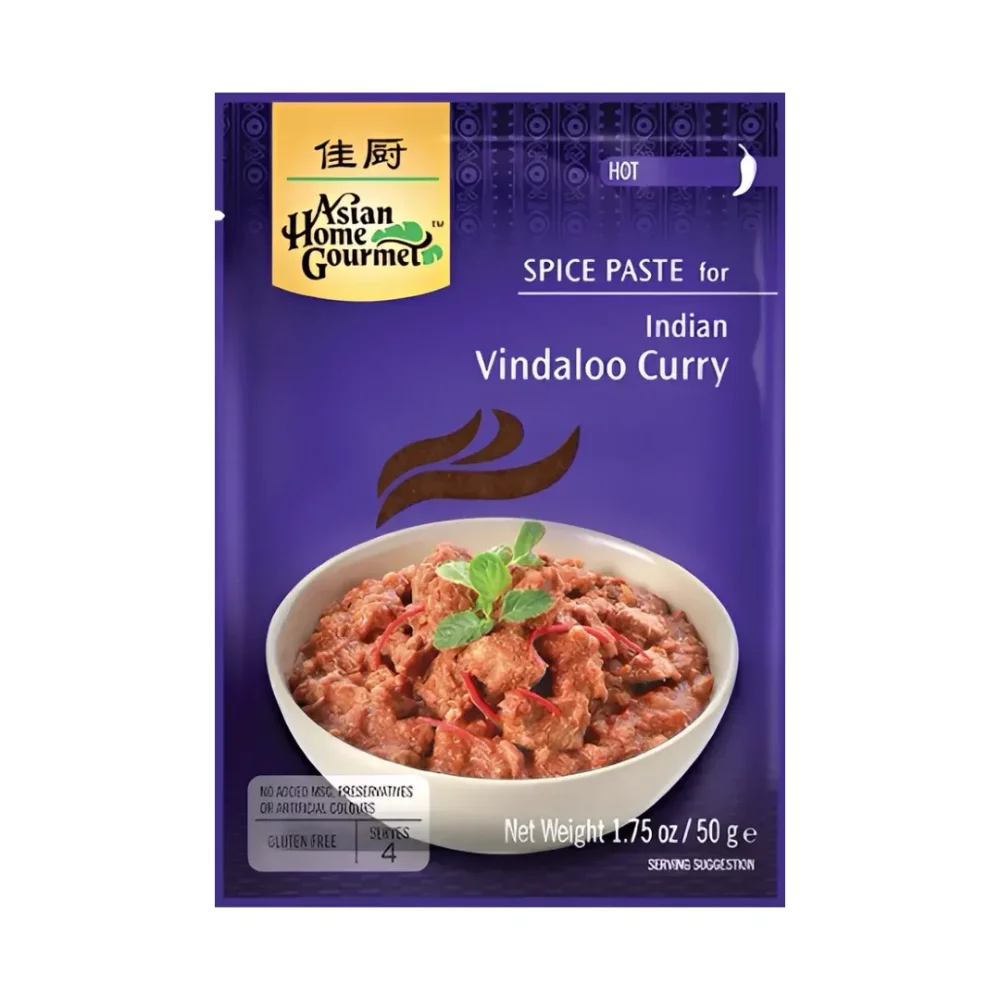
People often include internationally (and often export) known dishes like korma or vindalooin this indicative family. In home practice, it is good to know that some "quick" bases sold in Europe as paste are simplified kitchen shortcuts – useful when you want to save time, but not automatically representative of the whole Indian cuisine. If you want to start quickly with a ready base, it can be a practical choice, for example, AHG Pasta Korma curry 50 g or a spicier style like AHG Pasta Vindaloo Kari 50 g.
2) Thai curry: paste as the heart of the dish (not "curry powder")
Thai curries are known in Europe but often misunderstood: they are not primarily based on "curry powder", but on curry pasteThe typical logic of Thai curry is:
- paste as the starting point (a concentrated aromatic base),
- a strong role of fresh and processed aromatics,
- coconut milk as a carrier,
- some salty component (often fish sauce or another),
- sugar and acidity as balancing,
- often a faster building of the sauce than with many South Asian variants.
It is essential that Thai curries are not "different colors of the same sauce." They are different flavor systems – accordingly, they suit different ingredients and a different type of result.
If you are looking for a basic crossroad, it makes sense to start with the category curry pastes and only then handle the specific style.
3) Malaysia and Indonesia: gulai, coconut and long stewing – and why rendang is not "just another curry"
In the Malay-Indonesian area, the term "curry" works, but needs to be handled carefully. Common are dishes based on coconut milk, aromatic pastes, chili and long stewing. Besides that, there are styles that Europeans perceive as curry, but locally have their own logic – for example, gulai.
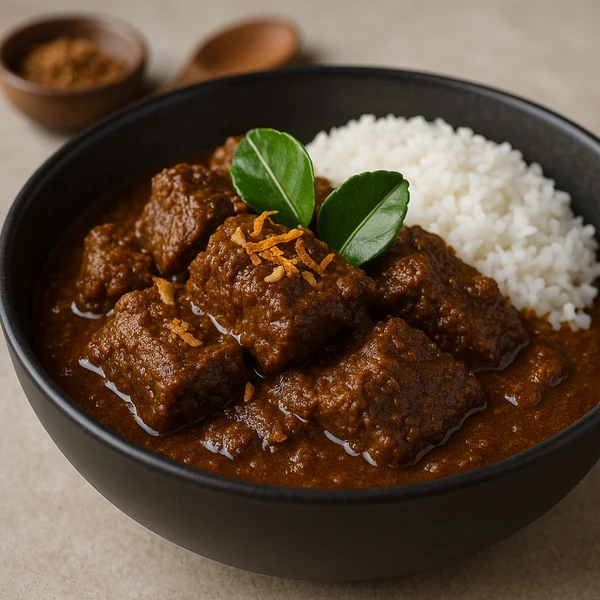
Rendang is a good example of blurry boundaries. In wider texts it sometimes is sorted into the "curry world," but according to its base knowledge it is technically and texturally much more reduced and concentrated. In other words: if you expect a "sauce for rice" like in common curry, you may be surprised – and conversely, if you want a thick concentrated result, it is good to know that rendang behaves differently from many coconut curries.
4) Japanese curry: look for roux, not coconut milk paste
Japanese curry is confusing for many because they take it as another "curry paste." However, the most common home base is roux or a similar block base, which already contains spices, fat, and thickener. Japanese curry tends to be thicker, less spicy, often rounder and clearly aims at a comforting "sauce for rice." So if you do not want a coconut curry and rather look for a thickened style, it's a completely different system than what you know from Thai pastes.
Curry paste, curry powder and masala: similar words, different tools
Much of the confusion around rendang/korma/vindaloo arises from people confusing dish names with base names and then reaching for "something with curry" regardless of the function. Practically, this distinction helps:
- Curry paste: a wetter and more concentrated base, often containing fresh or "wet" components. Typical mainly for Thai (and some Malay-Indonesian) styles, where after a short frying it quickly builds aromatic depth.
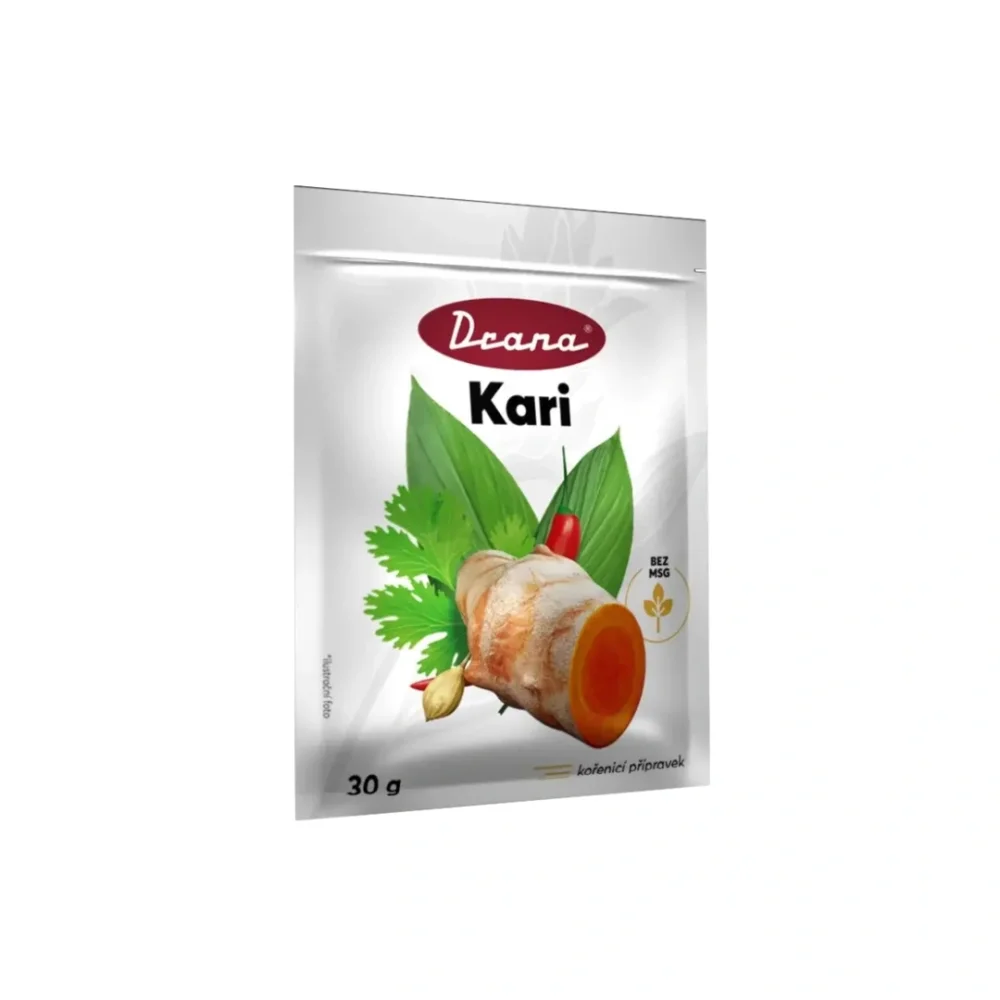
- Curry powder / spice mix: a dry blend of ground spices. In the Western world, it is often used as a universal "curry flavor," but by itself it does not determine a specific cuisine or sauce type. An example of such a mix can be, Drana Kari 30 g – typically works best when you briefly bloom it in fat at the start to open the flavor.
- Masala: in the South Asian context, it is more accurate to talk about various masalas (dry and wet), an aromatic base, and gradual layering of flavor. Therefore, it is good to be careful when someone uses the term "curry paste" also for Indian style – often it is a simplified retail base.
- Curry roux: typical for Japanese curry – combines spices and thickening, different work with texture and final profile.
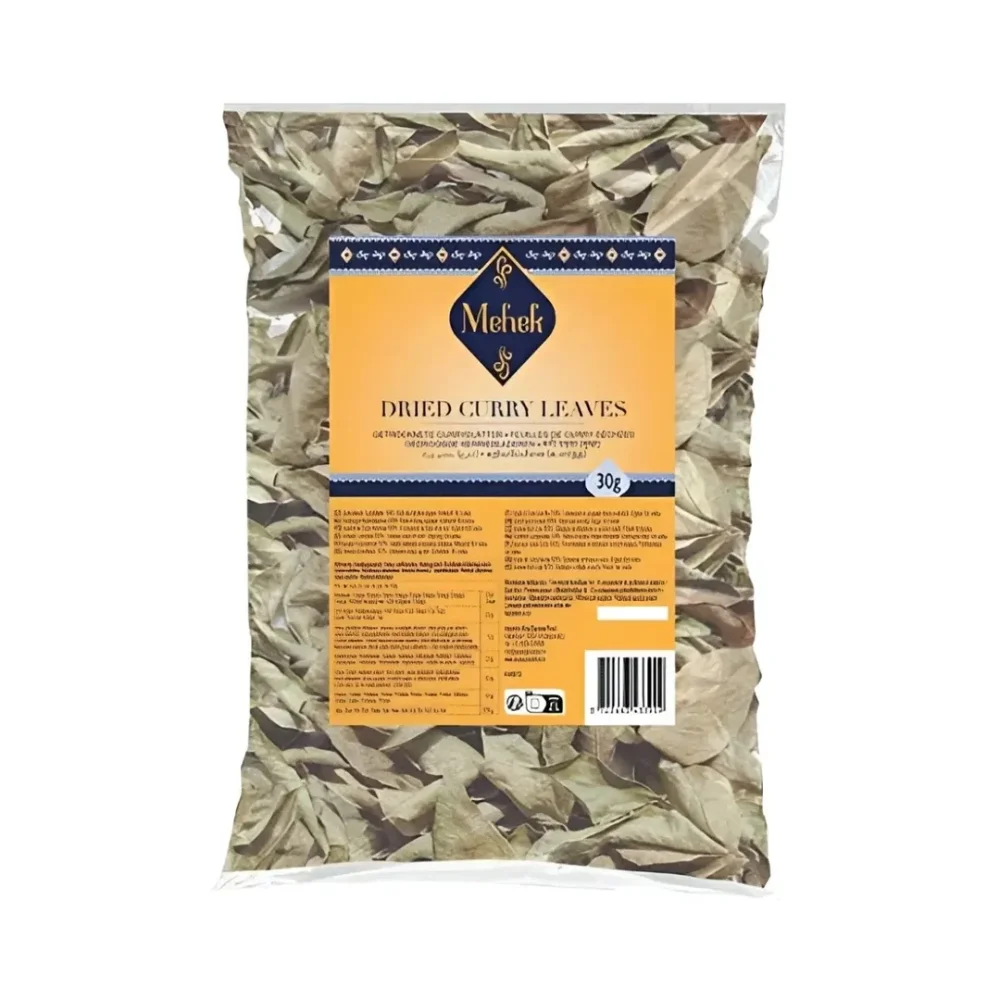
In South Asian dishes, an aromatic is also often added that is named similarly to "curry" but is not a curry blend: curry leaves. They add a herbal-spice aroma and are a separate ingredient – examples are Mehek Curry leaves 30 g.
How to start at home: a practical onboarding for saucy dishes (without a full recipe)
Below is a simple procedure on how to choose the right "start" and how to build the sauce so it does not taste flat. It is not a specific recipe but a way to work with the base and seasoning.
1) First, determine the family of the dish: Thai paste vs. South Asian spices vs. Japanese roux
- If you want coconut curry "quickly," you typically aim for the Thai world (paste + coconut milk + balancing).
- If you want the South Asian style, it often makes sense to work with spices/masala and an aromatic base (onion/garlic/ginger) – or use a ready-made base knowing it is a shortcut.
- If you want a thick sauce for rice without a coconut profile, Japanese curry usually means roux, not paste.
2) Choose Thai paste according to the goal (a practical "choice without disappointment")
With Thai pastes, it is useful to choose based on what result you want (and not based on the color you know from one restaurant):
- For everyday quick coconut curry: red or yellow are often mentioned as the easiest start (wide usability).
- For a fresh and distinctly aromatic dish: green (herbier, fresher profile).
- For a richer and more "restaurant-style" sauce: panang (usually thicker, stronger impression).
- For slow stewing and deeper flavor: massaman (suitable for slower dishes).
If you want to narrow down the choice right away, you can go directly to specific directories like red curry pastes or special curry pastes.
3) Build the sauce on a "carrier" and then adjust it (saltiness, sweetness, acidity)
In Thai style, it is typical that coconut milk acts as a carrier and the flavor is adjusted to be balanced: some salty component, a bit of sweetness, and acidity to "open" the flavor. A practical tip is to start carefully and season gradually – some pastes are more concentrated, others more flat and need more adjustment.
In South Asian styles, the sauce is often built more slowly and in layers; instead of quickly "mixing paste + coconut," it relies more on aromatic base and working with spices (masala as a tool).
4) Don't underestimate the side dish: rice and bread are not just "something on the side"
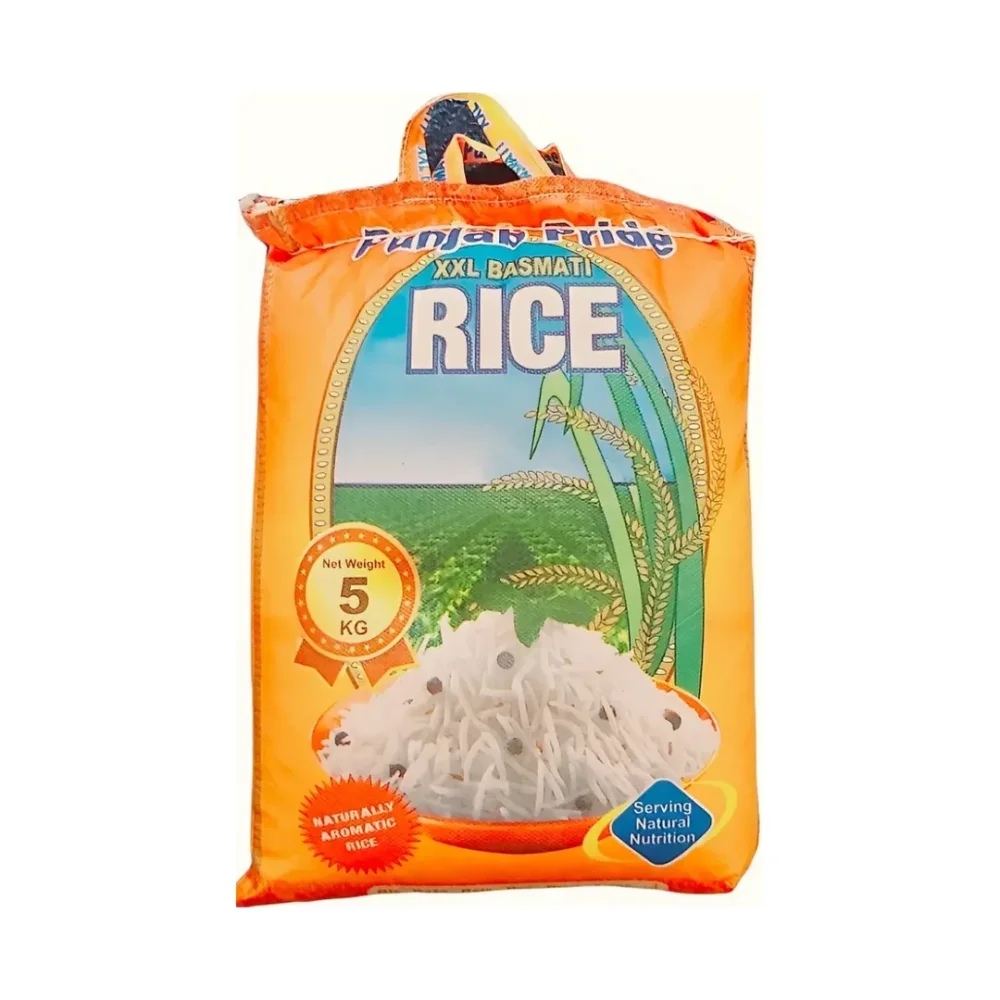
For sauced dishes, the side makes a big difference in how the sauce will come across. For South Asian curry, basmati is often used – for example, ESSA Basmati Rice Punjab Pride 5 kg. And for some Indian styles (especially those where you want to scoop up the sauce), Indian bread also makes sense – a practical directory is the category bread.
5) If you want to "taste the direction" without cooking from scratch, there are ready sauced dishes
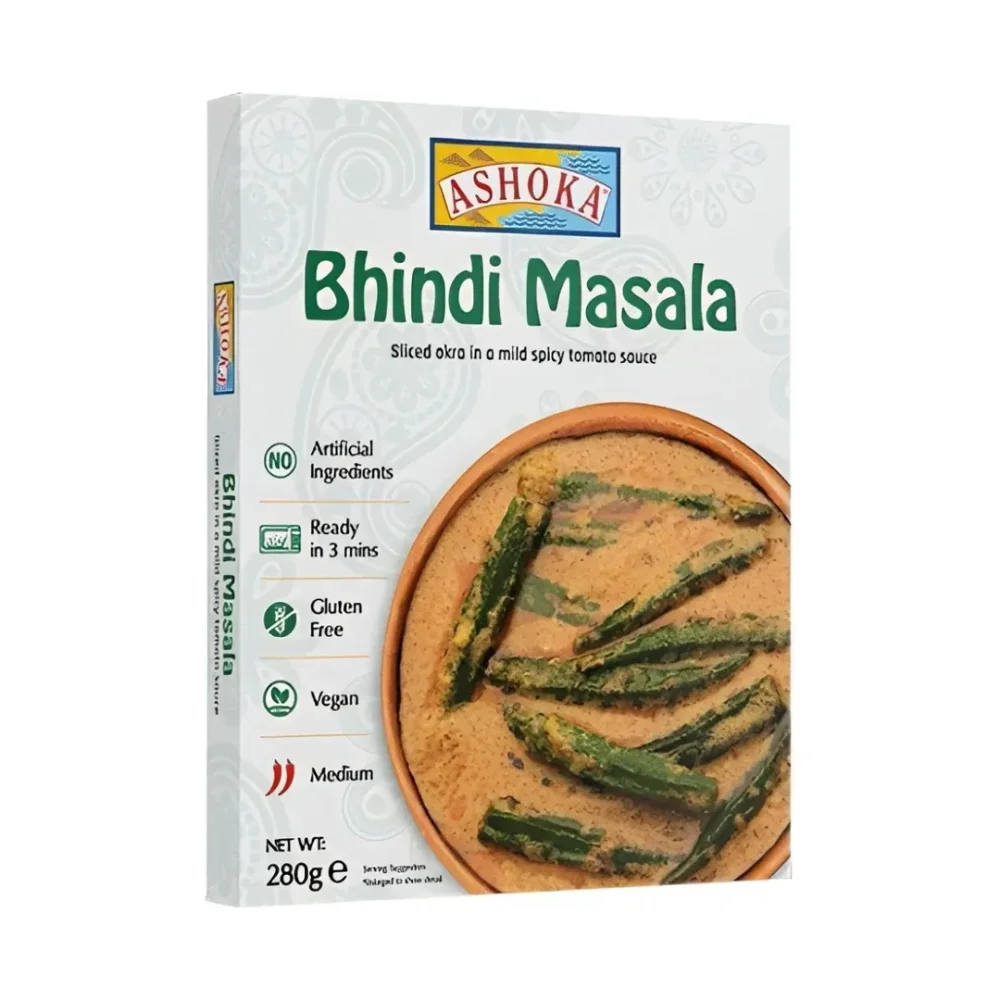
If you are not sure what profile you are actually looking for, it can be useful to first try a ready sauced dish and then decide whether you prefer more tomatoey/spiced South Asian directions or coconut curry. As an example of a ready Indian dish you can mention Ashoka Instant Bhindi Masala 280 g.
Most common mistakes and errors (and how to quickly fix them)
- Mistake: “Green is always the mildest.” Not true. Green tends to be fresher, but in practice, it can be strongly spicy too. If you are cooking for sensitive eaters, start with a smaller amount and adjust gradually.
- Mistake: “Yellow is just colored red.” Not true. It usually has its own spiced profile and different flavor logic, so it’s worth treating it as a separate choice, not as a "color variant."
- Mistake: “Massaman is just sweet Thai curry.” It’s not just sweetness – it is a broader style with its own flavor and historical context. If you expect just "mild coconut," you might be disappointed.
- Mistake: “Japanese curry = another paste into coconut milk.” Usually not. Japanese curry is based on a roux logic and gives a different type of thickness and final impression.
- Mistake: “Curry paste alone is enough and nothing else needs to be adjusted.” Not always. Some pastes are very concentrated, others need help with saltiness, acidity, or sweetness – the goal is balance, not just "more spicy = more curry."
What to take from the article
- “Curry” is not a single sauce: it’s a directional term that means different bases, different procedures, and different textures in different regions.
- Rendang is a good reminder of blurry boundaries: it is classified in the curry world, but is reduced and more concentrated than many "sauced curries."
- Thai curries are based on pastes and balancing (saltiness–sweetness–acidity–spiciness), not on universal curry powder.
- South Asian dishes often rely on an aromatic base and masala; ready “curry pastes” in the European sense should be seen as a practical shortcut, not as a definition of the whole cuisine.
- Japanese curry is different in technique: typically roux and a thicker “comfort” sauce for rice.

Read next
If you want to explore this topic further, continue with these related blog guides and articles:
