

 Česky (CZK)
 Slovensky (EUR)
 Deutsch (EUR)
 Austria
 Belgium
 Bulgaria
 Croatia
 Denmark
 Estonia
 Finland
 France
 Germany
 Greece
 Hungary
 Italy
Italy Latvia
 Lithuania
 Luxembourg
 Netherlands
 Poland
 Portugal
 Romania
 Slovenia
 Spain
Spain Sweden










Papadum
🫓 Papadum: the crunchy Indian crisp that upgrades curry (and snack boards)
Papadum (also papad or poppadom) is a very thin dried disc made from flour (often legume-based), then quickly cooked—dry-roasted, microwaved, or fried—until crisp. It’s a staple across the Indian subcontinent: something to dip, crunch between bites, and brighten rich sauces.
You can find Asian ingredients at Taste Of Asia.
💡 Tip: Build toppings at the very last minute. Once chutney hits papadum, it starts softening.
🕰️ Origins & where it fits
Papadum originates from the Indian subcontinent and is widely served as a side or starter. Regional styles vary by flour, seasoning, thickness and size—ranging from mild, “clean” versions to bold ones seasoned with black pepper, cumin or garlic.
🧪 What papadum is made from (and why there are so many types)
The core idea is simple: flour + water + salt (+ spices), rolled very thin and dried. The most common base is urad/black gram, but you’ll also find:
- Urad (black gram) – a classic for many Indian papads.
- Chickpea – slightly nutty, often a bit more robust.
- Rice / tapioca / potato – different crispness profiles used across Asia.
- Flavoured options – garlic, black pepper, cumin, and more.
✅ Tip: Allergens can differ by product (and “may contain” warnings vary). Always follow the label of the specific item you’re using.
🔥 Cooking methods: 3 fast ways that actually work
1) ⚡ Microwave (fastest)
Place one papadum on a plate (no sauces, no water). Heat in short bursts until it puffs and turns crisp. For many products it takes tens of seconds (depending on thickness and microwave power).
2) 🍳 Dry pan / open flame (most “street”)
Heat a pan with no oil, toast briefly and flip often. Over a gas flame works too—use tongs and keep it moving to avoid scorching.
3) 🫗 Frying (most “party”)
In hot oil it cooks in seconds, puffing and crisping quickly. Drain on paper towels. It’s delicious, but it adds the most oil compared to dry methods.
💡 Tip: Cook one at a time. Papadum expands and needs space, otherwise it curls and becomes harder to handle.
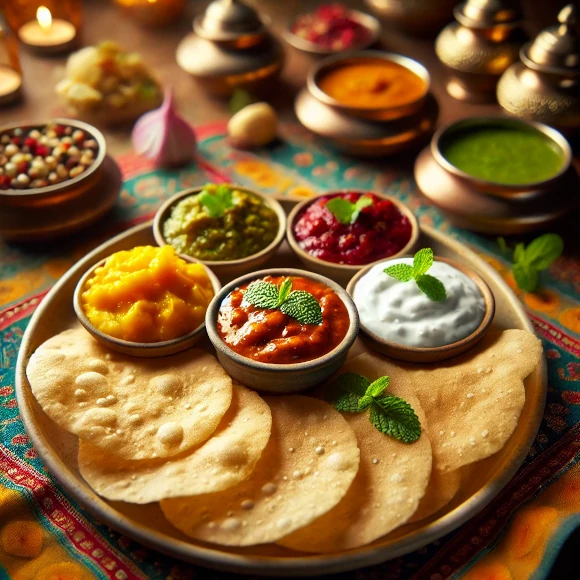
🍽️ How to serve papadum (and why chutney is the classic match)
- 🥘 With curry – dip into sauce and add contrast.
- 🥭 With chutney – mango for sweet-tangy, coriander for fresh; see chutney sauces.
- 🧅 Masala papad – chutney + onion/tomato + spices (recipe below).
- 🍚 With rice – a simple crisp element on the table.
✅ How to choose the right papadum
- Flavour: plain vs garlic vs black pepper—match it to your curry/dips.
- Cooking style: if you want ultra-fast, pick products that microwave well.
- Ingredients & allergens: check the specific label (base flour + possible traces).
- Use case: plain for dipping, pepper/garlic for standalone snacking.
🛒 Our picks (Taste Of Asia)
- Swad Indian bread Papadum 200g – an all-rounder for curry, dips and rice.
- Swad Indian bread Papadum garlic 200g – bolder flavour, great as a snack.
- Swad Punjabi Papadum with black pepper 200g – peppery punch for richer curries and party platters.
🫓 Recipe: Masala papad (quick Indian starter)
This is papadum in its most fun form: crisp base, chutney, fresh chopped veg, and a little spice. Minimal effort, maximum impact.
Ingredients
- papadum 2 pieces (plain/garlic/pepper)
- chutney 2–3 tbsp (mango or coriander)
- onion 1/2 small
- tomato 1/2 (deseeded)
- lemon / lime juice 1–2 tsp
- garam masala a pinch
- chilli optional
- coriander a pinch (or fresh)
- salt to taste
Method
- Cook papadum: dry-toast in a hot pan, over a flame, or microwave in short bursts until crisp.
- Spread a thin layer of chutney over the cooked papadum.
- Add finely chopped onion and tomato, then drizzle citrus juice.
- Season with garam masala, optional chilli and salt; finish with coriander.
- Serve immediately while crisp.
✅ Tip: Prep the chopped veg and spices ahead, but assemble on papadum right before serving.

Recommended products4
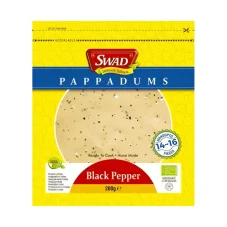
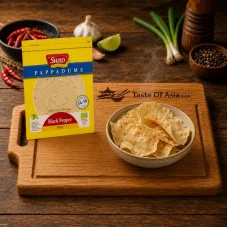
Swad Indian bread Papadum with black pepper 200g
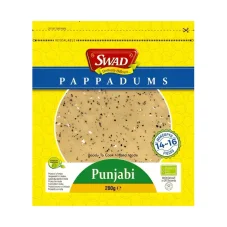
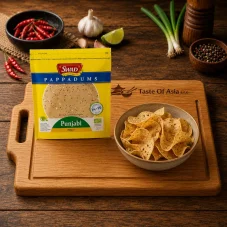
Swad Punjabi Papadum with black pepper 200 g
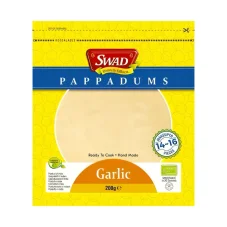
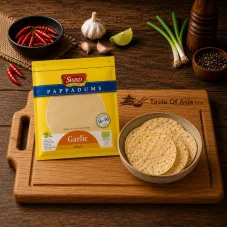
Swad Indian bread Papadum garlic 200g
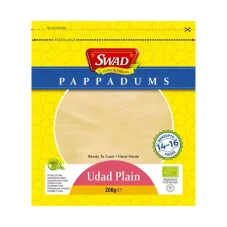
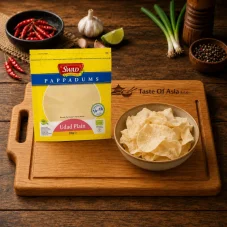
Swad Indian bread Papadum 200g
Read next
If you want to continue with the same topic, here are more related articles to explore: