


 Česky (CZK)
 Slovensky (EUR)
 Deutsch (EUR)
 Austria
 Belgium
 Bulgaria
 Croatia
 Denmark
 Estonia
 Finland
 France
 Germany
 Greece
 Hungary
 Italy
Italy Latvia
 Lithuania
 Luxembourg
 Netherlands
 Poland
 Portugal
 Romania
 Slovenia
 Spain
Spain Sweden










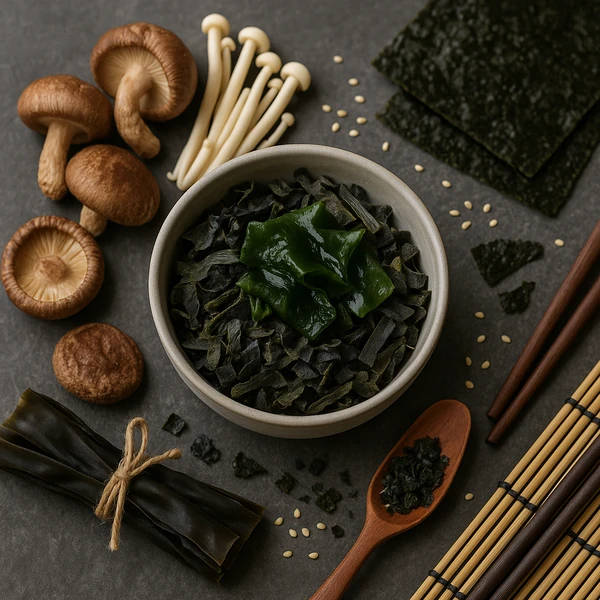
Mushrooms and seaweeds in Asian cuisine: umami, texture and practical use at home
Mushrooms and seaweeds in many Asian cuisines are often not the “main star” of the plate. All the more important they can be: they provide umami, they build broth depth, they add springiness or crunch and sometimes function only as a small but crucial finishing element. When you understand, what role they should play in a dish, you will be able to choose and use them much more confidently – and often pull out flavor without aggressive salting.
Why mushrooms and seaweeds are so important in Asia
In coastal areas of East Asia, seaweeds were naturally available and well storable ingredients. When dried they were light, durable and easy to transport – and so they naturally spread into everyday cooking. Mushrooms follow a similar logic, especially dried: they last a long time and offer pronounced flavor even out of season.
From a culinary perspective they are mainly connected by umami. Seaweeds are important for glutamates, dried mushrooms for guanylate and other flavor compounds. When cleverly combined with other ingredients, they can draw out a dish’s flavor so that it is often unnecessary to “push” with salt or complicated seasoning.
If you want to orient yourself practically by ingredient type, useful signposts are the categories Seafood products (seaweeds) and Vegetables and mushrooms (mushrooms and other plant ingredients).
How to think about them practically
The easiest is not to think of mushrooms and seaweeds as “one group,” but as functions, which they fulfill in a dish. In practice you will mainly encounter these roles:
- Depth and broth – the ingredient is steeped or cooked with others and provides the base (typically broths, soups, sauces).
- Texture – springiness, crunch, a “meatier” mouthfeel that complements noodles, rice or vegetables.
- Delicate sprinkle / coating / finishing – thin sheets or flakes added at the very end.
- Full ingredient – it goes into the pan, salad or stew as an equal component.
This view is useful also because the same ingredient can function completely differently with different preparation. For example a dried mushroom (after rehydration) is not just a “replacement for fresh” – it is often a different ingredient with a different aroma and texture.
Seaweeds
Seaweeds in Asian cuisine operate in several “modes”: sometimes they build broth and flavor depth, other times they are thin sheets or flakes for finishing a dish, and sometimes they form a standalone component (for example in a salad or as a snack).
Seaweeds: main types and how to use them
For common home orientation it is usually enough to understand well nori, wakame and kombu. Each of them heads in a slightly different direction – and that helps with selection.
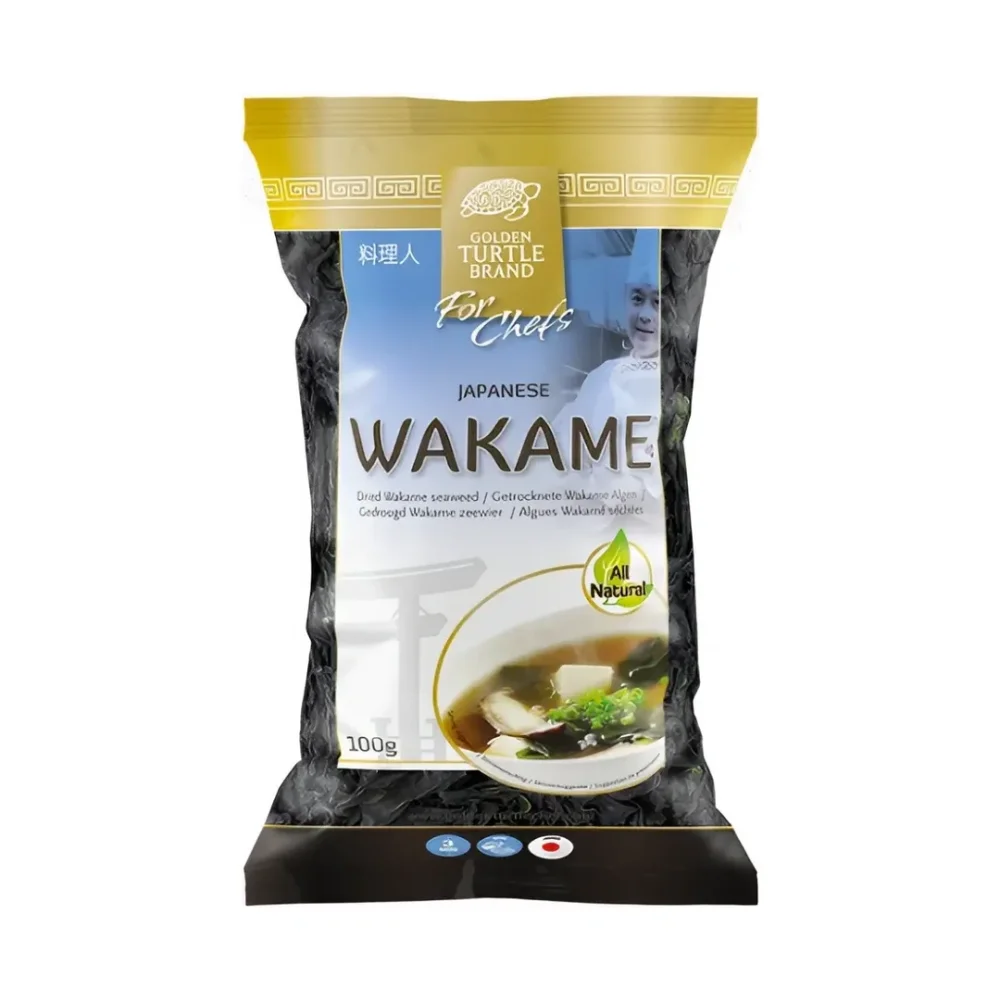
A practical example of “seaweed for soup or bowl” is dried wakame: after soaking it softens and increases in volume, making it suitable for soups and salads as well as a complement to rice bowls. If you want to start with one specific seaweed at home, a good starting point is dried wakame seaweed.
Nori
Most people associate nori with sushi, but in practice it has wider use. It is often thin sheets (or flakes), which serve as a finishing element: they add aroma, color, a gentle marine note and contrast to rice, noodles or soup.
When to use nori
- When you want to finish a rice bowl or noodle dish – to add “something extra” without complex cooking.
- When you want a sprinklethat adds aroma and contrast (and isn’t another sauce).
- When you need a wrap or a thin handheld element (typically rolls, simple “wraps”).
With nori timing often matters: if you want it to remain pronounced as a sprinkle, it makes sense to add it at the end, not long before.
Kombu
Kombu is a typical “broth” seaweed: it is often used for building depth and umami. In practice it pairs excellently with dried mushrooms – the combination of different umami sources can make a broth or soup fuller without having to reach for aggressive salting.
This is important also for meatless cooking: when you want a vegetarian broth without a sense of “emptiness,” kombu is often one of the key ingredients.
Other seaweeds and fringe types
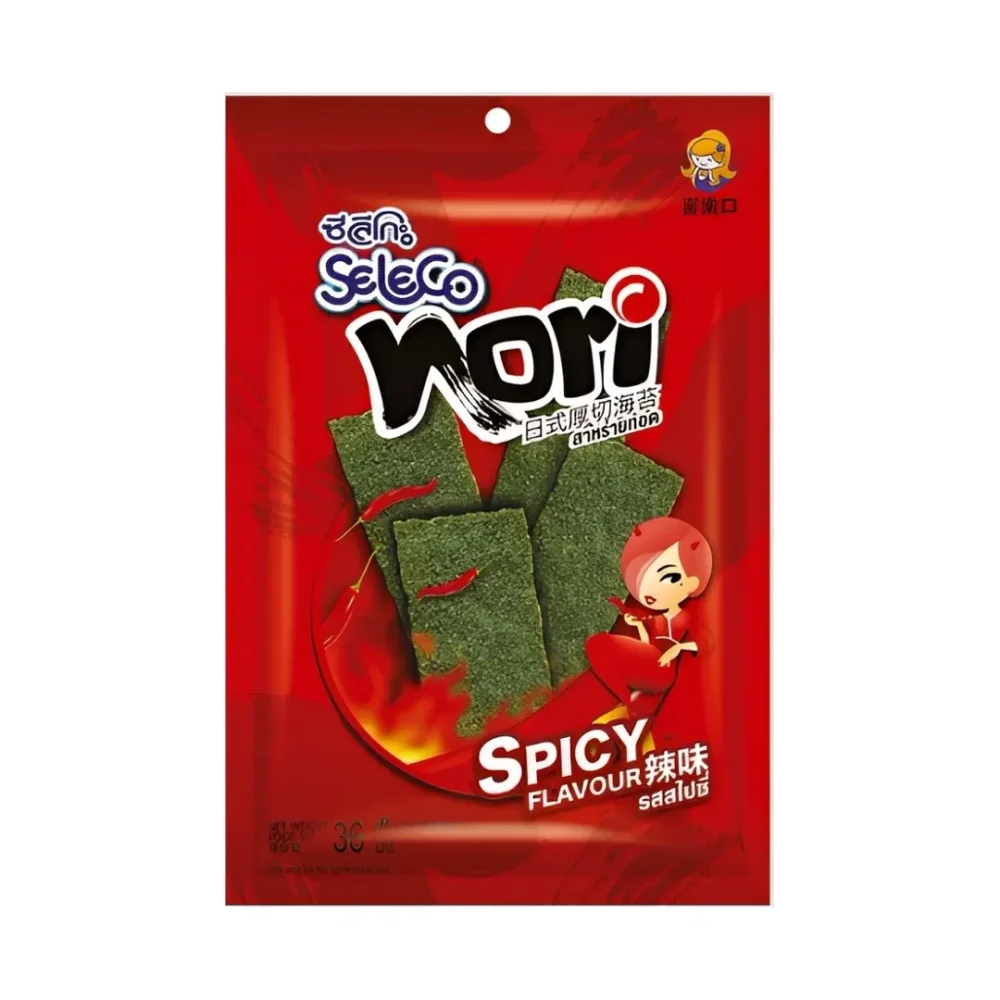
In practice you may also encounter other seaweed products: agar seaweeds for gelling, various snack variants, regional specialties or blends like furikake where seaweeds are just one component. If you’re tempted by a quick form of “seaweed as a topping,” there are also flavored toasted seaweeds – for example flavored and spicy seaweeds, which can be used as a quick crispy finishing for rice, noodles or soup.
Mushrooms
Mushrooms in Asian cuisine typically address two things: umami and texture. For umami shiitake is often mentioned (including in dried form). For texture types like wood ear or enoki are suitable – and for a quick pan use fresh mushrooms depending on whether you want more tenderness, springiness, or a “meatier” bite.
Dried mushrooms in general
Dried mushrooms have a special role: they are not just a substitute form of fresh mushrooms, but often a standalone ingredient with a different aroma and texture (this is especially true for shiitake). Practical rules that make a huge difference:
- Soak rather longer and more gently than briefly and aggressively.
- Do not discard soaking water thoughtlessly – often flavor remains in it that can be used for broth or sauce.
- After rehydration mushrooms should be well squeezed and if necessary trim off hard parts.
- Expect that after soaking they will significantly change volume and structure – you won’t be surprised that a “handful” suddenly becomes a full bowl.
Cold vs. hot water: slow soaking in cold water, ideally for a longer time, is usually better for flavor than a quick pour of hot water. The quick variant is practical, but slower rehydration often yields a rounder result.
How to choose and use mushrooms and seaweeds at home (so it works the first time)
If you are starting with them, a simple onboarding helps: pick one ingredient for depth, one for texture and one for finishing. And only then decide which specific dish to put them in. In Asian cooking the result is often decided not on the stove but earlier – during preparation.
🍜 1) Prepare ingredients in advance (mise en place)
In dishes that cook quickly and in many short steps (stir-fry, quick noodles, fried rice), there is no time to chop or search for additional components. Prepare in advance:
- mushrooms soaked, squeezed and sliced,
- seaweeds soaked and drained (if you don’t use them only as a sprinkle),
- other components so they go into the pan in the right order.
Poor preparation often leads to aroma burning, parts of the dish being raw and parts overcooked, or the sauce not coating everything evenly.
2) Watch moisture: when water is a problem and when it isn't
For mushrooms (and often for rehydrated seaweeds) the surface of the ingredient is crucial. Excessive moisture is a typical problem especially in wok and stir-fry: instead of frying, ingredients begin to steam. On the other hand moisture is not a problem in broths and stews – there it is desirable.
Practically: when you plan a quick pan, let ingredients drain well after soaking and dry if necessary; when building a broth you can work “wet” and also use the flavor from the soaking water.
3) Cut and size are not just aesthetics
The same ingredient behaves differently depending on the cut: it softens at a different rate, holds juices differently, coats with sauce differently and is eaten differently. Thinner and uniform pieces suit quick dishes, larger pieces suit stewing. Irregular cuts in a quick pan often cause “chaos” – some things are done, some not.
4) Quick orientation by goal
- For flavor and umami: shiitake (it often makes sense to also have a dried variant).
- For texture: wood ear, enoki or other more delicate types depending on the dish.
- For broth: dried shiitake and possibly a combination with kombu for a deeper base.
- For a quick pan: fresh shiitake, shimeji, enoki – depending on whether you want a more pronounced bite or tenderness.
As a simple “carrier” base where mushrooms and seaweeds are clearly visible, rice bowls and soups work well. If it makes sense for you to have a stable base at home for such dishes, the signpost Rice and rice productsis useful.

💡 Most common mistakes and what to watch out for
- Treating dried mushrooms only as a substitute for fresh ones. They often have different aroma and texture; with shiitake the difference is particularly noticeable. It helps to think of them as a standalone ingredient.
- Soaking that is too fast and aggressive. Quickly pouring hot water over them is convenient, but slower rehydration in cold water usually yields a rounder flavor.
- Mindlessly pouring out the soaking water. Flavor often remains in it – it makes sense to at least taste it and decide whether to use it in stock or sauce.
- Throwing wet mushrooms into the pan and waiting for them to sauté. Excess moisture is a typical reason in stir-fries for the food to start steaming and lose its 'snap'.
- Using nori as a garnish too early. When nori is meant to act as a finishing touch, timing is crucial – otherwise the garnish easily becomes just a soft element without contrast.
- Relying on a single 'substitute' in meatless cooking. In Asian vegetarian and vegan cooking, depth is often built from a combination of umami sources – typically mushrooms and seaweeds – plus other bases. At the same time, it's worth checking the ingredients of ready-made seasonings if you're strictly following a vegan diet.
What to take away from the article
- Mushrooms and seaweeds in Asian cuisine often act as a building block of flavor: umami, broth, texture, contrast and finishing touch.
- It's worth choosing seaweeds and mushrooms according to their role in the dish (broth / texture / garnish / main ingredient), not just by name.
- Dried mushrooms are not just a substitute for fresh ones: soak them more gently, work with the soaking liquid, and expect changes in volume and texture.
- In a quick pan the preparation matters: mise en place, the right cut and control of moisture often make a bigger difference than 'another sauce'.
- For home guidance it's usually enough to understand nori, wakame and kombu – and to know when they should be the base and when just the final touch.

Read next
If you want to explore this topic further, continue with these related blog guides and articles:
