


 Česky (CZK)
 Slovensky (EUR)
 Deutsch (EUR)
 Austria
 Belgium
 Bulgaria
 Croatia
 Denmark
 Estonia
 Finland
 France
 Germany
 Greece
 Hungary
 Italy
Italy Latvia
 Lithuania
 Luxembourg
 Netherlands
 Poland
 Portugal
 Romania
 Slovenia
 Spain
Spain Sweden










How to use dried seaweeds: nori, wakame and kombu in practice
Dried seaweeds are the “silent engine” of flavor in many Asian cuisines: sometimes they form the base of broths and umami, other times they add crunch, color or a delicate ocean aroma as a finishing touch. Once you understand what nori, wakame and kombu are for, seaweeds stop being an exotic specialty and become a practical ingredient you can cook with at home simply and precisely.
Seaweeds often don’t function as the main ingredient, but as a building block: they can elevate a soup, noodles or a rice bowl without needing to “oversalt” or overload the dish with spices. The key is that different types of seaweed have different roles – and confusing those roles is often why some people don’t enjoy seaweeds at home.
Why dried seaweeds are so important in Asian cuisines
In coastal areas of East Asia, seaweeds were naturally available and also easy to store. When dried they are lightweight, durable and easy to transport, so they naturally became widespread in everyday cooking.
From a culinary perspective, umami is crucial for seaweeds – they are important mainly because of glutamates. In practice this means they can pull out the flavor of a dish and give it “depth” even in simple soups, broths or noodles. Their flavor also often complements dried mushrooms, which add other taste compounds (for example guanylate) – together the umami feels fuller and rounder.
How to think about dried seaweeds at home: what role they play in a dish
The quickest orientation is to look at seaweeds according to what they are supposed to do in the dish:
- Broth and depth – seaweeds that are used as a flavor base (typically for broths and soups).
- Texture and “bite” – seaweeds that, after soaking, become a full-fledged ingredient in a soup, salad or bowl.
- Sprinkle, coating, finishing – thin sheets or flakes that add aroma, color, contrast and sometimes crunch.
Practical impact: when you know whether you’re looking for a “broth” seaweed, a “salad” seaweed or a “finishing” seaweed, choosing and using them becomes much easier.
🍳 Nori, wakame and kombu: main types of seaweed and their uses
For everyday home orientation it’s usually enough to understand three terms: nori, wakame and kombu. Each behaves differently in the kitchen and it’s not a good idea to substitute them.
Nori: thin sheets and flakes for finishing dishes
Think of nori as a “finishing” seaweed: it typically works as a delicate sprinkle or coating. That’s why it’s handled differently than seaweeds for broth – it completes a finished dish rather than being its main flavor base.
It’s suitable where you want to quickly add a marine aroma, color and contrast – for example on rice bowls, noodle dishes or in simple cold and warm combinations where the main flavor is already ready and you only want to “lift” it.
Wakame: a delicate seaweed that softens and expands after soaking
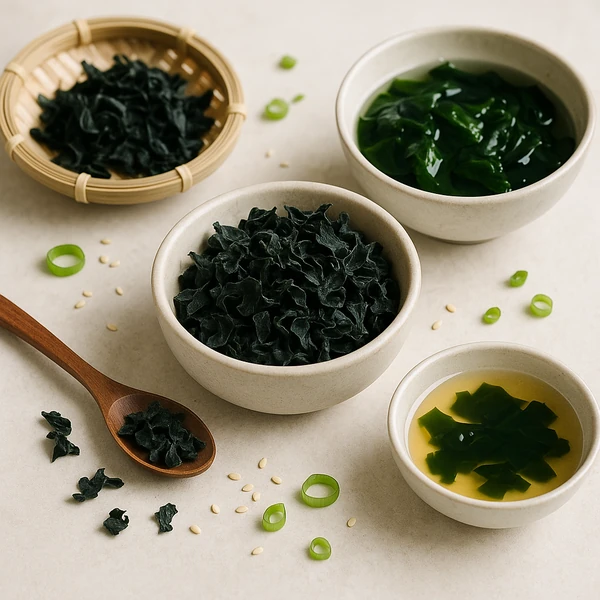
Wakame is a type of seaweed often used as a full ingredient – after soaking it softens and expands significantly. Because of that it’s great for soups (for example miso and ramen), salads and rice bowls, where it adds a gentle ocean flavor and a softer texture.
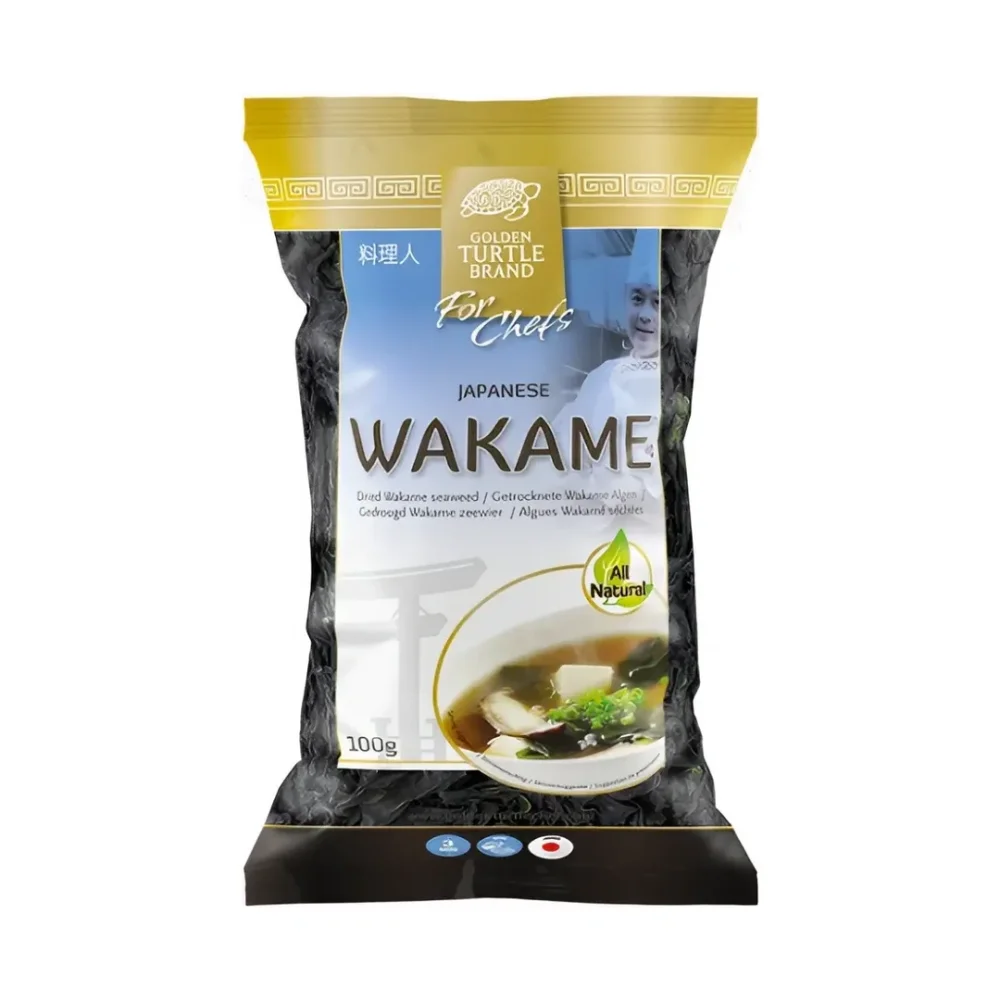
If you want to start with one specific product that’s easy to use across dishes at home, a good start is dried wakame, for example Golden Turtle Chef seaweed wakame dried.
Kombu: seaweed for broth and “depth”
Kombu is used mainly where you need to build flavor – typically in broths and bases. In practice it’s often combined with dried mushrooms (for example shiitake) because they complement each other well: seaweeds provide glutamates, mushrooms add other umami components.
It’s useful to think of kombu as a “kitchen foundation” – not as a sprinkle. If you expect it to behave like nori, the result is often disappointing.
Practical onboarding: how to start with dried seaweeds and how to use them
A simple rule applies to dried seaweeds: first clarify whether you want them as a flavor base, as an ingredient/texture, or just for finishing. How you work with them differs accordingly.
1) How much seaweed to use: start with less than you think
With dried ingredients it’s common that they change volume and intensity after contact with liquid. With wakame this is a key property: after soaking it softens and expands. Therefore a safe approach is to start with a small amount, test how it behaves in your dish, and only add more next time.
2) When to soak seaweed and when not to
- Seaweeds like wakame often make sense to rehydrate (soak) before use, because then they function as a full ingredient in soup or salad.
- Thin sheets and flakes (e.g. nori) usually work mainly as a finishing element – a sprinkle/coating – and it’s practical to treat them as a “final seasoning” on the plate.
- Seaweeds for broth (e.g. kombu) should be treated as a flavor base: their role is to build depth, not to create a biteable texture.
3) Where to use seaweeds in everyday home cooking (concrete examples)
- Soups and broths: seaweeds are often used as a building block of flavor. Wakame suits being an ingredient in soups (miso, ramen), kombu as a base for broth depth.
- Noodle dishes and rice bowls: nori works as a quick sprinkle/finishing touch, wakame as a soft ingredient that adds a marine note and contrast to meat, tofu or vegetables.
- Salads: wakame after soaking is also suitable for salads, where it fills the role of a standalone ingredient, not just seasoning.
- Quick pan dishes and stir-fries: in these dishes seaweed is more of a complement (contrast and finishing) than a main building element. If you want to include seaweed in quick dishes, it often works better as a sprinkle or part of the bowl after cooking rather than as the “base of the pan.”
4) How to choose dried seaweeds so you won’t be disappointed
Choosing well doesn’t automatically mean picking the most expensive option, but understanding what you expect from the seaweed and for which dish you really need it. Much disappointment comes from choosing the wrong type for a specific use (e.g. a sprinkle seaweed instead of a broth seaweed).
It also helps to distinguish whether you are buying a basic product (the seaweed itself for cooking), or a seasoned product/mixture. In practice there are also furikake-type mixes where seaweed is only one component – those are used differently than pure nori/wakame/kombu.
Common mistakes with dried seaweeds (and how to avoid them)
- Mixing up types: nori (sprinkle/coating) and kombu (broth base) are not interchangeable. If you swap them, the dish won’t be merely “a bit different,” but often wrong both in flavor and function.
- Using too much at once: with dried seaweeds that change volume (typically wakame), it’s easy to overdo it. A safe approach is to start with a small dose and adjust in subsequent cooking.
- Expecting the seaweed to be the “main star”: in many dishes it functions more as a building block of flavor, texture or contrast. If you push it to the foreground without the context of other ingredients, it can feel unbalanced.
- Not distinguishing pure seaweed vs. mixes: flakes and mixes (e.g. furikake) can be great for finishing, but they don’t serve the same function as seaweed for broth or as a standalone salad ingredient.
Takeaways from the article
- Dried seaweeds are important in Asian cuisines mainly as a building block of flavor (umami), as texture and as a finishing element.
- For home cooking it’s usually enough to know three terms: nori (sprinkle/coating), wakame (ingredient after soaking), kombu (broth base and for depth).
- The most common problem is not a “bad seaweed,” but the wrong type chosen for a specific use.
- For seaweeds that change volume, it’s best to start with a smaller amount and gradually find your own dosing.

Read next
If you want to explore this topic further, continue with these related blog guides and articles:
