


 Česky (CZK)
 Slovensky (EUR)
 Deutsch (EUR)
 Austria
 Belgium
 Bulgaria
 Croatia
 Denmark
 Estonia
 Finland
 France
 Germany
 Greece
 Hungary
 Italy
Italy Latvia
 Lithuania
 Luxembourg
 Netherlands
 Poland
 Portugal
 Romania
 Slovenia
 Spain
Spain Sweden










Gochujang, doenjang, and ssamjang: how to understand Korean fermented pastes
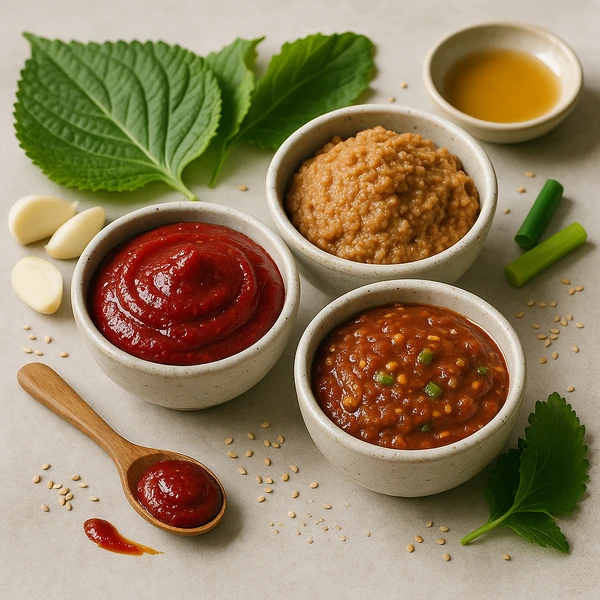
Korean “jang” – that is fermented sauces and pastes – are the flavor backbone of the entire cuisine. In practice, however, confusion often arises: gochujang, doenjang, and ssamjang look like “some dark pastes,” but each has a different role. In the article, we will show what to expect from them, how to use them in everyday cooking, and why it’s not worth mixing them up.
Why fermented pastes make such a difference in Korean cuisine
Fermentation is one of the key pillars in Asian cooking: it’s not just a historical method of food preservation, but mainly a way to umami, depth, aroma, and “finished flavor”, which cannot be simply replaced by salt or sugar. That’s why many dishes can work with a few ingredients – the fermented base is both a “flavor enhancer” and a binder.
In Korea, this is clearly seen in the pair kimchi and jang. Kimchi is a culturally rooted fermented vegetable, while jang (fermented sauces and pastes like gochujang and doenjang) forms the basic flavor backbone of everyday home cooking.
Where gochujang, doenjang, and ssamjang “fit on the map” of fermented bases
For orientation, it is helpful to know that in Asian cuisine there are several main groups of fermented bases: liquid seasonings (e.g., soy sauce), fermented vegetables (e.g., kimchi), fish and seafood bases (e.g., fish sauce), solid soy products (e.g., tempeh) – and also fermented pastes. Gochujang and doenjang belong to this category.
Important note: fermented bases are not “one universal sauce type.” On the contrary – precision is crucial. This applies across Asia: miso is not the same as doenjang, fish sauce is not the same as soy sauce. The same caution applies to Korean pastes.
Gochujang vs. doenjang vs. ssamjang: how their roles in dishes differ
Gochujang: fermented chili paste that adds depth and strength
Gochujang is a Korean fermented paste from the jang family. In cooking, it typically functions as a concentrated seasoning paste: in small amounts, it can give food fermentation depth and at the same time a “chili character.”
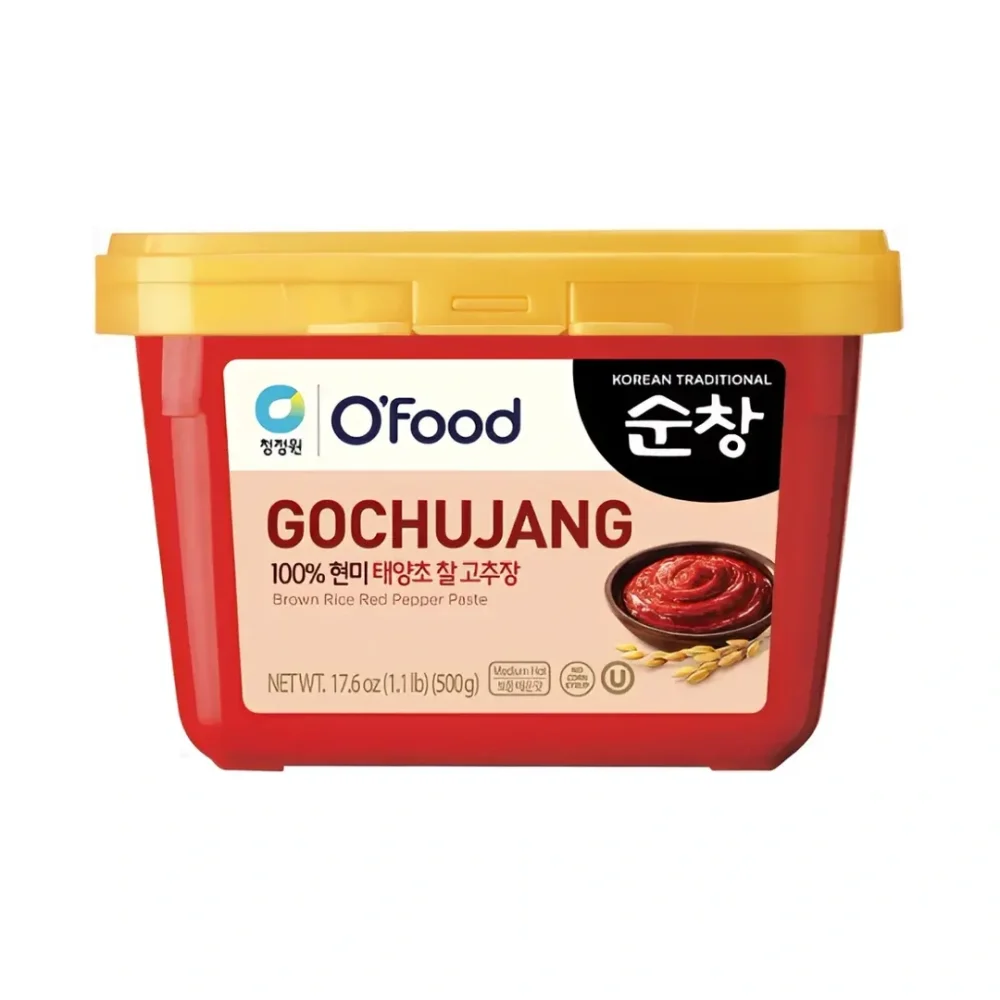
A practical example from home cooking: if you want to quickly create a more pronounced sauce or marinade, it makes sense to reach for gochujang and adjust the dosage according to spiciness. For a specific example, you can use O'Food Brown Rice Chili Paste Gochujang 500 g – even a small teaspoon can enhance the flavor of sauces, soups, or marinades.
Doenjang: fermented base for umami and “soup depth”
Doenjang is another of the Korean jang (fermented sauces and pastes). In practice, it is useful especially when you don’t just want to add salt, but quickly add umami and create a “base” that acts like a long-simmered flavor.
In cooking situations, doenjang falls among ferments that are useful:
- when you want to quickly add umami (alongside miso, soy sauce, or fish sauce),
- when you want a deep base for soups and stews (together with miso; gochujang rather in smaller amounts).
If you are starting with Korean pastes, doenjang is often a good “learning” tool: even a simple dish feels fuller thanks to it, without complicated cooking.
Ssamjang: when the name sounds familiar but can mean several things
Alongside gochujang and doenjang, the name ssamjangalso often appears. However, in the provided source materials, we do not have its exact composition or a clearly defined definition, so it is fair to keep a practical orientation: if you encounter ssamjang, treat it as a separate specific product type and do not try to automatically substitute gochujang or doenjang “by eye” just because it is a paste from the Korean circle.
🍳 How to start with pastes at home: dosing, usage, and simple combinations
The best path to fermented bases is not to start with extremes but with small and repeatable steps. This applies twice as much to pastes: they are concentrated and it’s easy to overshoot saltiness or intensity.
1) Start with one product and use it as a seasoning
Fermented products don’t have to be the “main ingredient” right away. Often it’s enough:
- 1 teaspoon per serving as a starting dose (with gochujang even less if you don’t know the spiciness),
- then taste and add more.
The point of fermented pastes is that they lift flavor even in small amounts – similar to how a few drops of fish sauce or a tablespoon of miso can add depth without long broth simmering.
2) When to use gochujang and when an “umami” base like doenjang
- I want spiciness + fermented depth: gochujang (typically in sauces, marinades, sometimes also in small amounts in the base of stews).
- I want umami without emphasis on spiciness: doenjang (typically in soups and stews as a “base”).
In practice, it’s useful to think like with Asian sauces in general: it’s not just that something is “dark and salty.” Ask yourself: what it adds to the dish – saltiness, umami, color, sweetness, or a final highlight?
3) How to “soften” pastes and why sesame oil is useful
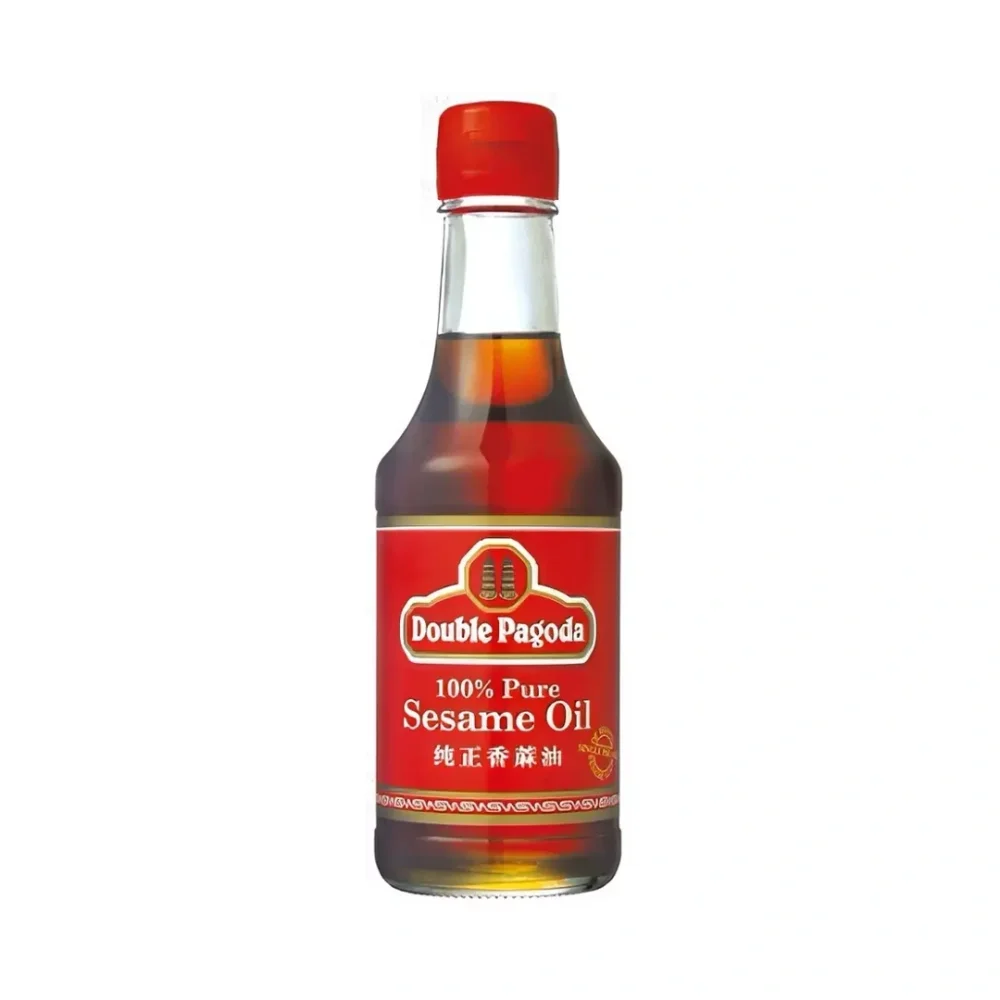
Fermented flavors are often strong and sometimes need their edges softened. A simple and practical step is to add a few drops of aromatic sesame oil as a finishing touch at the end. A fitting example is Double Pagoda Sesame Oil 250 ml.
The point is not to make the dish “sesame-flavored,” but to give it aroma and roundness – especially when working with a small dose of fermented paste and you don’t want to overload the flavor.
4) Where to try it in practice: noodles that absorb sauce well
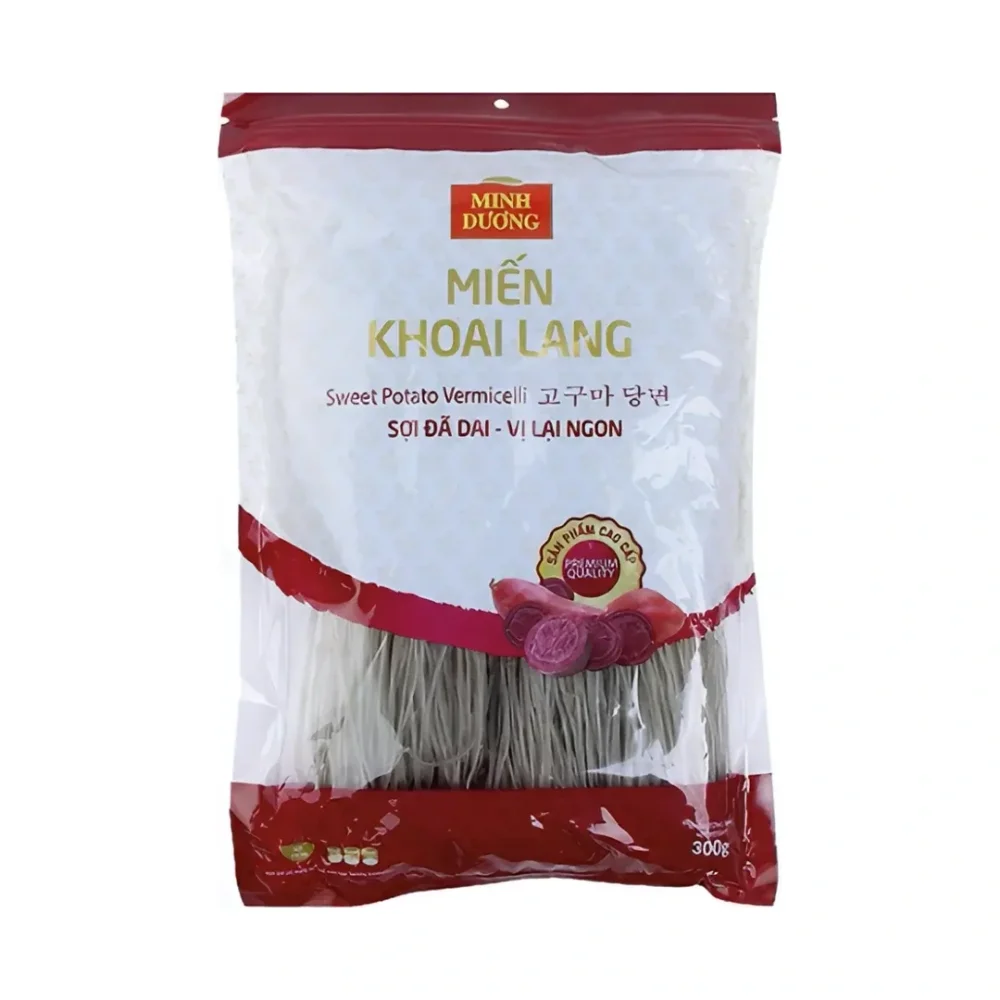
If you want to quickly check how the paste behaves in a sauce, ingredients that absorb it well are practical. Glass noodles turn translucent after cooking and “pick up” the sauce, so it’s easy to tell if you overdid the dosage. An example can be MD Sweet Potato Noodles 300 g.
It’s not a recipe, more a testing principle: make a small amount of sauce with a very cautious dose of paste, mix with noodles and gradually adjust. You’ll learn to “read” the intensity of the paste in real dishes.
💡 Common mistakes and what to watch out for
1) “It looks similar, so I’ll substitute it”
This is the most common error with fermented bases. Fermented products are not interchangeable: each is made differently, belongs to a different cuisine, carries a different flavor, and has a different role in a dish. Practically, this means if a dish lacks an umami base, a randomly chosen chili paste might not save it – and vice versa.
2) Overwhelming intensity (saltiness / spiciness) and how to fix it
Fermented pastes are concentrated. If you overdo it:
- dilute (add more sauce/broth),
- add neutral volume (rice, noodles, vegetables),
- soften with finishing (a few drops of sesame oil can help to round the flavor).
The most reliable prevention is simple: start with a small dose, taste, add.
3) Fermentation is not the same as “probiotics”
Fermented foods may contain live microorganisms and some can be sources of live cultures, but not every fermented food is automatically probiotic. In the kitchen, it’s more useful to think about fermented pastes mainly as flavor bases: umami, depth, the ability to “tie” a simple dish together.
4) Trying to build flavor only with “salt” instead of a fermented base
If you want fullness and longer aftertaste in a dish, just salting often leads to a flat salty result. That’s exactly the strength of fermented bases: they provide a more complex flavor without complicated cooking.
What to take away from the article
- Gochujang and doenjang are Korean fermented pastes from the jang circle and function as a flavor backbone: they can add depth and umami in small quantities.
- Gochujang is used when you want fermented depth combined with chili character; doenjang is a practical “umami base” mainly for soups and stews.
- Ssamjang does not have a clearly defined description in these materials – so treat it as a separate product type and don’t rely on free substitutions.
- Start with a small dose, taste and adjust: fermented pastes are concentrated and easy to overdo.
- Fermentation is primarily a culinary tool (umami, depth, “finished flavor”), not an automatic shortcut to probiotic expectations.

Read next
If you want to explore this topic further, continue with these related blog guides and articles:
