

 Česky (CZK)
 Slovensky (EUR)
 Deutsch (EUR)
 Austria
 Belgium
 Bulgaria
 Croatia
 Denmark
 Estonia
 Finland
 France
 Germany
 Greece
 Hungary
 Italy
Italy Latvia
 Lithuania
 Luxembourg
 Netherlands
 Poland
 Portugal
 Romania
 Slovenia
 Spain
Spain Sweden










Ube
💜 Ube: the purple ingredient that makes desserts instantly feel special
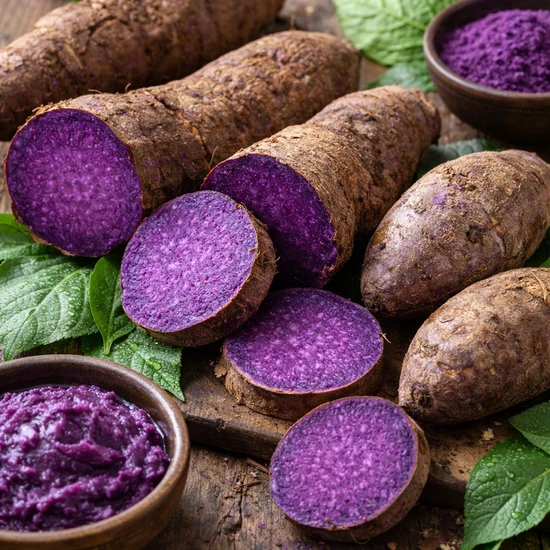
Ube is instantly recognizable: a vivid purple color, a gentle sweetness, and a dessert-friendly profile that loves coconut, dairy, and vanilla. It’s a classic in Filipino sweets—and it’s easy to use at home thanks to ube paste, ube halaya, extracts, and powders.
Shop Asian ingredients at Taste Of Asia. The quickest way to find ube products is search: ube.
💡 Tip: Want “café-style” ube? Use paste/halaya for body + a few drops of ube extract for that final aroma and color pop.
🕰️ Origin and background
Ube is especially associated with Filipino desserts. You’ll see it in ube halaya (a thick purple spread), ice cream, coconut-based sweets, and modern drinks like ube latte. Its visual impact is a big part of its popularity—one spoonful turns a plain cream or batter into something that looks made for a pastry display.
🧪 What ube is (and what it’s not)
Ube is a purple yam. It’s commonly confused with:
- Taro – different root, different taste and texture; often used in both sweet and savory dishes.
- Purple sweet potato – another ingredient with similar color but a different flavor and texture.
In recipes the swap can “work” visually, but if you want the true ube flavor, make sure the product is labeled ube.
👃 Flavor profile
- 💜 mildly sweet, creamy
- 🥥 pairs beautifully with coconut milk and dairy
- 🍦 vanilla helps round and lift the flavor
- 🌰 subtle nutty note
✅ Tip: A pinch of salt + vanilla often makes ube taste richer without adding extra sugar.
🧴 Common ube product forms
- Ube paste / ube jam / ube halaya – best all-round base for creams, fillings, ice cream, toast.
- Ube extract – concentrated aroma/color; use drop by drop.
- Ube powder – handy for mixes, baking, drinks; shines more with fat/milk.
- Frozen ube (when available) – great if you want to cook from scratch.
For a first try, paste/halaya is usually the easiest and most rewarding.
🍳 Best uses
🍦 Ice cream, creams, cheesecake
Stir ube paste into a coconut/dairy base and you instantly get color and flavor. No complicated technique needed.
🥞 Batters and baking
Extract adds aroma, powder/paste adds color and body. Always adjust sweetness at the end—some pastes are already sweetened.
☕ Ube latte
Warm milk or coconut milk + spoon of ube paste + vanilla. Sweeten to taste.
🍞 Spreads and layered desserts
Use halaya as a spread, a filling, or a layer in dessert cups with coconut cream and fruit.
💡 Tip: Ube loves fat (coconut, butter, cream). In very “watery” recipes the flavor can feel flatter.
✅ How to choose and store
- Form: fast results = paste/halaya; fine-tuning = extract; baking = powder.
- Sweetness: jams/pastes vary—taste first, sweeten later.
- Color: intensity varies; extract can boost it.
- Storage: refrigerate opened pastes/halaya; keep powder dry and sealed.
🛒 Our picks
🍮 Recipe: Ube halaya
A classic base you can use as a spread, a filling, an ice-cream swirl, or a latte starter.
Ingredients
- 300 g ube paste / ube base
- 400 ml coconut milk
- 200–250 ml sweetened condensed milk
- 30–50 g butter/ghee (or coconut fat)
- 1 tsp vanilla (optional)
- pinch of salt
- optional: a few drops ube extract
Method
- Combine ube base, coconut milk and salt in a pot; heat on medium.
- Add condensed milk and stir constantly; lower heat as it thickens.
- Stir in butter/fat and cook until thick and smooth (15–25 min).
- Finish with vanilla and optional ube extract; taste and adjust.
- Jar it, cool, then refrigerate.
✅ Tip: Cook a few minutes longer for a firmer, bakery-style filling texture.

Recommended products2
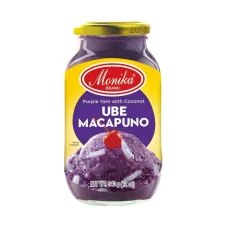
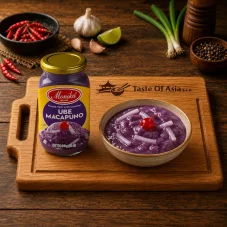
Monika Ube Macapuno jam with Coconut 340 g
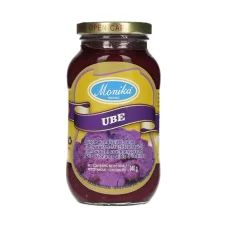
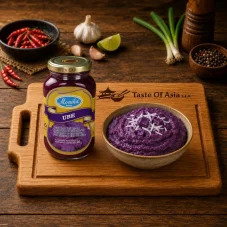
Monika Ube jam 340 g
Read next
If you want to continue with the same topic, here are more related articles to explore: