


 Česky (CZK)
 Slovensky (EUR)
 Deutsch (EUR)
 Austria
 Belgium
 Bulgaria
 Croatia
 Denmark
 Estonia
 Finland
 France
 Germany
 Greece
 Hungary
 Italy
Italy Latvia
 Lithuania
 Luxembourg
 Netherlands
 Poland
 Portugal
 Romania
 Slovenia
 Spain
Spain Sweden










Typical Chinese ingredients: what forms the basis of flavor and how to use them at home
"Chinese cuisine" is not a single uniform tradition, but a wide family of regional styles. Nevertheless, certain ingredients are repeated in it, without which home cooking with Chinese influences often sounds flat or "un-Chinese." In this guide, you will find an overview of the most typical ingredients, their function in dishes, the main differences, and practical tips for first use.
Typical Chinese ingredients are not just "exotic" items for the shelf. They are recurring building blocks of flavor (saltiness and umami, acidity, aroma, spiciness), textures (crispness of vegetables, softness of tofu, elasticity of noodles), and also basic side dishes (rice and wheat products). When you understand them as functional parts of the puzzle, you can much easier choose the right type and have a stable base for stir-fry, braising, soups, and quick pickling.
What is meant by "typical Chinese ingredients" and why they matter
Typical can be considered what recurs across Chinese cooking styles and regions: basic starches (rice and wheat products), a strong role for soy and fermented seasonings, aromatics (ginger, garlic, spring onion), typical acidity (black vinegar), specific spices (such as Sichuan pepper), and frequent use of dried, pickled, and fermented components.
It is also important to know that regional differences are not cosmetic: cooking is different in the north and in the south, different in coastal areas and different inland. Therefore, the goal is not to have "everything," but to have several correct basics that can be combined.
Starch as a base: rice, wheat products, and different types of noodles
South vs. North: rice and wheat are not the same
Simplified, it holds that rice dominates in the south, while wheat products dominate in the north. In practice, this means not only a different side dish but different "typical food shapes": alongside cooked rice, various noodlesappear, as well as wheat-based things like dumplings, buns, steamed buns, pancakes, and crepes.
🍳 Wheat vs. rice noodles: use determines choice
Noodles are not one category. For home cooking, it’s most practical to start with a reliable universal type and only then add more specialized shapes. It is important to know, what they are made of and what they are intended for – not all noodles behave the same in soup, in a wok (stir-fry), or in cold dishes.
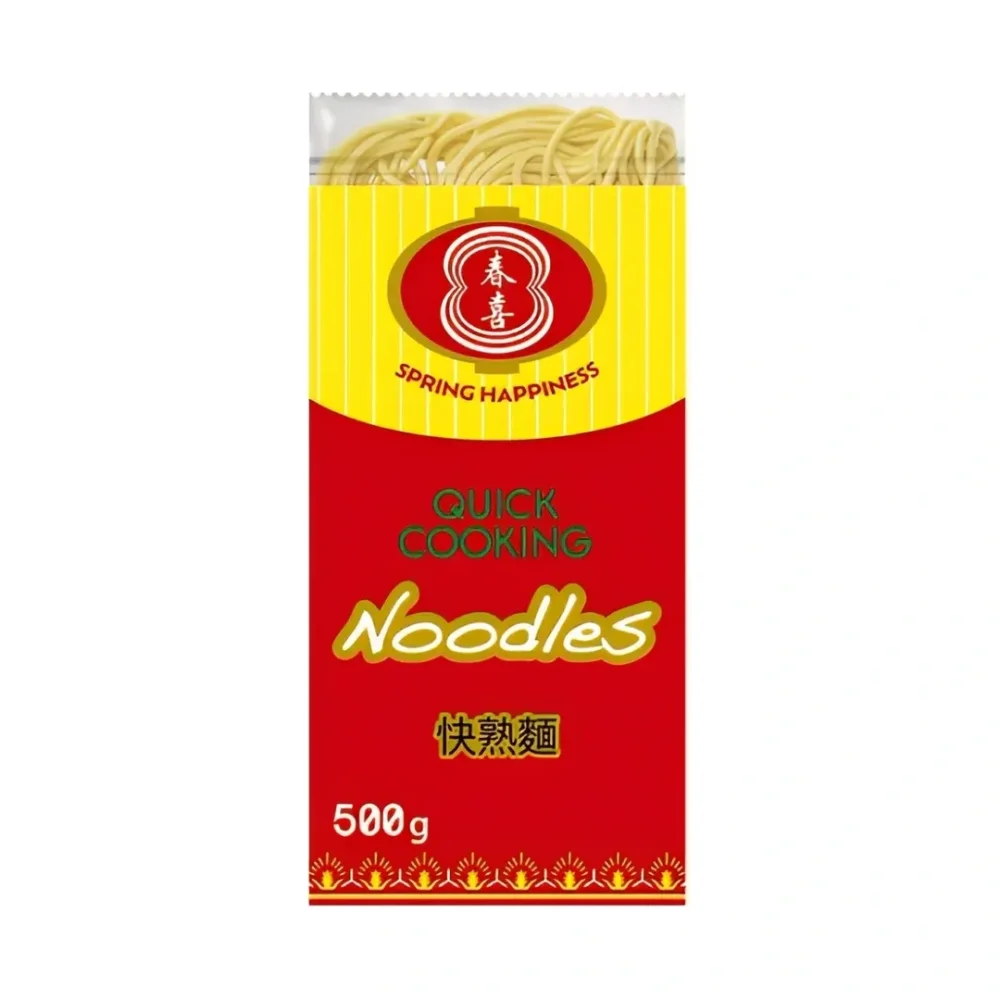
An example of universal wheat noodles that are quick to prepare and carry sauces and broths well could be Spring Happiness quick egg-free noodles.
Soy as the backbone of flavor and texture: soy sauce, tofu, and tofu skin
Soy plays a fundamental role in Chinese cuisine. It is not just one "soy sauce": soy appears as soy sauce, fermented pastes, tofu, tofu skin (tofu sheets), fermented tofu, and other products. Soy products often decide whether a dish has typical depth (umami) and the right "cooked" flavor.
Light vs. darker soy sauce: different roles in dishes
In Chinese-style cooking, often both light soy sauce and alongside it darker soy sauce for colorare worked with. For a home start, it's most important to distinguish that different types are not always interchangeable: one primarily serves for seasoning, the other can more strongly affect appearance and final tone.
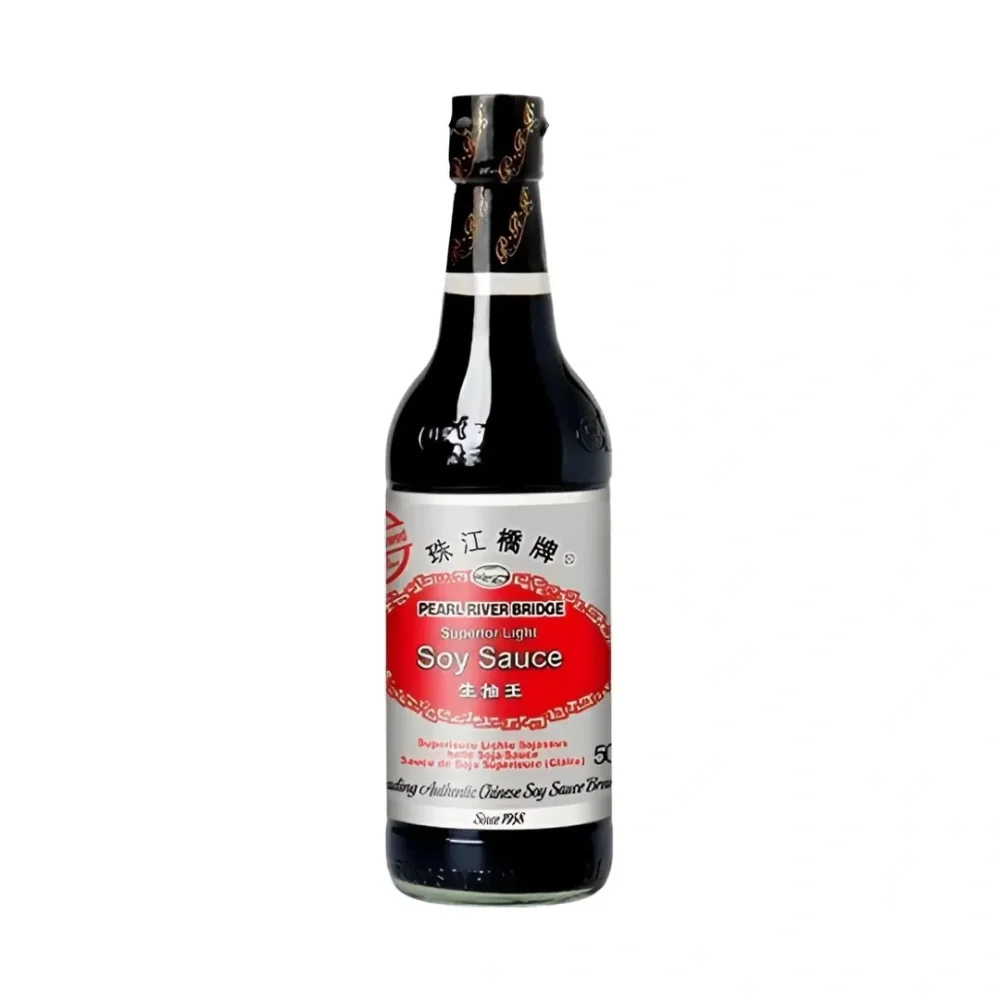
If you want to start with a basic, universal seasoning for stir-fry, noodles, and rice, an example of light sauce is P.R.B. soy sauce light Superior.
Tofu and tofu skin: typical ingredients that require proper preparation
Tofu and tofu skin are typical not only in taste but especially in texture. With tofu, often suitability for a specific technique and surface matter – for quick frying, it's a problem if the ingredient is too wet and starts to steam instead of fry. (This rule also applies for mushrooms or certain types of vegetables.)
👃 Aromatics and spices: ginger, garlic, spring onion, chili, and Sichuan pepper
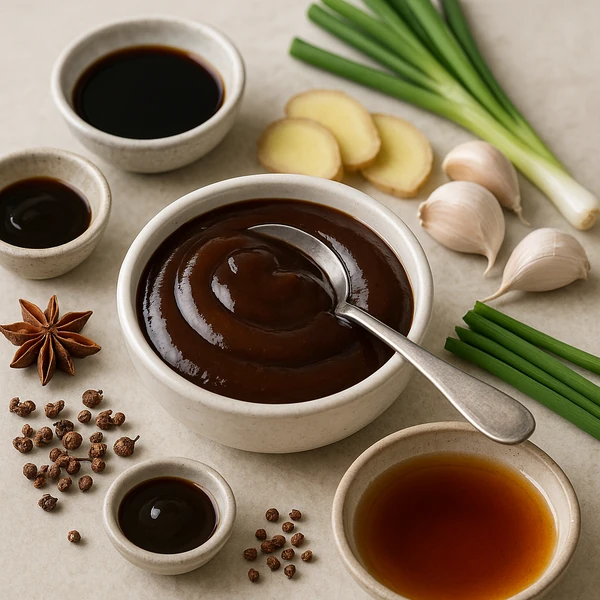
"Chinese aroma" in home cooking often does not come from one bottle but from well-handled aromatics. Typical bases include ginger, garlic and spring onion. In quick cooking (stir-fry), it's key to timing: aromatics can easily burn before the rest is done.
Characteristic spices also include chili and Sichuan pepper. Both ingredients should be dosed with respect to how strongly they influence the whole dish – and mainly not used as a "mandatory ingredient" in everything because different regions have different preferences.
👃 Acidity, aroma, and depth: black vinegar, rice wine, sesame oil, and fermented components
Besides saltiness and umami, acidity is often equally important in Chinese cooking – it can "open" the flavor and add contrast. A typical seasoning is black Chinese vinegar and generally more matured vinegars that can be distinct but do not have to taste sharp.
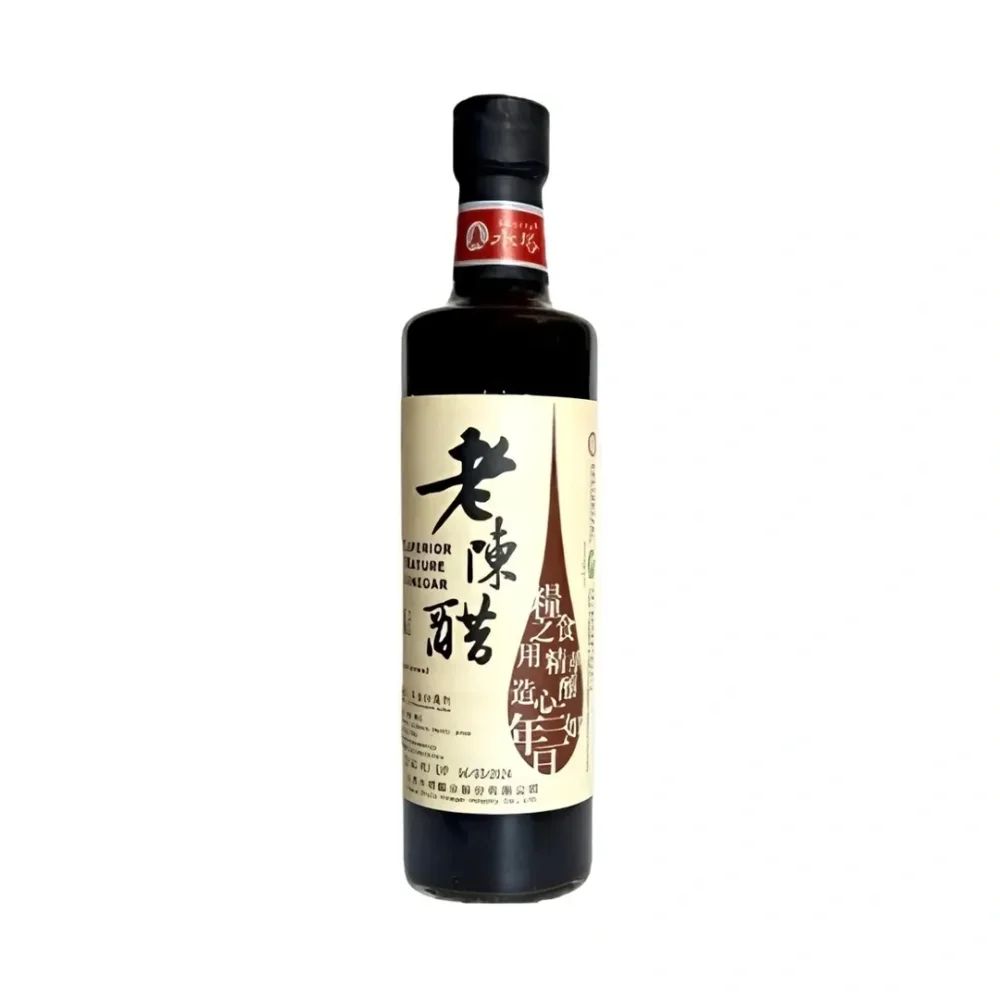
An example of a mature vinegar suitable for dressings, marinades, and quick pickling is Shuita 3-year matured vinegar.
In the same "family" is also sesame oil – often used as aroma and finish, not as a universal cooking fat. And then fermented pastes and pickled components, which give the dish specific depth and character (typically various pastes, and sometimes strong chili oils). This also includes sauces that serve as quick seasoning or glaze.
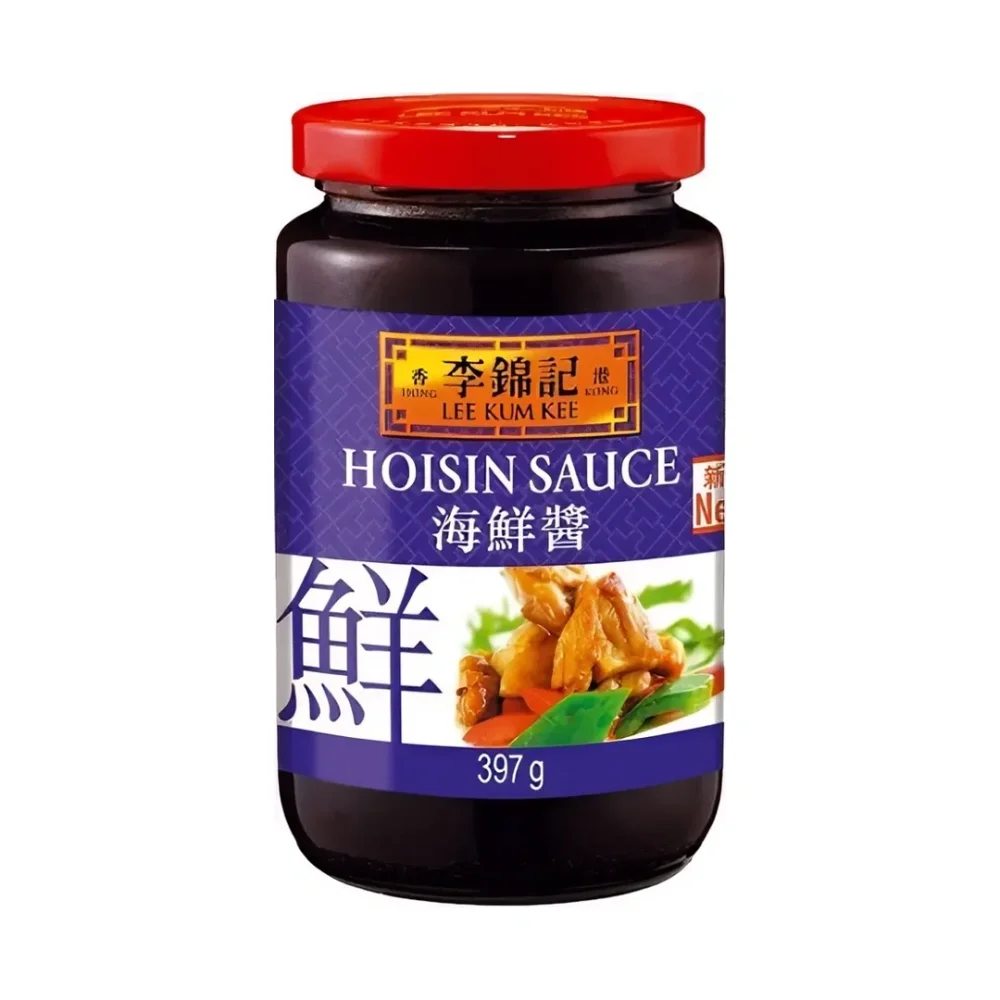
A well-known example is hoisin sauce, a thick sweet-salty sauce used as a dip, glaze, or quick seasoning. Specifically, for example, Lee Kum Kee hoisin sauce. Alongside it, Chinese-oriented pantries often also include oyster sauce as another umami base.
How to cook with these ingredients at home: practical onboarding for first attempts
The fastest way to a convincing result is to be clear about two things: (1) which technique you are cooking with and (2) the role of the specific ingredient. Chinese cuisine often relies on techniques like stir-fry (quick frying), steaming, braising, stocks and soups, deep frying, as well as pickling and fermentation.
1) Stir-fry in a wok: speed, order, and readiness decide
Stir-fry is typical for being fast and at high temperature. The result is influenced by:
- size and shape of pieces (the same ingredients behave differently depending on the cut: they soften at different rates, brown differently, and absorb sauce differently),
- mise en place (everything cut, measured, and prepared in advance),
- surface dryness (too wet tofu, mushrooms, or vegetables will steam rather than fry).
A practical help for home dosing: start with smaller amounts of seasonings and rather add more. For liquid bases like soy sauce, it's often sensible to go by teaspoons to tablespoons per portion depending on how much ingredients you have and how salty you want the dish. Add acidity (vinegar) carefully – a few drops or a small amount can change the whole dish.
2) Braising: when you want depth and a "cooked through" flavor
Many dishes rely on slow braising, often with soy sauce, sugar, spices, stock, or rice wine. Here it pays to think about the roles of individual components: soy sauce gives saltiness and umami, long heat softens edges and creates a more uniform flavor. Acidity (for example, Chinese vinegar) is then a good tool to "open" the result – rather at the end and in small doses.
3) Quick pickling: acidity as a shortcut to strong flavor
Pickling is important historically and flavor-wise in a Chinese context. For home use, a practical shortcut is quick pickled vegetables: the goal is not "fermentation for weeks" but a quick contrast to richer or umami dishes. More matured vinegar can be an advantage because it adds acidity but does not have to taste aggressive.
💡 What to watch out for: the most common mistakes in buying and cooking
- Mixing types within one category. A typical mistake is buying "some" soy sauce and expecting it to behave the same in everything. In practice, it's important to distinguish type and role (seasoning vs. color, basic vs. ready-seasoned product).
- Not reading the label and unclear function of the product. With sauces and pastes, it's worth distinguishing whether it is a cooking base, table sauce, dip, or a ready mix.
- "Noodles are noodles." They are not. If you don't know whether they are meant for soup, stir-fry, or cold dishes, the result can be soft, stuck together, or on the contrary hard.
- Using aromatic sesame oil as a universal oil. It often makes more sense as an aroma in small amounts at the end than as the main fat.
- Wet ingredients in the wok. If you throw ingredients straight into the pan after washing, they can easily start steaming instead of frying. For quick cooking, drying and working with surface dryness is essential.
- Too specialized purchase at the beginning. Warning signs are very narrow use, need for precise dosing, extremely strong flavor without universality, or large packaging of something you realistically won't use much.
What to takeaway from the article
- Chinese-styled cooking stands on recurring basics: rice and wheat products, soy and soy products, aromatics, acidity (typically Chinese vinegars), sesame oil, and fermented and pickled components.
- The most important differences are often inside one category (types of sauces, types of noodles) – it pays to choose according to function and use.
- For stir-fry, preparation in advance decides: cutting, order of ingredients, dry surface, and precise timing.
- Start with several universal basics and only then add specialties – results will be more certain and without unnecessary blind purchases.

Read next
If you want to explore this topic further, continue with these related blog guides and articles:
