


 Česky (CZK)
 Slovensky (EUR)
 Deutsch (EUR)
 Austria
 Belgium
 Bulgaria
 Croatia
 Denmark
 Estonia
 Finland
 France
 Germany
 Greece
 Hungary
 Italy
Italy Latvia
 Lithuania
 Luxembourg
 Netherlands
 Poland
 Portugal
 Romania
 Slovenia
 Spain
Spain Sweden










The taste of Chinese cuisine: how to recognize it, understand it, and bring it home
"Chinese taste" is not one universal sauce or one type of dish. It is a way of working with layers – saltiness, umami, subtle sweetness, sourness, spiciness, aromatic "warmth" of spices, and texture. When you understand what each layer does and how various techniques (wok, steaming, braising, broths) create it, you will navigate Chinese cuisine much more confidently – and stop confusing it with a few simplified European ideas.
Chinese cuisine is not a single uniform cuisine, but a large family of regional styles that developed in different climatic, agricultural, historical, and cultural conditions. Therefore, "Chinese food" can mean a quick stir-fry one time, a clear broth another time, a steamed dish, slowly braised meat, or a dish based on fermented foundations.
In this guide, we will focus mainly on the flavor profile: how flavor is layered in Chinese cuisine, why different regions emphasize different things, and how to practically "assemble" it at home without complications.
What to imagine under the "taste of Chinese cuisine" (and why it is not just one taste)
In Chinese cuisine, the combination of flavor layers is very important. Typical dishes may stand on saltiness, umami, light sweetness, sourness, spiciness, aromatic "warmth" of spices, as well as texture and aroma.
An important detail: not every dish uses all of them. Good Chinese food often does not rely on excess, but on precision – selecting several layers that support each other and intentionally keeping others in the background.
Practically, this means that one part of China may excel in spiciness, another in broth, another in sweet and sour profile, and elsewhere the emphasis is on the pure taste of the ingredient (for example fish or braised vegetables). When some "Chinese" dish doesn't suit you, it often doesn't mean you dislike Chinese cuisine – you just encountered a style that emphasizes different layers than you like.
Why Chinese cuisine is so diverse: regions, climate, and local customs
What people in Europe often imagine as "Chinese food" is actually just a small slice of a much broader world of flavors, techniques, and local customs. The north tastes different from the south, the coast differs from the inland – Sichuan tastes different than Cantonese/Guangdong cuisine.
Diversity is not a coincidence. When available ingredients, climate, preservation methods, and daily cooking rhythm vary long-term, it logically also changes what flavor is based on:
- Elsewhere, the standard of skill is the broth (and thus the depth, purity, and "length" of flavor).
- Elsewhere, the focus is on quick stir-fry, where the order of ingredients, piece size, and precise timing decide.
- Elsewhere, braising dominates, where layers build slowly: soy sauce, sugar, spices, broth, or rice wine.
- And elsewhere pickling and fermentation speak clearly, creating very specific aromatic profiles.
This "regional" view is also useful for home cooking: instead of looking for one universal Chinese sauce, you choose which type of flavor and technique you actually want to cook.
👃 Flavor layers in practice: saltiness, umami, sweetness, sourness, spiciness, aroma, and texture
To make Chinese flavor composition easy, it is good to think in layers and know what each is for. Below are layers that often appear in Chinese cuisine – and especially what to do with them at home.
Saltiness and umami: the "skeleton" of flavor
Saltiness in Chinese cuisine is rarely an end in itself. It is often a carrier of umami and depth – and if you overdo it, the food will feel heavy. It helps to dose salty components precisely and rather in parts.
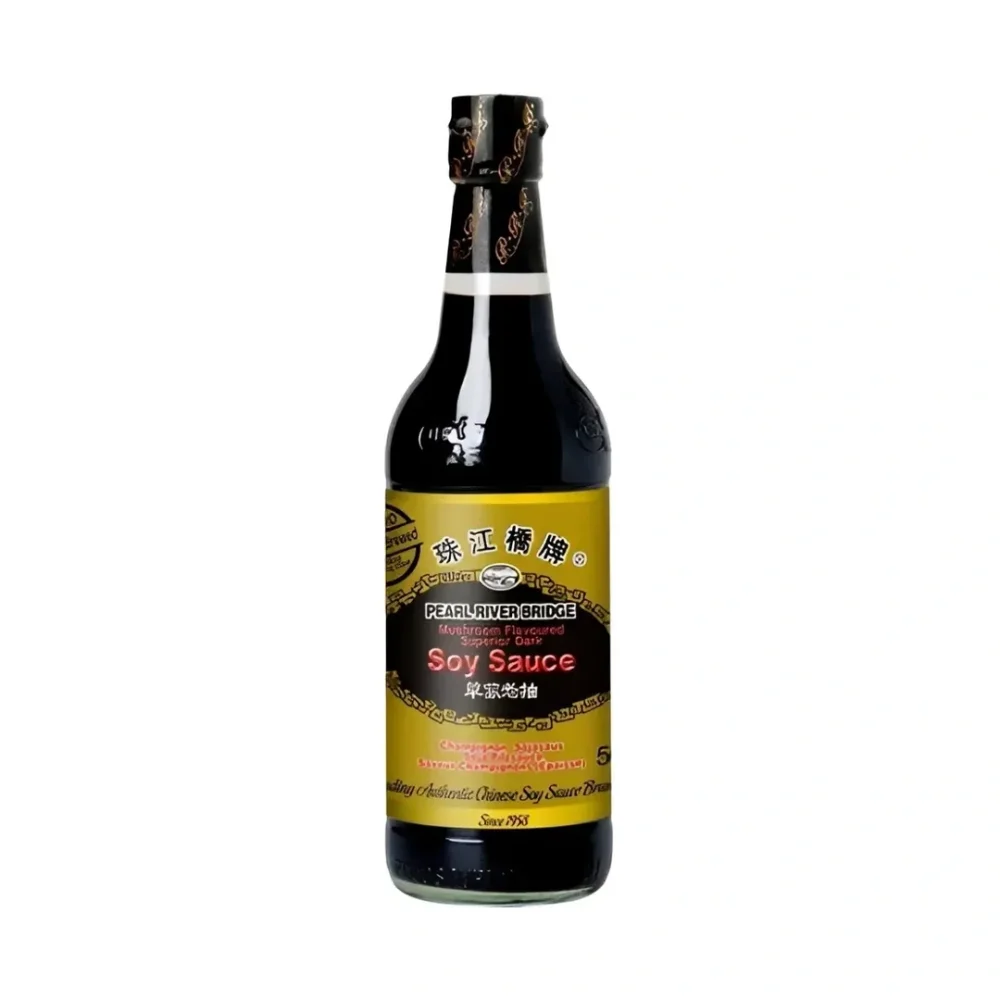
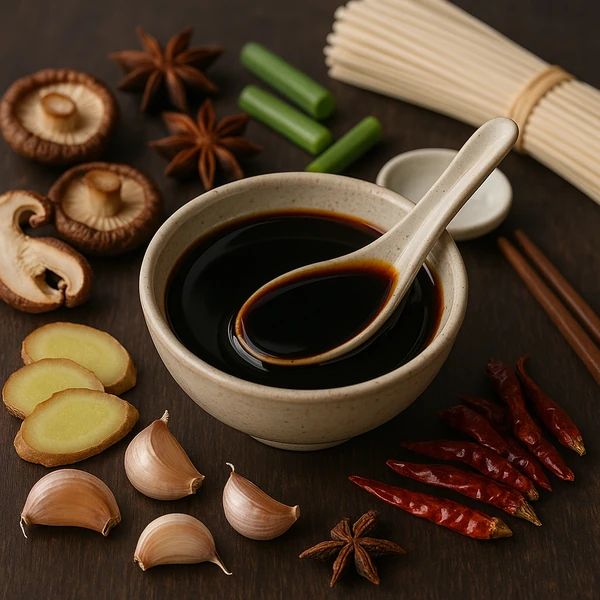
A practical example is dark soy sauce, which can add not only taste but also color and a "darker" tone. It is typically added in small amounts to wok dishes and marinades – more like a correction than as the main liquid. If you want to try this effect, for example P.R.B. dark mushroom soy sauce.
Another classic umami pillar is oyster sauces – they are often expressive, rounded, and can "soften" the dish toward a fuller taste. For orientation and style comparison, the guide oyster saucesis useful.
Light sweetness: balancing and a more "finished" impression
Subtle sweetness in Chinese food often doesn’t aim to make the food sweet. It rather does two things: softens edges (especially saltiness) and helps create a sense of "roundness" and connection.
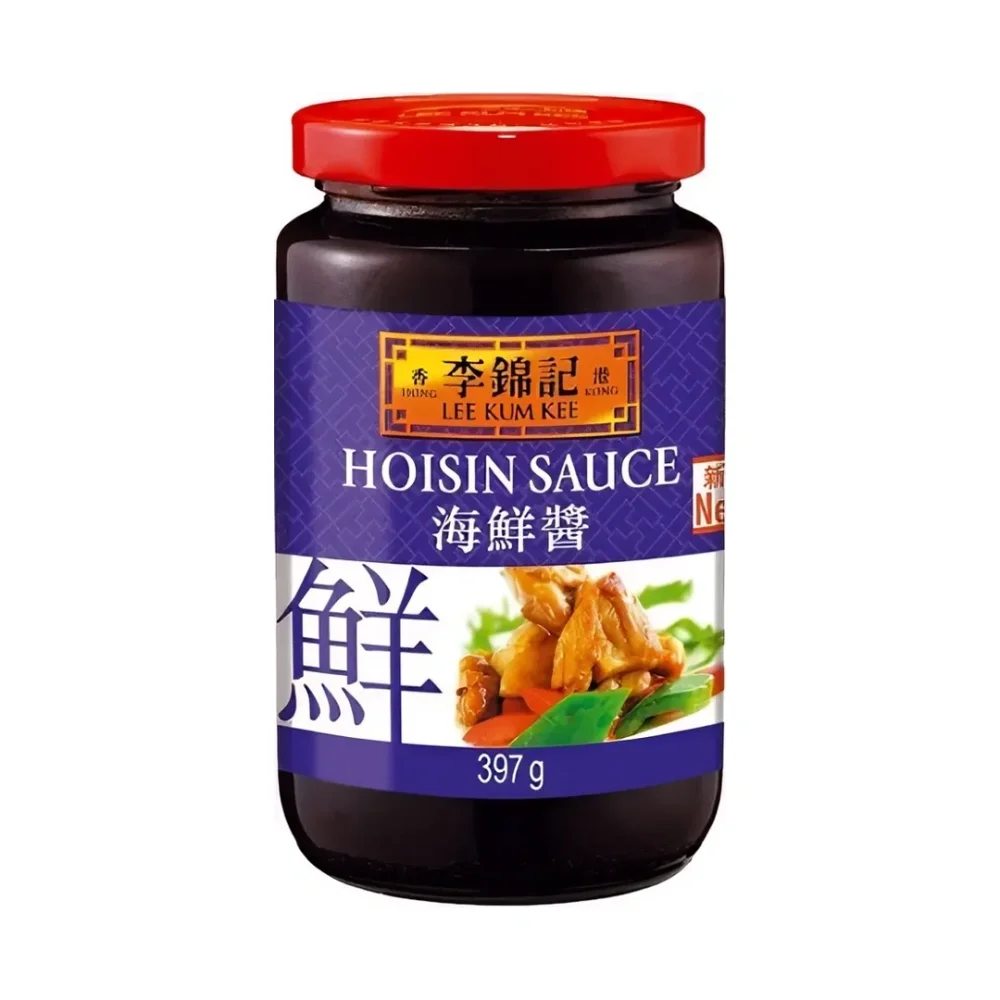
A typical sweet-salty profile seasoning is hoisin – it suits quick stir-fry dishes, marinades, and as a glaze or dip. If you want to start with one bottle, it is a good "bridge" to Chinese taste because it is clear and easy to use: for example Lee Kum Kee hoisin sauce. And if you want to first compare different style variants, the guide to hoisin sauceshelps.
Sourness: enhancing flavor without "vinegar shock"
Sourness in Chinese cuisine can "lift" and lighten a dish. It is often a precise seasoning – a small amount that makes a big difference.
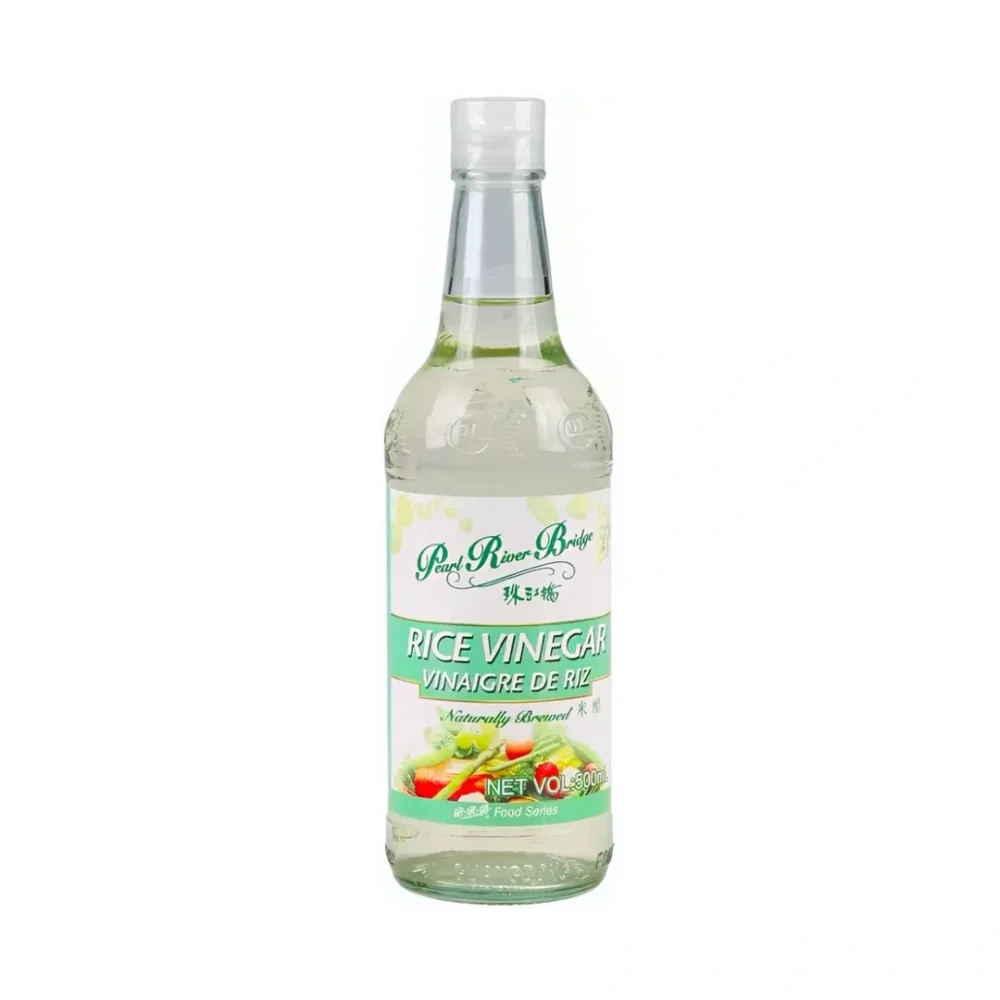
For gentler work with sourness, rice vinegar is suitable, which is typically less aggressive than common Western vinegars and combines easier with saltiness and umami. For dressings and marinades, you may try P.R.B. rice vinegar.
👃 Spiciness and aromatic "warmth" of spices: intensity is not a must
Some Chinese cuisines work significantly with spiciness, but it is not a universal trait of the whole country. Similarly, the "warmth" of spices (warming aroma) can be key in some dishes and almost invisible in others. From a flavor perspective, it is important to realize that spiciness is not a substitute for taste – it is one layer that must fit with the others.
A home rule that works: when you add spiciness, make sure the dish has umami support and at least a hint of balance (like light sweetness or sourness). Otherwise, the result will seem sharp and flat.
👃 Texture and aroma: why the same ingredients can taste "completely different"
In Chinese cuisine, taste is not just dealt with by the tongue but also by contrast of textures and aromas. Crispy vs. soft, juicy vs. well-cooked, smooth sauce vs. "dry" frying – all these decide if you perceive the dish as fresh and precise or as heavy and monotonous.
Techniques that create flavor: wok, steam, braising, broths, frying, and fermentation
The same seasoning behaves completely differently depending on the technique. Conversely, some techniques are so typical in Chinese cuisine that they alone create a "Chinese" impression.
Stir-fry (quick frying): speed and sequence are half the flavor
Quick frying at high heat is one of the best-known techniques. Key are speed, order of ingredients, piece size, and precise timing. Flavor builds quickly here: aroma and texture form first, then liquid seasoning – often just a short contact so the sauce "grips" the surface.
Home tip: for wok dishes, prepare ingredients in advance (cut, measured). If you start cutting while stir-frying, you lose control over timing and texture and flavor will fall apart.
Steaming: gentleness, juiciness, and pure flavor
Steaming is important especially in cuisines that want to preserve gentleness, juiciness, and pure taste of the ingredient. Flavor is then less "saucy" and more based on ingredient quality and precise seasoning.
Braising and stewing: layers that build slowly
Many Chinese dishes rely on slow braising – often with soy sauce, sugar, spices, broth, or rice wine. Here the layers unify over time: saltiness rounds off, sweetness softens, aroma develops, and the resulting flavor is usually "deeper" than in quick stir-fry.
These types of dishes often include Chinese cooking wine. It is useful not to confuse it with Japanese mirin: mirin is typically sweeter and glazing, while Chinese cooking wine places less emphasis on sweetness and more on aroma, deepening meat flavor, working with marinade, and a "warmer" tone in stir-fries and braised dishes. This is important in home practice so you don't expect the same effect from one bottle for everything.
Broths and soups: a measure of culinary skill
In some regions, broths are one of the most important measures of cooking skill. Broth flavor is usually delicate but layered – showing that Chinese cuisine is not only about quick frying.
Frying: texture and contrast
From light frying to deeper frying – texture, crispiness, and contrast are important. Even if the flavor base is similar, crispiness can completely change the perception of saltiness and sauce.
👃 Pickling and fermentation: specific aromas
Pickling and fermentation are important historically and flavor-wise. They help create very specific aromatic profiles – sometimes strong, other times just as a "undertone" that makes the dish recognizable.
How to start at home: simple flavor "building set" and product orientation
Beginners often want to start "Asian cuisine" as one package, but no such thing exists in practice. If you are attracted by Chinese cuisine, it works well to start by cooking style – typically quick pan dishes (wok entry), because you quickly learn to layer flavor on them.
Building set for first stir-fry (without recipe, but with specific logic)
For 2 servings of quick pan dishes, try to prepare 3–4 layers in advance and add them gradually. Guideline:
- Aroma + texture: first fry ingredients to create aroma and correct texture (it's not about sauce, it's about the base).
- Salty/umami: add a small amount of salty component and mix. With dark soy sauce, start really carefully (about a teaspoon or little more) – it often serves more for color and "tone" than actual salting.
- Rounding off: if you want a sweet-salty profile, add a small amount of hoisin or oyster sauce and briefly toss so the flavor connects with the surface of ingredients.
- Sourness as final correction: a few drops or a small amount of rice vinegar at the end can "open up" and lift the dish.
How to correct mistakes during cooking:
- Is it too salty? Soften with some sweet layer or add a neutral ingredient (like more vegetables) and briefly stir.
- Is it too sweet/heavy? A small amount of sourness (rice vinegar) helps or simply reduce the sweet layer next time.
- Is the flavor flat? Often umami (skeleton) or sourness (enhancement) is missing. Add in small steps so you don't overshoot.
Noodles: not every one fits every dish
With noodles, it is important to know what they are made of and what they are for. Not every noodle is suitable for soup, stir-fry, or cold dish – the difference is in texture after cooking and how they carry sauce or broth.
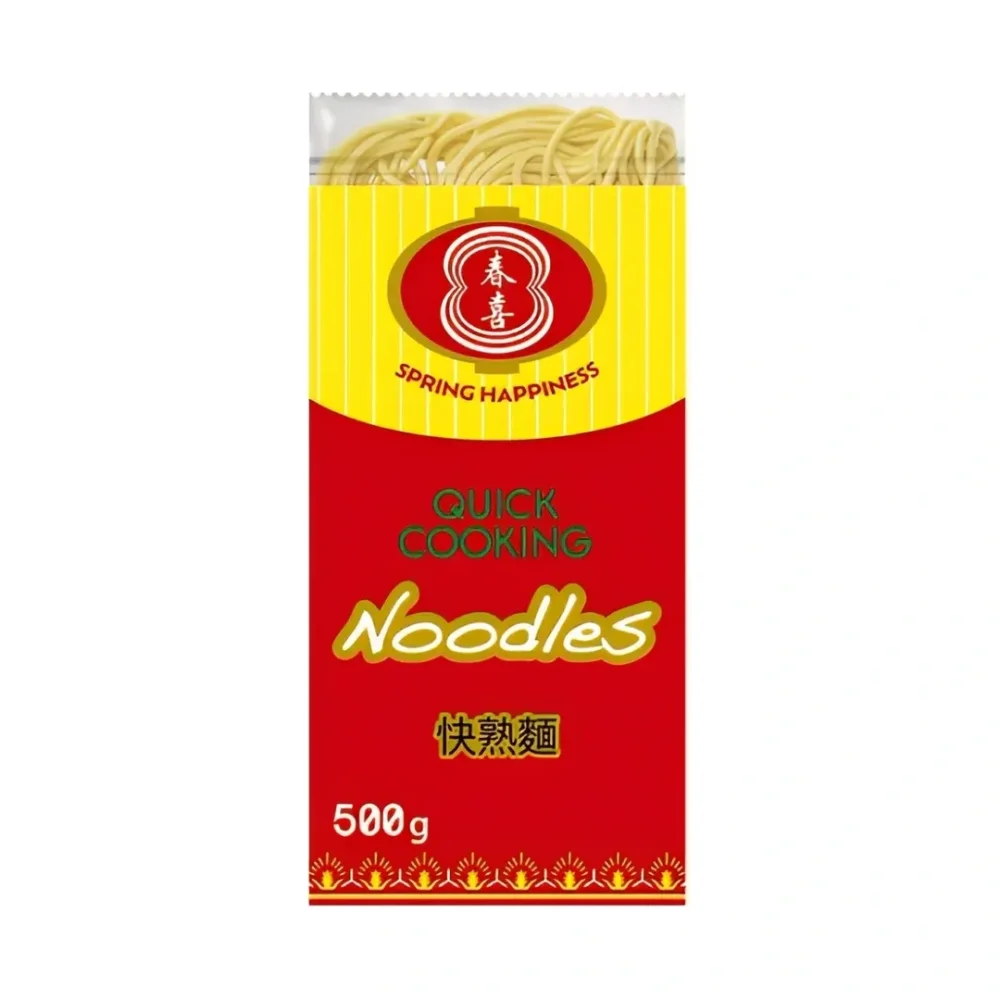
For universal home use (wok, soups, and simpler salads), wheat noodles with neutral taste are suitable. Practical examples are Spring Happiness quick egg-free noodles, which soften quickly and absorb flavor well. With such noodles, it pays to watch not to overcook – for most dishes it is better to leave them a bit firmer and finish cooking shortly in sauce or broth.
How to recognize a "good" base: cooking sauce vs. table sauce vs. ready mix
With sauces and pastes, it is helpful to distinguish whether it is a base for cooking, table sauce, dip, or ready mix. The practical difference is that a cooking base is intended for layering flavors and often used in small doses, while a table sauce or dip can be a "finished" flavor without need for further tuning.
Similarly with spices and aromatics, aroma is crucial – stale spices can completely change the result (often not by making it milder, but by making it flat and bland).
Most common misconceptions about Chinese cuisine (and how to quickly fix them at home)
- "Chinese cuisine is one." It is not – it is a collection of very different regional cuisines. Fix: instead of looking for one single "Chinese taste," decide if you want wok, broth, steam, or braising style.
- "Chinese food is mainly stir-fry and fried rice." That is just a small slice. Chinese cuisine includes a wide range of broths, noodles, dumplings, steamed dishes, braised dishes, and fermented bases. Fix: when you get bored with the pan, try steamed dishes or slow braising – the flavor will be completely different even with the same seasonings.
- "Everything is very salty and saucy." It is not. Many Chinese cuisines work with subtlety, lightness, and purity of flavors. Fix: start with a smaller amount of salty layer and add gradually; for milder dishes, give more space to the ingredient.
- "Sichuan = all of China." It is not – Sichuan is very famous but just one of many branches. Fix: if you don’t like one pronounced style, don’t generalize that about the whole cuisine.
- "Chinese cuisine is always very fast." Some dishes are fast, but others rely on long broths, slow braising, or laborious shaping. Fix: expect time for braised dishes – flavor builds differently than in wok.
A common practical mistake in home cooking is also confusing similarly named “rice wines”. If a recipe calls for Chinese cooking wine, expect aromatic effect for wok, marinades, and braising; if it calls for Japanese mirin, it typically means a sweeter and glazing effect. This is not cosmetic – it will show in flavor.
What to take away from the article
- "Taste of Chinese cuisine" is layering (saltiness, umami, light sweetness, sourness, spiciness, aroma, texture, and scent) – and especially precision, not excess.
- Chinese cuisine is a family of regional cuisines; the north tastes different from the south, coast from inland, and Sichuan is different from Cantonese cuisine.
- Technique creates flavor: wok is about timing, steam is about purity, braising is about depth, broths are about subtle layering and frying is about texture contrast.
- For a home start, the “building set” works: saltiness/umami + rounding off + sourness for correction (and dose everything in small steps).
- The biggest mistake is expecting one universal "Chinese" taste – instead, choose a style of dish and compose layers accordingly.

Read next
If you want to explore this topic further, continue with these related blog guides and articles:
