Česky (CZK)
 Slovensky (EUR)
 Deutsch (EUR)
 Austria
 Belgium
 Bulgaria
 Croatia
 Denmark
 Estonia
 Finland
 France
 Germany
 Greece
 Hungary
 Italy
Italy Latvia
 Lithuania
 Luxembourg
 Netherlands
 Poland
 Portugal
 Romania
 Slovenia
 Spain
Spain Sweden










Seaweed
🌊 Seaweed in Asian cooking: nori, wakame & more – instant umami
Seaweed is one of those “small” ingredients that quietly upgrades everything. It adds umami, a gentle ocean note and a savoury depth that makes soups, rice bowls and salads taste more complete — with almost zero effort.
Asian ingredients are available at Asian Food Shop. For seaweed, start here: Sea products.
💡 Tip: If a dish tastes flat, it often doesn’t need more salt. It needs umami — seaweed does that beautifully.
🕰️ A quick note on history
In Japan, Korea and coastal China, seaweed has long been a practical pantry staple: easy to dry, easy to store and insanely versatile. From soups and broths to snacks and sushi, it’s a classic “coastal ingredient” that turned into a modern flavour shortcut.
🧪 The seaweed types you’ll meet most often
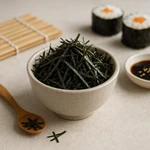
🍣 Nori (sushi sheets)
- thin sheets for sushi rolls, onigiri and quick toppings
- mild, slightly roasted, very “sushi”
- hates humidity — storage matters
🥗 Wakame (soups & salads)
- dried pieces that expand a lot after soaking
- milder and greener-tasting than nori
- perfect in miso-style soups, noodle soups and cucumber salads
🍲 Kombu (broth base)
- large dried sheets used for dashi-style broths
- deep umami without heavy “fishiness”
- great when you want depth with minimal ingredients
🔥 Roasted/seasoned seaweed snacks
- salty, often lightly spicy — snackable and addictive
- also works as a quick topping on rice bowls
- check salt/oil on the label
🧰 How to prep it (the easy way)
💧 Wakame: soak & go
- soak in cold water for 5–10 minutes
- drain, quick rinse, squeeze gently
- start small — it expands dramatically
🔥 Nori: keep it dry
- open → take → seal immediately
- if it softens, a very quick, careful pass over a dry pan can help
🍲 Kombu: slow warmth (for broth)
- often heated gently and removed before boiling
- goal: clean umami, not an overcooked sea taste
✅ Tip: Treat seaweed like seasoning. A little lifts everything; too much can take over.
👃 Flavour profile
- 🌊 ocean-salty, mineral notes
- 🍄 strong umami (especially kombu)
- 🔥 snacks add spice and extra savoury punch
- 🍣 nori is usually the gentlest and most “sushi-forward”
🍳 Where it shines in the kitchen
🍣 Sushi, onigiri & rice bowls
Nori is the classic. Even without rolling sushi, slice it into thin strips and sprinkle over rice with eggs, veggies or salmon.
🍜 Soups (miso-style, ramen-style) & broths
Wakame is a fast upgrade: soak it, drop it into hot soup, done. It instantly makes the bowl feel more “complete”.
🥗 Quick salads
Wakame + cucumber + rice vinegar + soy sauce + sesame oil is the core. Bright, savoury, and ready in minutes.
🍙 Topping (furikake vibe)
Nori (or crushed snack seaweed) turns plain rice into something you actually crave. Great on eggs and noodles too.
🔥 Snack & crunchy finishing touch
Seasoned seaweed is a snack, but it also doubles as a finishing topping when you want instant flavour.
🫶 Benefits (keep it practical)
Seaweed naturally contains minerals (often including iodine). Think of it primarily as a flavour ingredient — a little goes a long way. For snacks, keep an eye on salt and oil.
⚠️ Note: If you have specific dietary or thyroid-related concerns, enjoy seaweed in moderation and rely on the label.
✅ How to choose good seaweed
- Pick the format: nori sheets for sushi, wakame pieces for soups/salads, kombu sheets for broth, seasoned snacks for topping/snacking
- Storage matters: nori should be dry and crisp
- Snack labels: check salt/oil, and any allergens listed
- Allergens: always follow the packaging info
🛒 Our picks
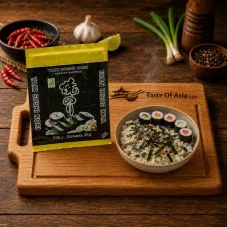
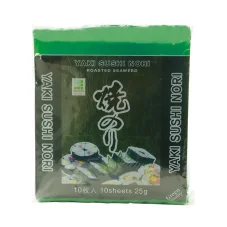
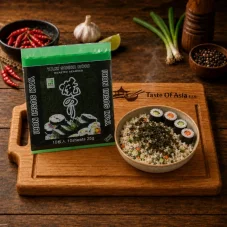
- JH foods Yaki Nori seaweed for sushi 25 g – classic sheets for rolls, onigiri and toppings
- JH foods Yaki Nori seaweed for sushi Gold 25 g – a “nicer sheet” for clean sushi presentation
- Golden Turtle Chef Dried Wakame seaweed 100 g – soups, salads, quick sides
- Taokaenoi Hot and spicy seaweed 32 g – snack or instant topping when you want heat
🥗 Recipe: Quick wakame sesame salad
Once you make this once, it becomes a routine. Fast, bright, savoury — perfect next to rice, sushi or noodles.
Ingredients
- dried wakame about 10 g
- 1 small cucumber
- 2 tbsp rice vinegar
- 1–1.5 tbsp soy sauce
- 1 tsp sesame oil
- 1–2 tsp sugar
- 1 tbsp sesame seeds (toasted if possible)
- optional: chilli, spring onion
Method
- Soak wakame in cold water for 5–10 minutes. Drain, rinse briefly, squeeze gently.
- Slice cucumber thinly. Optional: lightly salt for 5 minutes, then pat dry.
- Mix vinegar, soy sauce, sesame oil and sugar. Taste and adjust.
- Toss wakame and cucumber with dressing. Top with sesame, chilli and spring onion.
- Rest 5 minutes and serve.
✅ Tip: For extra umami, sprinkle a few thin nori strips on top right before serving.
❓ FAQ
How do I prep dried wakame fast?
Soak in cold water for 5–10 minutes, drain and rinse briefly. Start small — it expands a lot.
How do I keep nori crisp?
Seal it tight and keep it dry. Close the pack immediately after taking what you need.
Nori vs. wakame?
Nori is sheet seaweed for sushi/toppings. Wakame is for soups and salads after soaking.
Can I use seaweed outside Asian recipes?
Yes. Nori on eggs and rice, wakame in cucumber salad, kombu in broth.


Recommended products4
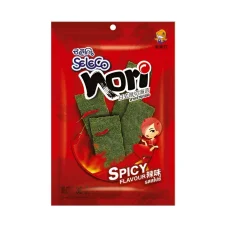


Seleco Seaweed seasoned and spicy 36 g

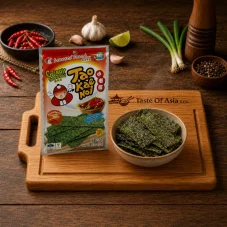
Taokaenoi Hot and spicy seaweed 32 g
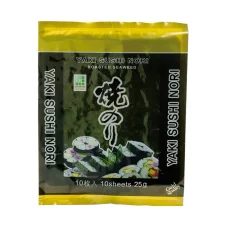
JH foods Yaki Nori seaweed for sushi gold 25 g
JH foods Yaki Nori seaweed for sushi 25g
Read next
If you want to continue with the same topic, here are more related articles to explore: