

 Česky (CZK)
 Slovensky (EUR)
 Deutsch (EUR)
 Austria
 Belgium
 Bulgaria
 Croatia
 Denmark
 Estonia
 Finland
 France
 Germany
 Greece
 Hungary
 Italy
Italy Latvia
 Lithuania
 Luxembourg
 Netherlands
 Poland
 Portugal
 Romania
 Slovenia
 Spain
Spain Sweden










MSG (Monosodium Glutamate): What It Is, How It Adds Umami, and How to Use It Well
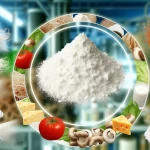
🧪 What exactly is MSG?
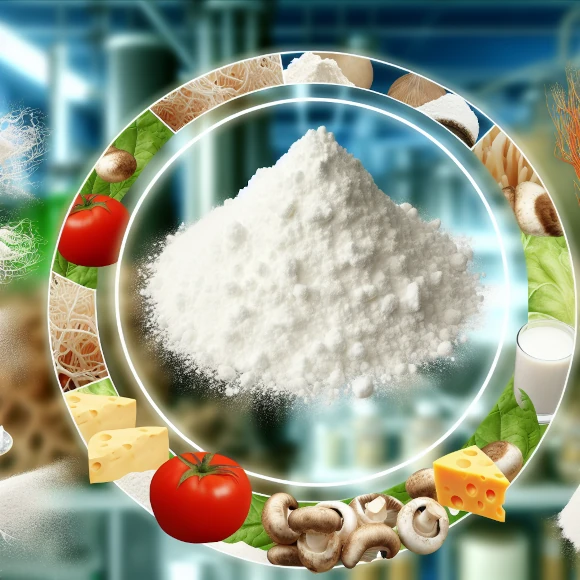
Glutamate is an amino acid (more precisely, the salt form of glutamic acid) that occurs naturally in many foods and in the human body. MSG (monosodium glutamate) is simply a purified, food-grade form of glutamate combined with sodium. In cooking, it’s valued because glutamate activates our receptors for umami—the savory taste associated with broths, aged cheeses, roasted meats, and well-fermented sauces.
In practice, MSG works like a “flavor amplifier”: it doesn’t make food spicy or salty by itself, but it makes existing savory notes taste fuller and more rounded.
🍜 Umami in real foods: where glutamate comes from naturally
Even if you’ve never added MSG to a dish, you’ve eaten glutamate many times. Natural glutamate is especially noticeable in foods that are ripe, aged, cured, dried, or fermented.
- Tomatoes (especially cooked or concentrated)
- Aged cheeses (such as Parmesan-style cheeses)
- Mushrooms (dried shiitake are a classic umami booster)
- Seaweeds like kombu (a foundation for Japanese dashi)
- Fermented condiments (soy sauce, fish sauce, miso)
- Cured meats and slow-cooked stocks
This is why so many traditional cuisines “discover” umami without ever naming it—techniques like drying, fermenting, and aging naturally concentrate glutamate.
🔍 Natural glutamate vs. added MSG: what’s the difference?
From a taste and chemistry perspective, the glutamate molecule is the same whether it comes from a tomato, a piece of kombu, or a spoon of MSG. The main difference is context and concentration:
- In whole foods, glutamate comes bundled with other flavors, aromas, and textures—so the result is complex and balanced.
- In purified MSG, glutamate is concentrated and fast-acting. That can be useful for consistency, but it also means it’s easier to overdo.
Used thoughtfully, MSG can be a handy tool—especially when you want rich savory flavor in quick stir-fries, soups, or vegetable dishes without relying on heavy sauces.
🧂 MSG and salt: can it help you use less?
MSG contains sodium, but it delivers a strong savory boost with a comparatively small amount. Many cooks use it to maintain satisfaction in dishes while reducing overall saltiness.
A practical approach at home:
- Season your dish as usual, but stop slightly short of your normal salt level.
- Add a small pinch of MSG, stir well, and taste again.
- Adjust with salt only if needed.
The goal isn’t to replace salt completely—salt and umami do different jobs—but to use each more efficiently.
👩🍳 How to use MSG in everyday cooking (without making food taste “processed”)
MSG is at its best when it supports existing savory ingredients rather than trying to create flavor from nothing. Think of it the way you’d use a stock cube—except you control the dose and don’t add extra aromas.
Where MSG shines
- Soups and broths (especially quick weeknight versions)
- Stir-fries with vegetables, tofu, chicken, or shrimp
- Noodle dishes and fried rice
- Vegetable-forward meals that can feel “flat” without long cooking
- Marinades (a tiny amount helps savory notes linger)
A simple starting dose
For home cooking, a helpful baseline is a pinch in a pan or roughly ¼ teaspoon for a family-size dish, then adjust. MSG is easy to overuse—start low, taste, and increase only if the dish still feels thin.
Pairings that naturally support umami
MSG plays especially well with ingredients that already contain nucleotides (like inosinate and guanylate), which create a well-known “umami synergy”:
- MSG + mushrooms (deep, earthy savoriness)
- MSG + meat or seafood (brothy, rounded richness)
- MSG + fermented sauces like soy sauce (layered umami—use less of each)
✅ Safety, myths, and sensitivity: what most people should know
MSG has been studied for decades and is widely considered safe for the general population when consumed in typical dietary amounts. You may have heard of “Chinese restaurant syndrome,” a term that came from anecdotal reports in the 1960s. Since then, controlled studies have not consistently shown MSG to cause symptoms in most people at normal food levels.
That said, individual sensitivity can exist, as with many ingredients. If you notice reliable reactions (for example, after large amounts on an empty stomach), the simplest solution is to reduce or avoid it—just as you would with any personal dietary trigger.
🧾 How to spot MSG on labels (and what “no MSG” really means)
On packaged foods, MSG may appear directly as “monosodium glutamate” or “MSG.” Some products labeled “no added MSG” can still contain naturally occurring glutamate from ingredients like yeast extract, soy sauce, tomatoes, or hydrolyzed proteins. The flavor can still be umami-rich—it’s just achieved through different ingredients.
🧊 Storage and common mistakes
- Store it dry and sealed: MSG is stable, but it can clump if exposed to humidity.
- Don’t use it to fix blandness caused by missing fundamentals: if a dish lacks acidity, aromatics, or proper cooking, MSG won’t replace them.
- Avoid heavy-handed seasoning: too much MSG can give food a one-note “savory powder” character. Use it like a finishing adjustment, not the main flavor.
💡 Quick usage idea (no full recipe)
For a fast umami boost in a vegetable stir-fry: cook garlic and ginger, add vegetables, season with a little soy sauce, then finish with a small pinch of MSG right before serving. The dish tastes fuller without needing extra oil or a lot of salt.
🛒 Our picks
- Ajinomoto Glutamate 454 g – a classic pantry size for frequent cooking.
- Racha Churos Glutamate 93 g – a compact option if you want to try MSG in small amounts first.
- Flying Goose Sriracha extra hot (without MSG) 455 ml – for those who prefer heat and want a chili sauce made without added MSG.
❓ FAQ
Does MSG taste like salt?
Not exactly. It contributes savory depth (umami). You’ll often still need some salt for balance, but sometimes less than usual.
Can I use MSG in vegetarian cooking?
Yes. It’s especially useful in vegetable soups, tofu dishes, and mushroom-based meals where you want more body and savoriness.
Is MSG the same as “glutamate” in tomatoes or cheese?
The glutamate that creates umami is the same molecule; the difference is that whole foods contain many other compounds that shape the final flavor.

Recommended products2
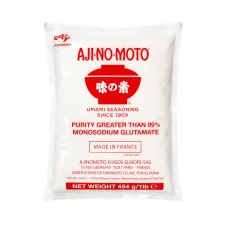
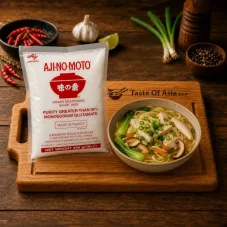
Ajinomoto Glutamate 454 g
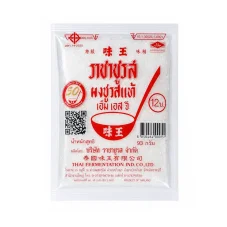
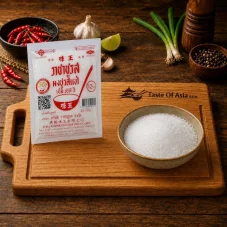
Racha Churos Glutamate 93 g
Read next
If you want to continue with the same topic, here are more related articles to explore: