


 Česky (CZK)
 Slovensky (EUR)
 Deutsch (EUR)
 Austria
 Belgium
 Bulgaria
 Croatia
 Denmark
 Estonia
 Finland
 France
 Germany
 Greece
 Hungary
 Italy
Italy Latvia
 Lithuania
 Luxembourg
 Netherlands
 Poland
 Portugal
 Romania
 Slovenia
 Spain
Spain Sweden










Most common mistakes when cooking with tofu: why it sometimes fails and how to easily turn it to your advantage
Tofu has a reputation as a "boring substitute" mainly because it is often treated as a single universal ingredient. But tofu is primarily about working with texture and how well it can carry the flavor of sauces, marinades, or broth. When you choose the right type (silken vs. firm) and understand the difference between "salting" and "glazing" through various styles of soy sauces, tofu stops being a compromise and becomes one of the most practical ingredients in the kitchen.
Tofu is not a "ready flavor": what it is and why so many people struggle with it
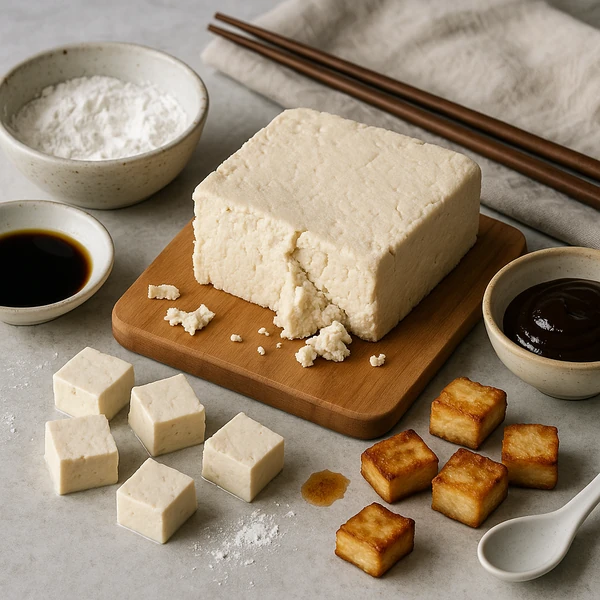
Tofu is made from soy milk: it curdles similarly to cheese production and the resulting mass is pressed into blocks. The degree of pressing (and thus water content) is the reason why tofu exists in several fundamentally different textures.
The key characteristic of tofu is not a "strong intrinsic flavor." On the contrary: its strength lies in excellent absorption of surrounding flavors. In practice, it functions as a carrier of sauce, marinade, broth, or spice. If you expect tofu to replace the taste of meat by itself, you will often be disappointed – not because tofu is bad, but because you are using the wrong logic with it.
At the same time, it’s good to keep a broader context in mind: tofu belongs to the large family of soy products, where alongside mild and neutral ingredients are also strong fermented products (for example tempeh, natto, or miso). These things are not interchangeable – and some “tofu mistakes” arise precisely because everything is lumped into one category.
Texture matters: silken vs. firm (and why there is soft and extra firm)
The most important basic division of tofu is simple: silken (soft) vs. firm (firm). In the kitchen, they behave so differently that choosing the wrong type is the fastest way to crumbling, watery, or "rubbery" results.
Silken tofu (soft, delicate) – great for soups, creams, and cold dishes
Silken tofu is very soft, smooth, and delicate. It is suitable for miso soup, delicate stewed dishes, cold dishes, dips, dressings, or desserts. On the other hand, it is not suitable for aggressive stirring or frequent turning in a pan – it is not "frying tofu," although sometimes it is used this way.
Firm tofu (firmer) – suitable for pan, wok, grill, and baking
The firmer the tofu, the more suitable it is for pan, grill, and baking. Firmer textures hold their shape better and can better withstand working with sauce during cooking. At the same time, "firmer" does not automatically mean "better" – it just means it has a different role.
Japanese terms you may encounter: kinugoshi and momen
In some contexts, you will also come across Japanese terms: kinugoshidofu (typically softer, closer to silken) and momendofu (typically firmer, closer to firm). This is not a marketing detail – it’s an abbreviation for the expected behavior of tofu in a pot or pan.
Yuba (tofu skin): "tofu" that behaves completely differently
When soy milk is heated, a layer forms on the surface that can be collected and dried. This creates yuba (tofu skin). It has a gently layered, flexible structure and is usually more concentrated in flavor than regular tofu. In Chinese and Japanese cuisine, it is used fresh or dried, sometimes rolled into knots, often as part of stewed dishes and broths. If you expect a “block of tofu,” you will be surprised – pleasantly so when you use it in the right style of dish.
Tempeh is not tofu: similar ingredient, different technology and different result
Tempeh comes from Indonesia and is made by fermenting whole (or partly peeled) soybeans. So it is not a product from coagulated soy milk like tofu. That’s why tempeh has a denser, “chewy” texture and a stronger, nutty to slightly earthy or tangy taste. Where tofu often takes on surrounding flavors, tempeh actively contributes to the dish – and that’s why people sometimes find it “works” where they expected tofu but actually needed a stronger ingredient.
Choose tofu based on the dish (not habit): quick guide for everyday cooking
The most useful question is not “Is it tofu?” but what you need from it in the dish: should it hold shape in the pan, be delicate in broth, or function as a creamy base?
When cooking delicate dishes and wanting a smooth texture
- Look for silken tofu and kinugoshi types.
- Expect the tofu to be more of a "component of the broth/sauce" than a browned element.
- Handle gently: less stirring, careful manipulation.
When cooking wok, pan, and grill
- Look for firm or extra firm tofu (firmer textures with lower water content).
- Expect tofu to carry sauce and marinade – that’s why it suits quick stir-fry styles.
When you want fermented depth (but not "tofu flavor")
- Don’t limit yourself to tofu: consider tempeh or fermented soy products like miso or doenjang.
- It’s important not to mix terms: natto is not "another tofu" and has its own logic of use.
Tofu as a carrier of flavor: how (not) to make marinades and sauces to avoid flat results
Because tofu excellently absorbs surrounding flavors, the quality of the result often depends on what sauce you use with the tofu – and whether you distinguish "cooking" sauces from "final flavor" sauces.
Most common source of confusion: soy sauce is not a single ingredient
Soy sauces are a wide family of seasonings based on soy, salt, and fermentation (or a mixture of fermented and technologically processed components). One name covers distinctly different styles (Chinese, Japanese shoyu, Korean ganjang, Thai varieties for wok, and sweet Southeast Asian types). They can only sometimes be swapped "piece for piece" – and it will always change the flavor and color of the dish.
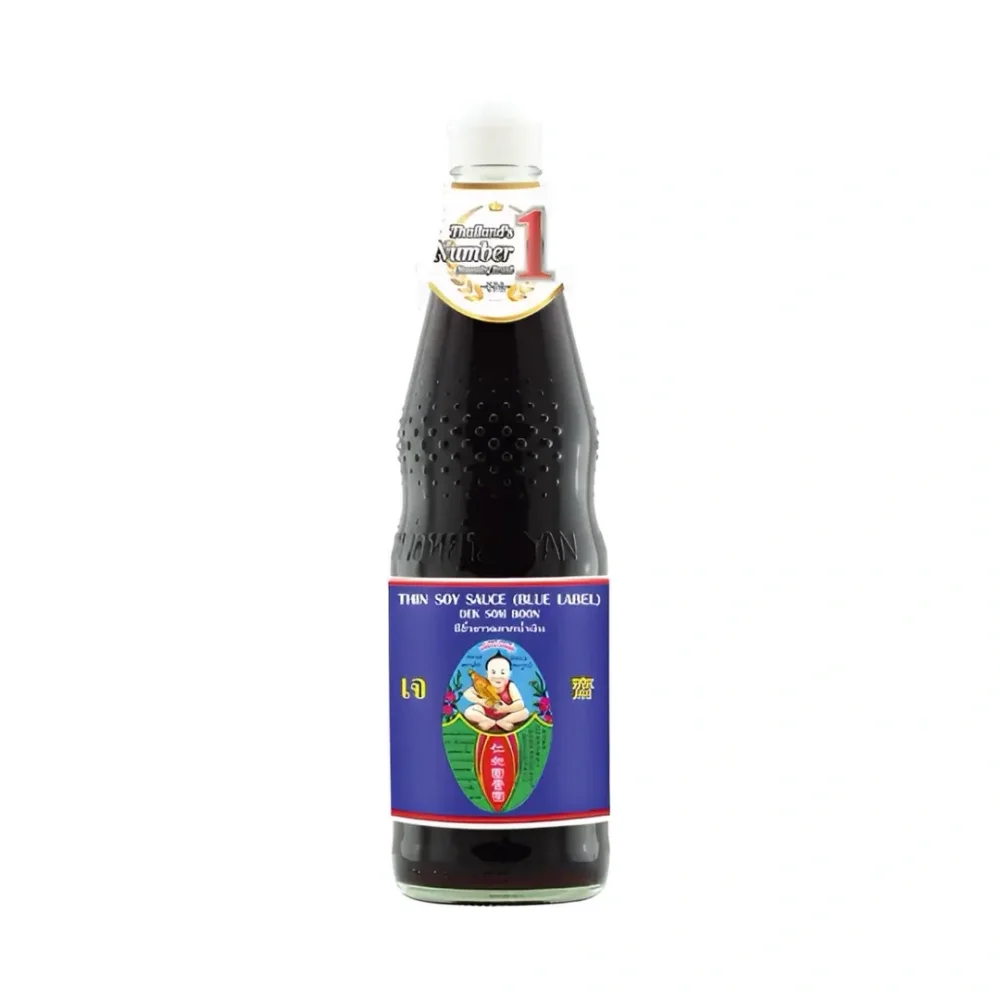
If you want to start simply and cook a quick stir-fry with tofu, it helps to have one straightforward working sauce at hand. An example of this style can be Dek Som Boon light soy sauce (recipe C), which is suitable for quick seasoning of woks, rice, noodles, marinades, and dips.
Don’t look for substitutes based on color: “light” and “dark” don’t mean the same everywhere
One of the most common mistakes with sauces (and thus with tofu) is substituting based on color. Dark sauce may not serve the same role as another dark sauce – and "light" on the label typically doesn’t mean a diet version but a different style or lighter color. To keep things clear, consider the entire topic of soy sauces first, and only then decide whether you are reaching for light or dark soy sauces according to purpose.
Beware of sweet-thick sauces: they are not just "another soy sauce"
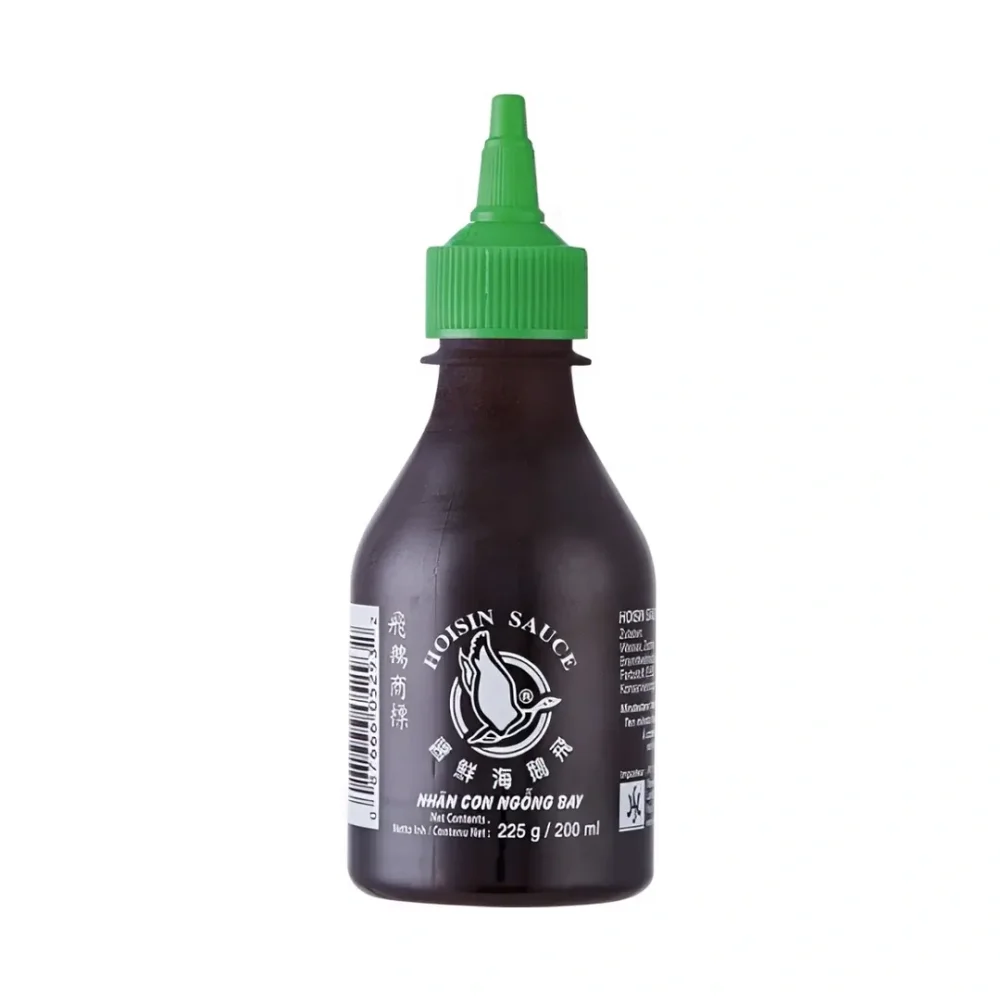
Another typical mistake: to use a sauce based on sweet-savory thickness where you mainly need pure saltiness and umami. The result tends to be heavy and unnecessarily sweet. A practical example is hoisin – it is excellent as a glaze, in stir-fry, or as a dip but is not a universal substitute for basic soy sauce. If you use hoisin, it's useful to think of it precisely as a "different logic"; an example of such style is Flying Goose hoisin sauce.
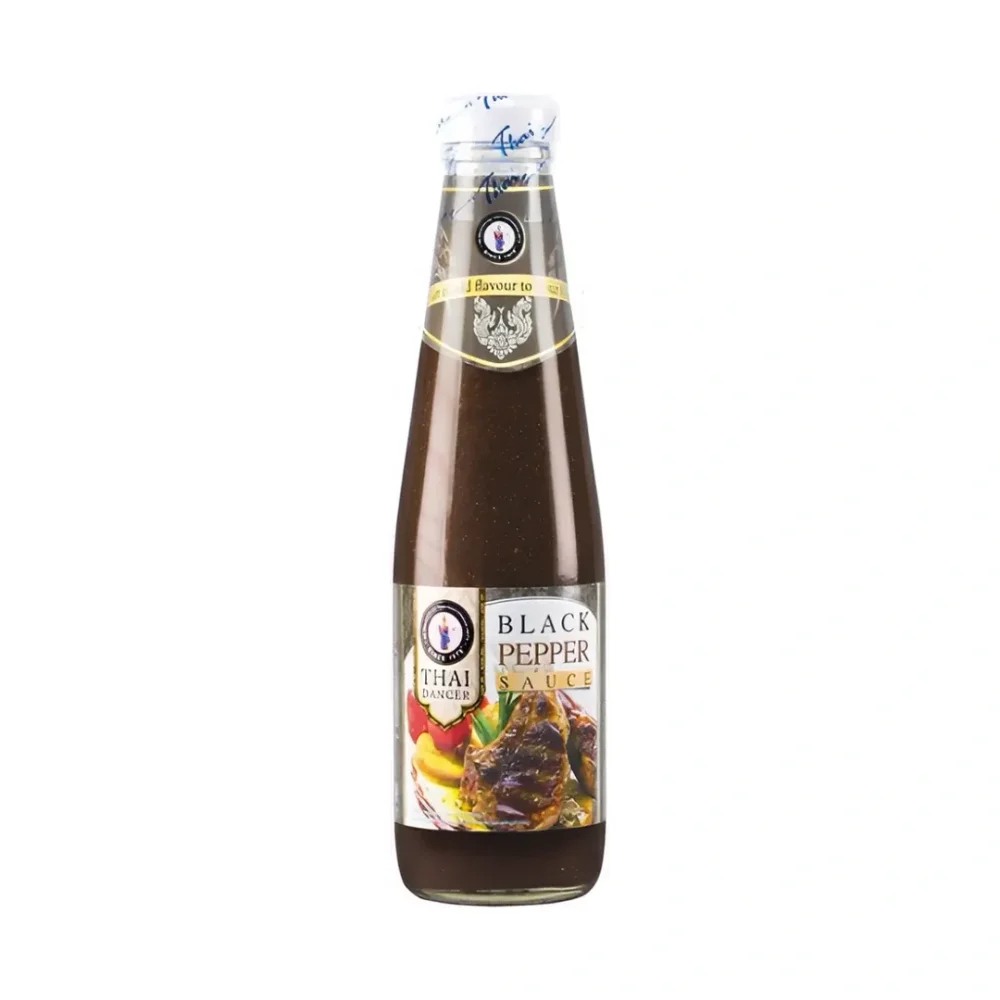
Similarly, other ready-made sauces aimed more at quick coating and final effect work the same way. For example, Thai Dancer pepper sauce for frying can quickly "set" tofu into a distinctive stir-fry style but does not make sense to be used as a universal salty base for everything.
Most common mistakes when cooking with tofu (and how to fix them)
1) “Tofu is all the same.” It’s not – the type of tofu determines the result
This is the basic misconception from which most other problems arise. If you want browned cubes for the wok and take silken tofu, you will struggle with crumbling. Conversely, if you want a delicate soup and choose extra firm tofu, the result may feel hard and “out of place” in the overall dish texture. The fix is simple: always clarify if tofu in the dish should be delicateor hold shape.
2) “The firmer, the better.” No – it depends on the dish
Firm tofu is great for pan, grill, and baking. But that doesn’t mean it is universally “better.” Soft tofu has its place in soups, cold dishes, desserts, dips, and dressing-related texture roles. The fix: don’t judge tofu on a "better/worse" axis, but on a right for the given techniqueaxis.
3) “If I don’t know, I’ll take silken tofu.” A common mistake especially for pan and grill
Silken tofu is great but delicate. If you put it where you will stir intensively, turn, or want to fry it until crisp, it often falls apart and releases water – and the problem is not in the tofu but in the choice. Fix: for pan and grill, prefer firm/extra firm; leave silken for soups, delicate stews, creams, and cold use.
4) Confusions in the “soy family”: tempeh is not tofu and natto definitely not
In European cuisine, soy products are often considered one group of "plant proteins," but technologically and flavor-wise, they are different worlds. Tempeh is a fermented block from whole beans, has a stronger taste and different texture; natto is also a fermented product but with its own specific texture and use. Fix: if you want a neutral carrier of sauce, stick to tofu; if you want a stronger “active” flavor component, it makes sense to consider tempeh – but don’t expect it to behave like tofu.
5) Using one bottle for everything: the sauce often decides whether tofu will be “flat” or interesting
It shows doubly with tofu because tofu absorbs flavor. One universal soy sauce can do a lot but not everything. Sometimes you need a sauce that mainly salts and carries umami, sometimes something that binds and rounds the dish, sometimes a sweet-salty thickness for glazing. Fix: at minimum, watch the difference between “working soy sauce” and “finished glaze/dip” and don’t mechanically switch them.
6) Substituting sauces based on color
“Dark” doesn’t mean the same in all cuisines and export terminologies – and sweet, dark sauces are not automatically “dark soy sauce.” Fix: always start with the sauce name and purpose, not just visual impression.
What to take away from the article
- The best way to understand tofu is as a carrier of flavor – sauce, marinade, or broth are often more important than trying to "highlight tofu itself."
- The crucial choice is texture: silken for delicate dishes (soups, creams, cold cuisine), firm/extra firm for pan, wok, grill, and baking.
- It’s not "the firmer, the better" – it’s "the right tofu for the right technique."
- Tempeh and natto are not tofu variants; they are different soy products with different technology, flavor, and uses.
- Soy sauce is not a single ingredient: mixing up colors and using one bottle for everything is a common reason tofu tastes flat or overdone.

Read next
If you want to explore this topic further, continue with these related blog guides and articles:
