


 Česky (CZK)
 Slovensky (EUR)
 Deutsch (EUR)
 Austria
 Belgium
 Bulgaria
 Croatia
 Denmark
 Estonia
 Finland
 France
 Germany
 Greece
 Hungary
 Italy
Italy Latvia
 Lithuania
 Luxembourg
 Netherlands
 Poland
 Portugal
 Romania
 Slovenia
 Spain
Spain Sweden










What to drink with Asian food: from real tea to modern drinks
Choosing the right drink for Asian food is not just a detail. A drink can soften the food, cleanse the palate between bites, or on the contrary, "overpower" the flavor of what you put effort into cooking. In this guide, you will mainly get oriented in teas (from green to dark/post-fermented) and modern Asian drinks like bubble tea or matcha latte – and most importantly, when each style makes sense.
Why the choice of drink with Asian food is more important than it seems
With Asian dishes, you often work with strong aroma, fermented flavors, and sauces that have both saltiness and depth. The drink is not just to "wash down" – it can help keep the food clear in taste. In practice, you will most often meet two worlds:
- real tea (from the tea plant) as a pure and functional drink with food,
- modern Asian drinks (ice, milk, syrups, textures), which are often a standalone experience and sometimes even a "drink as a snack."
🌶️ First orientation: what is "real tea" and what is more of an infusion or sweet drink
For real tea a drink from leaves or buds of the tea plant is considered Camellia sinensis. From one plant, green, white, yellow, oolongs, black, and dark/post-fermented teas can be produced – the difference is not a "different plant" but mainly processing (harvesting, withering, heating, rolling, oxidation, possible aging or microbial fermentation).
It is important that not everything commonly called tea is the same:
- Herbal and fruit blends are technically more infusions (tisanes) – they can be great, but taste-wise behave differently from tea made from the tea plant.
- Matcha latte mix with sugar is not the same as pure matcha – sugar and milk components can play a big role.
- Jasmine tea can be quality tea scented with jasmine flowers, but also simply a flavored blend. You can quickly tell at the table: naturally scented tea tends to be "cleaner" and less intrusive, while flavoring can overpower the food.
What are the main types of real tea (and how they differ in taste)
When choosing a drink for food, it helps to know what flavor profiles to expect:
- White tea is among the least processed. It is usually gentle and light, sometimes floral or sweetly fruity. It is not automatically "weak," just subtler than bold dark styles.
- Green tea has oxidation stopped early, so it often tastes fresher (grassy, seaweed, vegetable, or nutty tones). An important difference: in China, leaves are often heated on a pan, in Japan they are typically steamed – which is why Chinese and Japanese green teas don’t taste the same.
- Yellow tea is rarer. Simply put, it stands between green tea and a more gently "rounded" profile – often softer and less grassy.
- Oolong is a broad category between green and black tea: from light, floral, and creamy to darker, roasted, mineral or honey-fruity.
- Black tea is usually stronger and more robust in flavor than green and light oolongs.
- Dark / post-fermented tea is a separate world, where further aging or microbial fermentation comes into play.
For pairing with food, it is practical to think simply: the milder the food, the milder the tea; and the bolder, greasier, or "darker" the flavor of the food, the more it can handle stronger black or dark styles.
China as the cradle of tea: why the Chinese tea world is so vast
China is crucial historically and culturally for tea – it is here that the oldest documented tea tradition originated, and from China, tea spread further to Japan and other parts of Asia. The Chinese tradition works with six main categories: green, yellow, white, oolong, black, and dark.
In practice, one thing is very useful for everyday home pairing: Chinese green teas are often gentler, nuttier, or "chestnut-like" compared to many Japanese styles. For many people, they are therefore a welcoming introduction to the world of green tea.
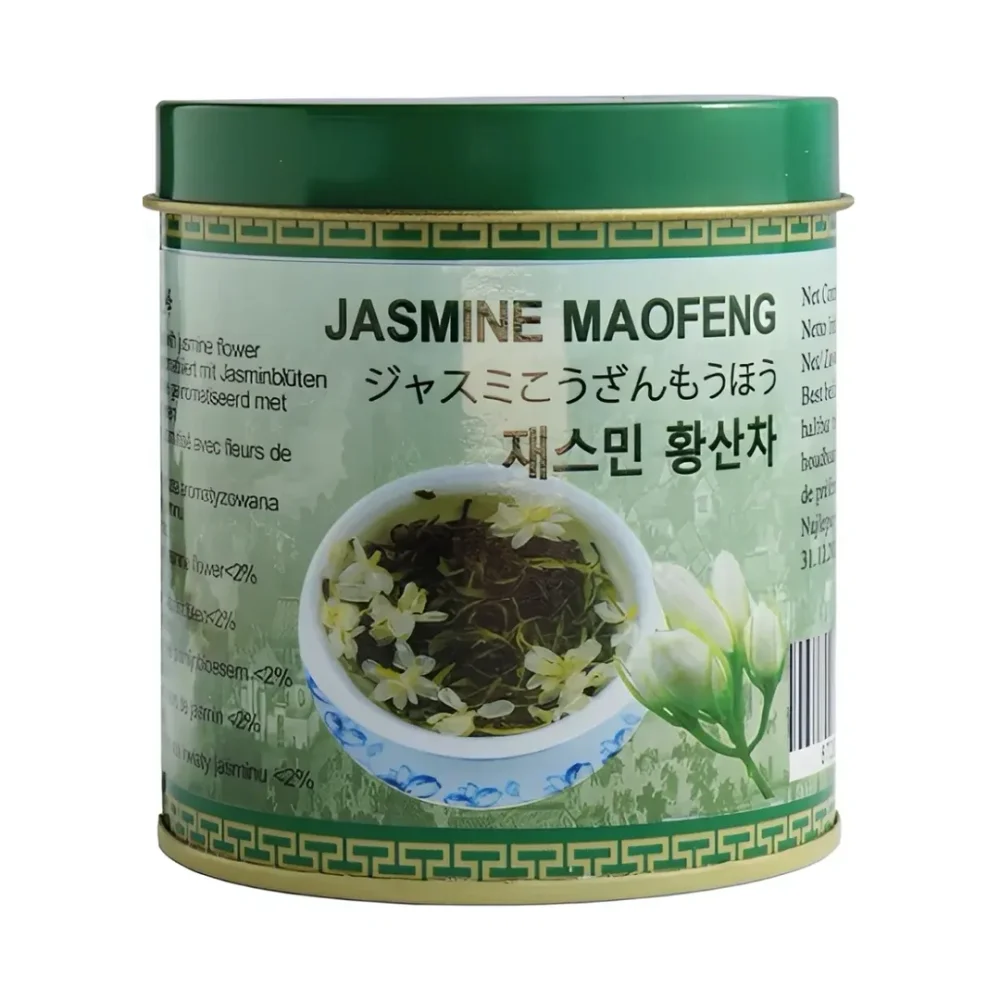
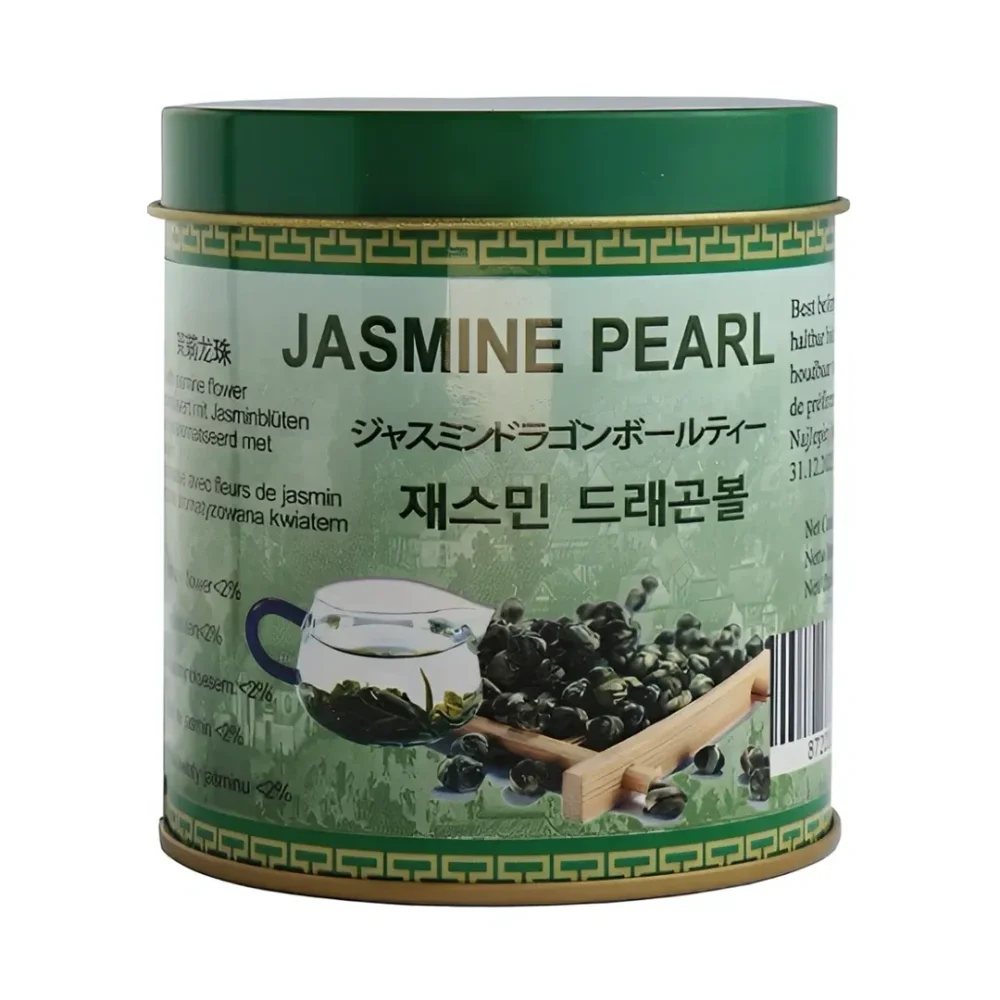
Another classic is jasmine tea. If you want a very accessible tea with food, jasmine often works as a "bridge" – it is aromatic but still based on tea. As specific examples of two common styles, you can try the loose-leaf green jasmine tea Golden Turtle Green Tea Jasmin Mao Feng or jasmine green tea shaped into pearls Golden Turtle Green Tea Jasmin Pearl. Even with similar names, they can differ in character and intensity – so it makes sense to try and compare.
Modern Asian drinks: when they suit food and when it’s better to treat them as "dessert"
Modern Asian drinks are not just "something sweet with ice." It's a broad world where traditional tea culture meets urban street food, with texture (pearls, jelly, aloe…), ice, and often a dairy component playing a big role. Importantly, a modern drink is often not just an accessory to food – it is a standalone product with its own identity.
Typical features of modern Asian drinks:
- strong connection to a tea or fruit base,
- frequent combination of traditional ingredient with modern service,
- a big role of texture,
- possibility of personalization (sweetness, ice, toppings, type of milk),
- emphasis on "drink as snack" – drink as a small snack.
If you want a modern drink with your meal, it often works better when it is less sweet and rather refreshing. On the contrary, very sweet and milky versions (typically some milk teas or latte styles) practically behave more like a dessert after the meal.
As a useful way of thinking, you can use the simple “finished drink model,” which is based on five layers: base (tea/fruit extract), sweetness, temperature (hot/iced), texture and aroma/identity (e.g., matcha, jasmine, yuzu/yuja, plum). When a layer is missing, the drink feels “just like sweet tea.” When balanced, it feels complete.
🍳 How to choose a drink for Asian food at home: concrete and practical steps
1) First, decide what role the drink should have
- I want it not to interfere with the food → go for pure true tea (often green tea, lighter oolongs, possibly jasmine).
- I want it to refresh and “lift” the flavor → citrus and fruity directions work, often in iced form (especially when the food is flavor-rich).
- I want the drink as an experience → consider modern drinks (bubble tea, milk teas, matcha latte) more as a separate course and watch the sweetness.
2) With tea, it’s worth learning to read the packaging (it’s half the orientation)
With teas, it makes sense to watch several specific points:
- Origin (country and region): “Japanese green tea” is something different than “matcha-style tea.”
- Type of tea: green, oolong, black, dark, matcha, genmaicha or flavored tea. One word often decides more than the picture.
- Composition: pure tea is usually simple; with blends, watch if aroma, sugar, or milk component is added (typically in some “matcha latte” blends).
- Form: loose leaf tea gives more room to the whole leaf and greater control; bags are convenient but often hide smaller particles.
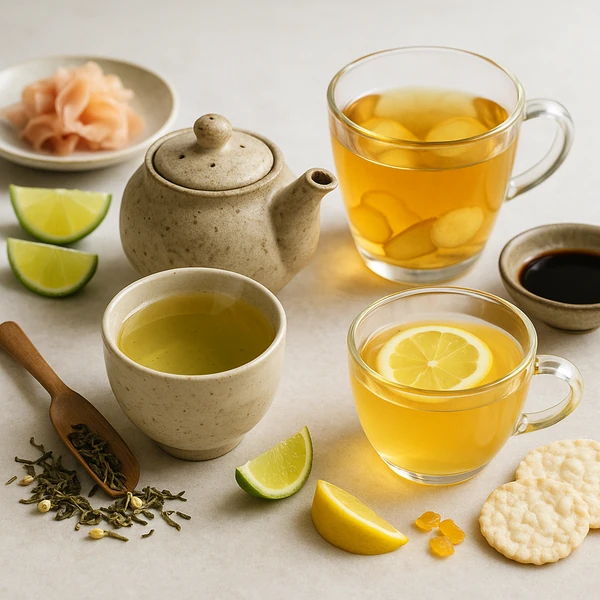
3) Quick citrus and ginger “teas”: when you want something easy (hot and iced)
In a modern home setting, speed often wins. This is exactly where concentrates come in handy, which flavor water without complicated preparation and work in both warm and cold versions.
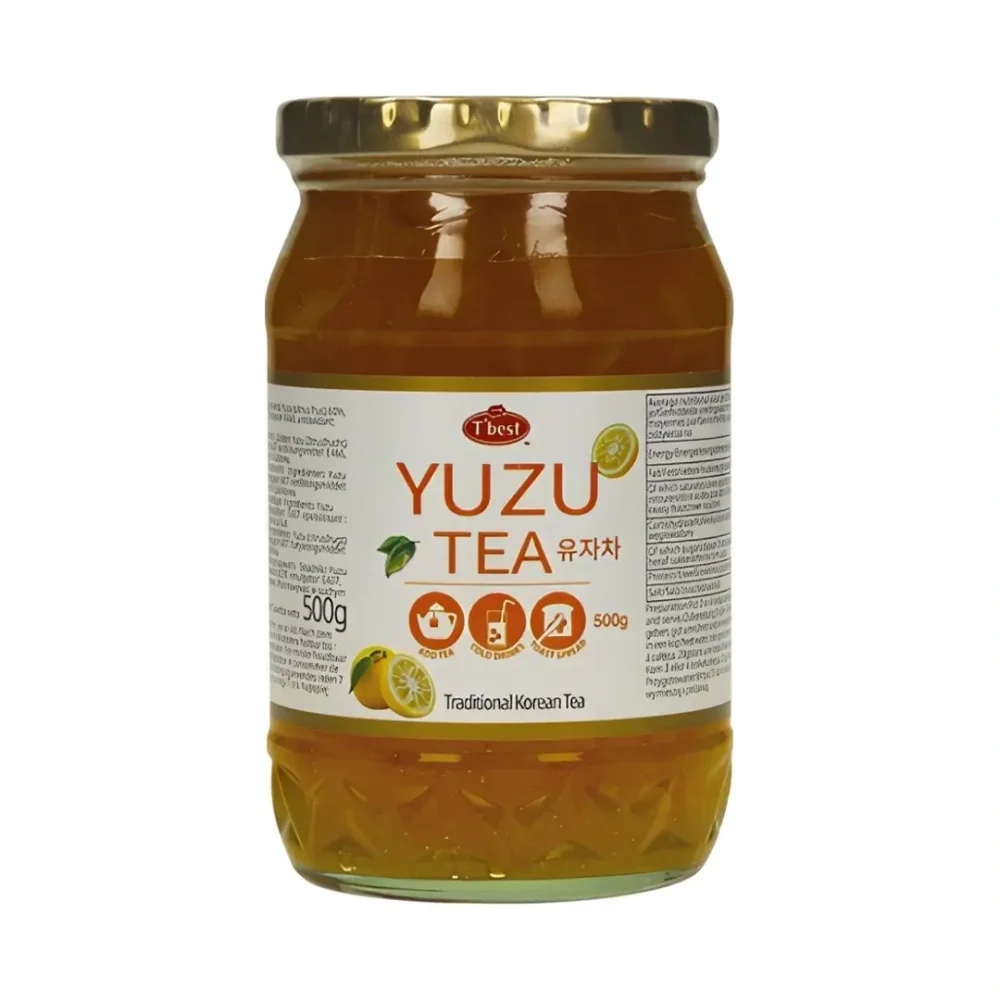
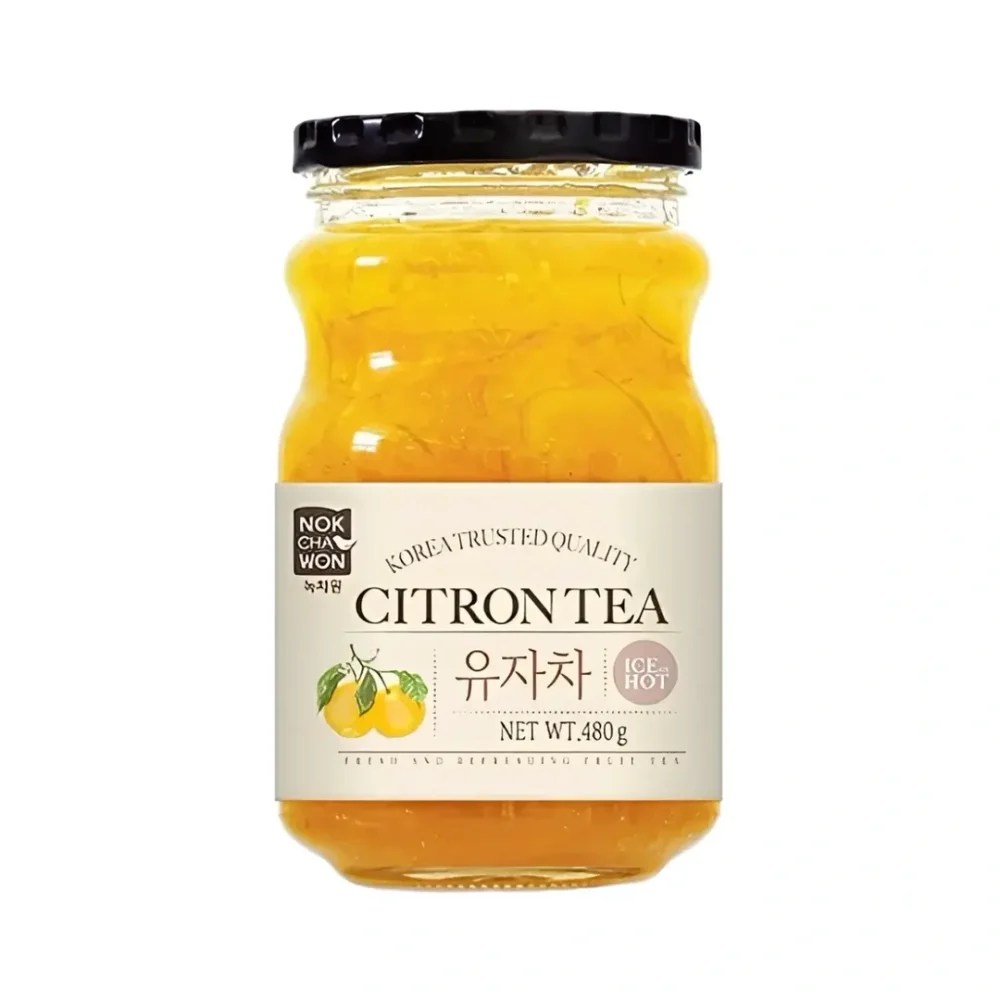
- For a distinctly citrus, fresh direction, for example, T'best Citrus Tea Yuzu (yuzu is an aromatic citrus). The refreshing character is practical especially when the food is flavor-rich and you want a drink “to rinse the palate.”
- If you want a simpler lemon profile, it might make sense Nokchawon Lemon Tea as a syrup concentrate for hot and iced drinks.
- If, on the other hand, you are looking for a stronger warming and spicy direction, try T'best Ginger Tea as a base that you can adjust to taste.
Practical procedure without “magical proportions”: because various concentrates have different strengths, always start with a smaller amount (e.g. 1 teaspoon into a cup/glass), mix well, taste, and only then add more. With food, this is often an advantage: you adjust the drink so the flavor does not overpower what’s on the plate.
Common mistakes and misunderstandings (and how to avoid them)
- Confusing “true tea” and infusion: both can work, but behave differently. If you want a pure accompaniment to food, it’s usually safer to start with teas from Camellia sinensis.
- “Matcha latte” doesn’t automatically equal matcha: watch the composition in blends – some are mainly based on sugar and milk components. For rich food, it might be more dessert than accompaniment.
- Jasmine tea is not always the same: it can be tea scented with flowers, or a flavored blend. If you feel the drink overpowers the food, the problem is often in excessive flavoring.
- Underestimating information on the packaging: origin, type, and form carry great importance in tea. The same “green tea” can taste completely different depending on processing style.
- Poor storage and loss of aroma: aromatic ingredients and teas generally dislike moisture, heat, light, and air. Tea that is “stale” does not feel pure with food – even though it is still usable.
- Modern drink as mandatory pairing: bubble tea or milk tea often work better as a standalone thing. With food, they fit better when you watch the sweetness and the drink does not dominate.
What to take away from the article
- True tea is from Camellia sinensis; differences between green, oolong, and black are mainly the processing, not a different plant.
- To orient in flavor, it’s enough to know the basic types: white (delicate), green (fresh), yellow (softer), oolong (wide range), black (stronger), dark/post-fermented (aging/fermentation).
- The Chinese tea world is extraordinarily vast and jasmine tea is a practical, accessible choice with food – but it is not always the same (flower scenting vs. flavoring).
- Modern Asian drinks are often not just a complement to a meal: watch the sweetness and feel free to treat them as a "dessert" course.
- The simplest rule helps you the most: choose the role of the drink (do not disturb / refresh / be an experience) and adjust the type and intensity accordingly.

Read next
If you want to explore this topic further, continue with these related blog guides and articles:
