


 Česky (CZK)
 Slovensky (EUR)
 Deutsch (EUR)
 Austria
 Belgium
 Bulgaria
 Croatia
 Denmark
 Estonia
 Finland
 France
 Germany
 Greece
 Hungary
 Italy
Italy Latvia
 Lithuania
 Luxembourg
 Netherlands
 Poland
 Portugal
 Romania
 Slovenia
 Spain
Spain Sweden










Typical Indian dishes: how to understand dhals, "curry", tandoori and street food
"Typical Indian food" does not have a single form. Indian cuisine is a family of regional styles – from delicate legume dhals through various sauce styles (korma, vindaloo, rogan josh, palak paneer, chole) to tandoori and the essential world of street snacks. In this guide, you will get clarity on the most typical groups of dishes, regional differences, and especially how to practically start with Indian flavors at home.
India abroad is often reduced to one category of "curry." In reality, it is more useful to think of typical Indian dishes as several large families of foods that have their own logic – and often their own set of ingredients, side dishes, and techniques.
How to understand "typical Indian dishes": it's not just about spiciness
Indian cuisine is characterized by not relying solely on spiciness. Often, working with aroma, depth, and "layering" of flavor is more important. Spices are used to highlight ingredients, not to overpower them – spiciness is just one of many components and is not dominant in many dishes.
A good guideline shortcut: many Indian dishes consist of several elements that balance each other. Not just the "main sauce", but also a side (rice or bread), something sour or fresh, sometimes chutney or pickle, and often a "cooling" element in the form of yogurt.
Typical building blocks of Indian cooking are repeated across regions:
- grains and sides (especially rice and various breads),
- legumes and dhals,
- vegetables and sometimes legume flours,
- dairy products (yogurt, ghee, paneer),
- aromatics and spices,
- techniques such as tempering spices, slow stewing, cooking at very high heat, or quick frying.
Most typical groups of Indian dishes (and how to recognize them)
When you say "typical Indian dishes," the most practical approach is to divide them into several groups. For each group, pay attention to the role of legumes/rice/bread, how the aromatics are structured and what type of cooking method predominates.
Dal (dhal): legume dish as an entry point
Dal (often also spelled dhal) is not one specific dish, but an entire family of legume dishes. This is what makes it one of the best "entry points" into Indian cuisine: depending on the type of legume and seasoning, it can be delicate, thick, creamy, spicy, smoky, or rich.
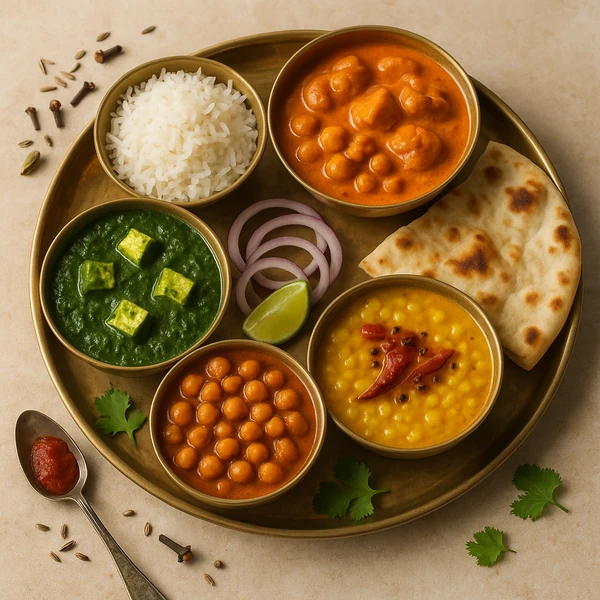
What is typical for dal in practice: it works as a filling main dish as well as part of a "plate" with multiple components. It is often paired with rice or breads and is also good when you don't want to eat something extremely spicy.
Curry and saucy dishes: why "curry" is not one thing
The word curry is taken as one category in European use. In the Indian context, it is important to understand that it is not one precise dish but a broad group of saucy dishes – and the individual names are distinct styles with their own logic, not just "different curries."
Frequently mentioned and typical styles include:
- korma,
- vindaloo,
- rogan josh,
- palak paneer (spinach dish with paneer – Indian cheese),
- chole (chickpea style).
A practical tip about the term "curry": if you like particular Indian flavors, it pays off to look for (and cook) more by style name rather than by the general term "curry."
Tandoori and marinated dishes: high heat, yogurt, and spices
Tandoori style is based on marination (often yogurt- and spice-based) and very high heat. Typical is a lightly charred surface, a "smoky" impression, and distinctive aroma.
It's a different world from long-simmered sauces: tandoori dishes focus on an intense surface and marinade aroma, not on "deep sauce."
Street food and snacks: chaat, samosa, kachori, pakora, bhel
Indian cuisine is not just about main dishes. Street food and snacks are an essential part of how "India tastes" in everyday life. Typical names you often encounter include:
- chaat,
- samosa,
- kachori,
- pakora,
- bhel.
Good news for orientation: even though individual snacks can be very diverse, they share showing the "fast" side of Indian cuisine – often vibrant, aromatic, and based on contrasting flavors and textures.
Rice and festive dishes: biryani and related worlds
Rice in Indian cuisine is not just a neutral side dish. In many Asian cuisines, the fundamental question is not "what will be the side," but rather "what will go with the rice" – and rice acts as a stable center around which other components are arranged.
The "festive" rice world includes, for example, biryani. It is often at rice dishes that you recognize how much the aroma and texture of the rice matter and how it connects with spices and other components.
Why Indian dishes taste different in various regions (and what you can recognize on the plate)
The diversity of Indian cuisine comes mainly from geography and the ingredients naturally available in the region – and also from historical influences.
- Northern India has strong ties to wheat, dairy products, tandoor and often richer sauces.
- The South is much more rice-based and often uses coconut, tamarind, curry leaves and fermented batters.
- The West includes both distinctly vegetarian areas, as well as coastal regions with fish and coconut milk.
- The East is known for rice, fish, mustard oil and a milder aroma.
- The Northeast often differs from the "classic idea of Indian curry": it uses more fermented ingredients, simpler seasoning, and different types of meat and vegetables.
Besides geography, history also played a role:
- Persian and Central Asian influences brought pilafs, kebabs, richer "gravy" style and festive meat dishes.
- The Portuguese brought, among other things, chili peppers, tomatoes, potatoes, papaya and cashew – ingredients that many people today perceive as a natural part of Indian cuisine.
🍳 How to start with typical Indian dishes at home: selection, first steps, and a “safe” procedure
The easiest start is to choose one family of dishes and to it one side dish. This will help you avoid the most common beginner’s trap: trying to cook an “Indian feast” without having the basic logic of flavors in hand.
1) Choose a style (dal vs. sauce vs. tandoori) and don’t jump between them
- Do you want something soothing and hearty? Start with dal.
- Do you want a saucy dish? Pick a specific style (e.g. vindaloo or chole), not a general “curry.”
- Do you want a “high heat” flavor? Go for tandoori logic (marinade + high temperature).
2) Build your plate around rice or flatbreads
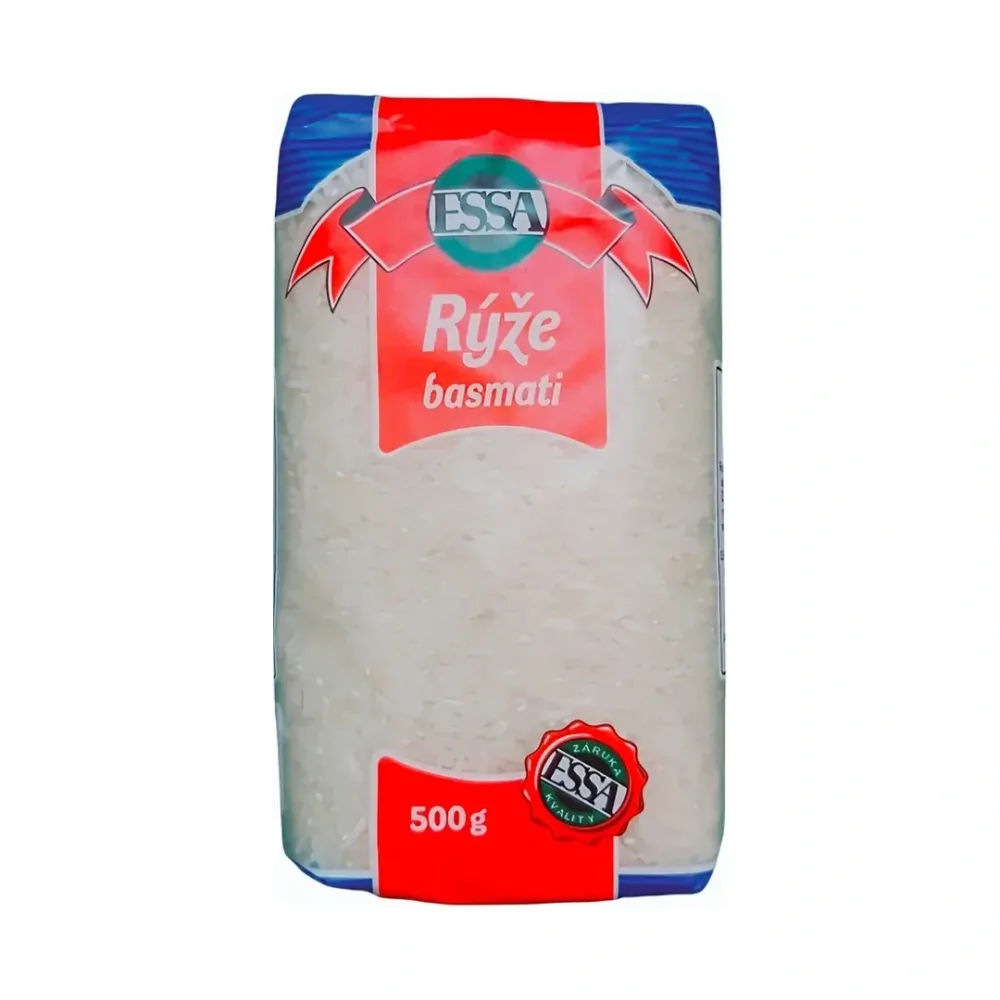
If you want to start simply, rice is often the most stable base. For Indian style, the typical is basmati rice; as a specific example, ESSA Basmati Rice 500 g. With rice, it’s worth watching mainly the aroma and texture – so it blends well with the sauce or dal and doesn’t feel “heavy.”
With flatbreads, keep in mind that “Indian bread” comes in many forms. If you want to explore different types, the category Breadserves as a guide.
3) Learn the two most important techniques: tempering spices and seasoning at the end
Tempering spices (briefly blooming spices in fat) is one of the techniques that make Indian food “Indian” even in simple cooking. A practical tip:
- Start, for example, with 1–2 tablespoons of fat in a pan/pot.
- Heat the spices (seeds, mix, or leaves) briefly – just until they release their aroma.
- Once the spices smell aromatic, continue with other ingredients so that the spices don’t burn (burnt spices are often bitter).
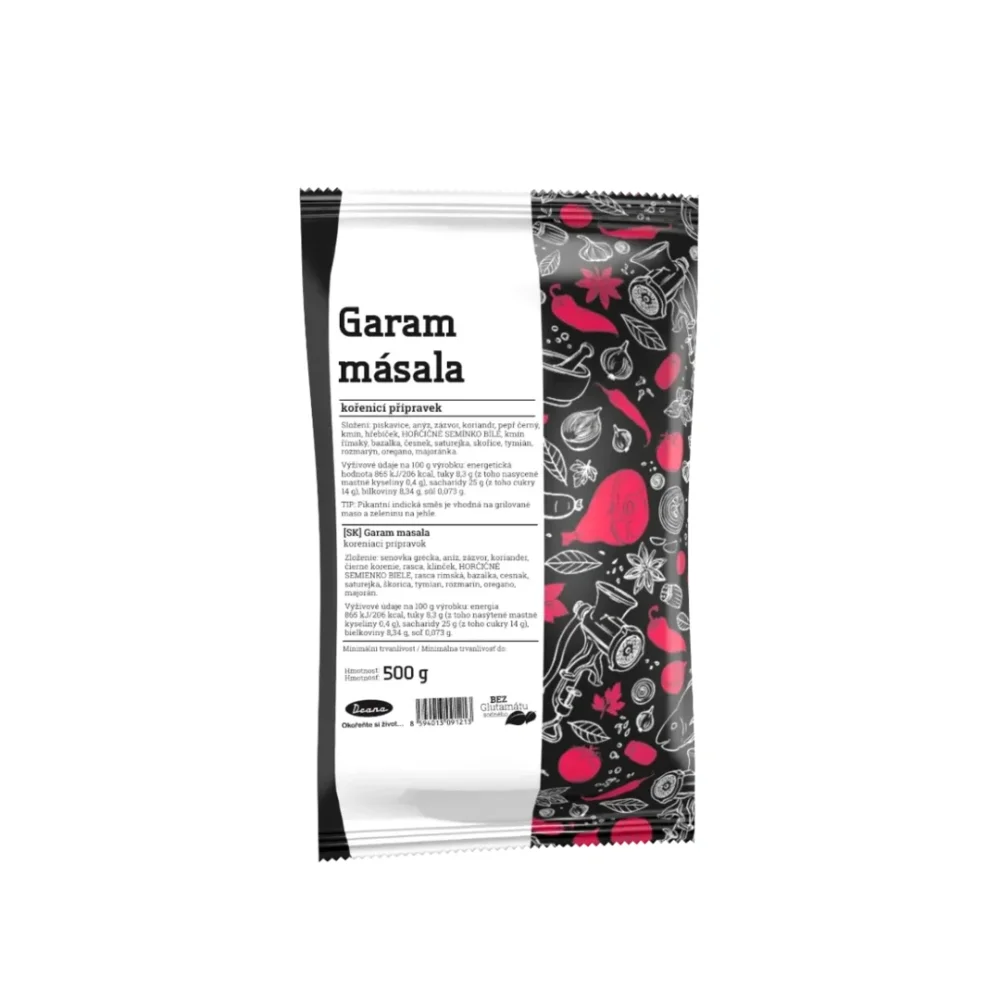
Aromatic blends like garam masalaare often used to “round” the flavor. As an example, you can take Drana Garam Masala 500 g. For initial attempts, it’s more practical to add a small amount (e.g. about 1/2 teaspoon for several servings) and gradually adjust to taste.
4) When you want “south,” try curry leaves – but don’t confuse them with curry powder
Among typical Indian ingredients are curry leaves, which are especially important for the south. In practice, you use them precisely for brief tempering in fat; usually, just a few leavesare enough to imprint their aroma throughout the dish. A specific example: Mehek Curry Leaves 30 g.
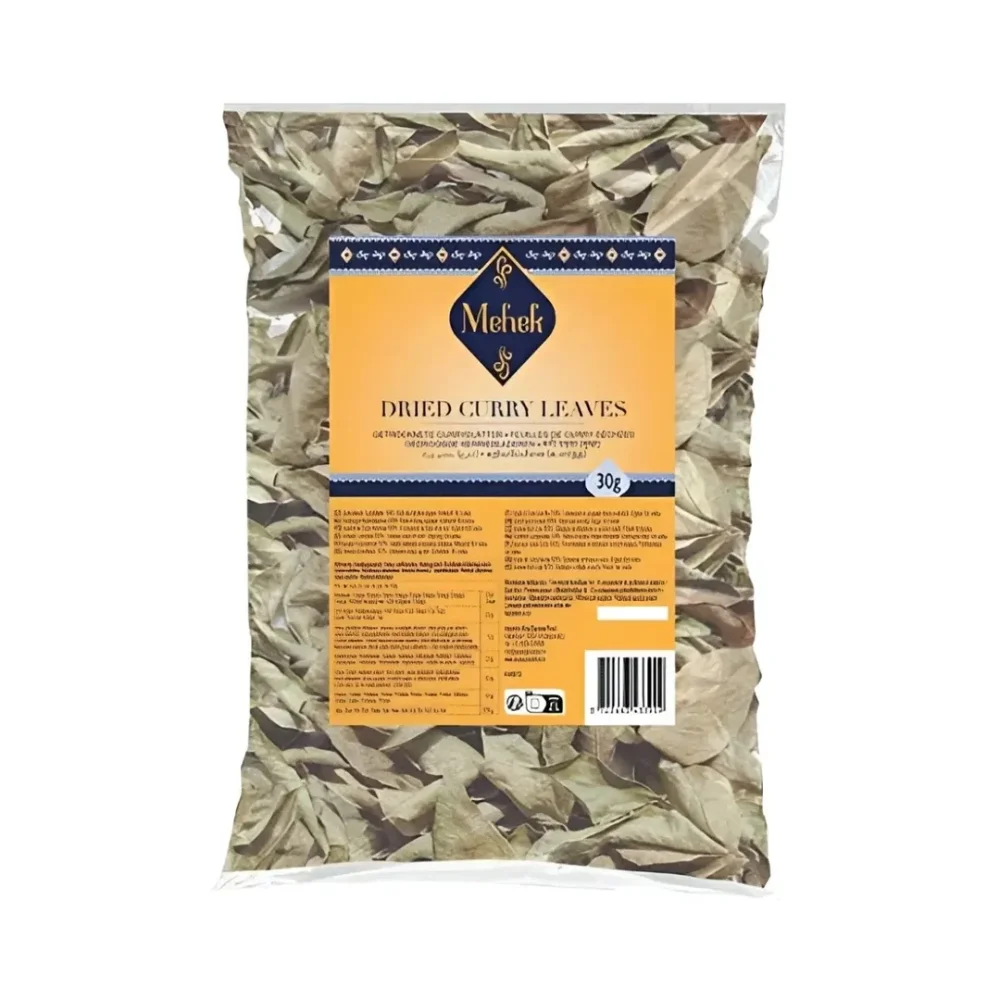
Important notice for shopping and cooking: curry leaves are not the same as curry powder (spice mix). The word “curry” in the name is a source of frequent confusion.
5) Quick way to a specific style: vindaloo as a clearly named direction
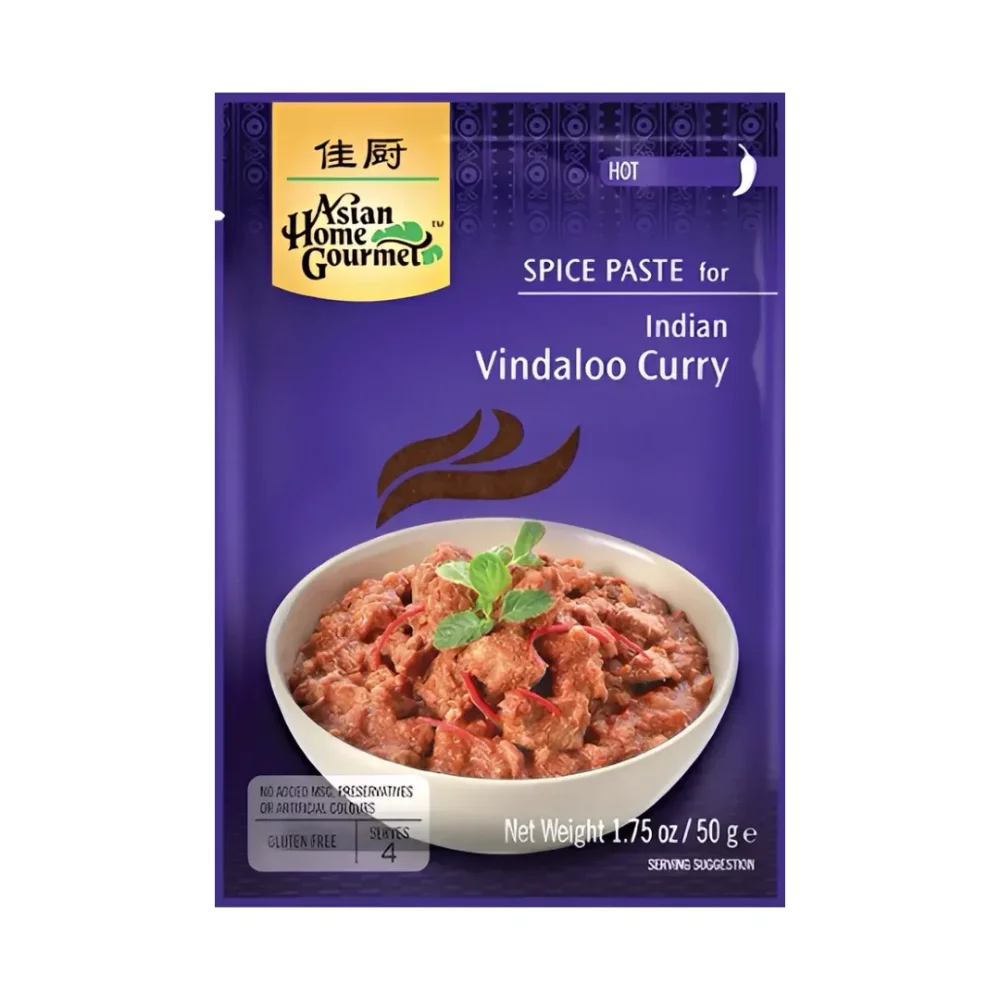
Because individual saucy styles are separate “worlds,” it can help to choose seasoning that is named directly after the style. For vindaloo, a practical shortcut can be AHG Vindaloo Curry Paste 50 g. The usage principle corresponds to the technique of blooming spices: briefly bloom it in a pan, then add the main ingredients.
6) And what about “curry powder”? Consider it a shortcut, not a definition of Indian cuisine
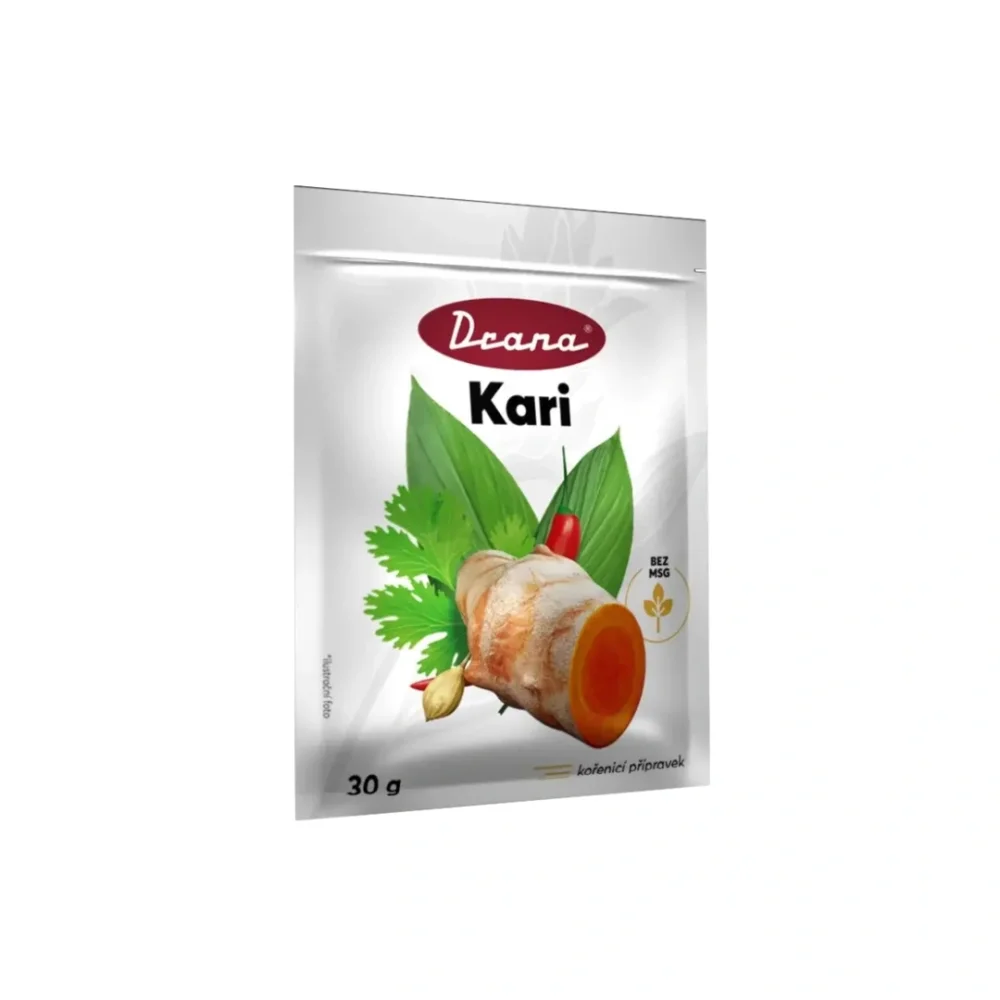
In a European context, “curry” is often cooked as a universal flavor. If you want quick, aromatic cooking without the ambition to stick to a specific style, a mix like Drana Curry 30 g can be useful – especially when briefly bloomed in fat at the beginning of cooking. From the perspective of orientation in Indian cuisine, however, it's important to keep in mind that korma, vindaloo, rogan josh, palak paneer, or chole are not “different curries”, but different styles.
💡 Common mistakes and what to watch out for
- “Indian = always spicy.” Spiciness is just one component. Often the aroma, depth, and work with spices are more important.
- “Curry is one spice and one dish.” In practice, “curry” is a broad term; specific names like korma, vindaloo, rogan josh, palak paneer, or chole are distinct styles.
- Burning spices during tempering. Bloom spices briefly and then continue immediately – burnt spices often make the dish bitter and “dusty.”
- Confusing “curry leaves” and “curry powder.” Curry leaves are a specific aromatic ingredient (typically for the south), while curry powder is a spice mix. The name confuses; function in the dish is different.
- The idea that naan and tandoori are universal standards for every Indian dish. Indian cuisines differ regionally; what is typical for one region or style may not be “all of India.”
What to take away from the article
- “Typical Indian dishes” are best understood as families of dishes: dal, saucy styles, tandoori, street food, rice dishes.
- Curry is not one thing – names like korma, vindaloo, rogan josh, palak paneer, or chole are not just variants but distinct styles.
- Regional differences make sense through ingredients: north (wheat, dairy, tandoor) vs. south (rice, coconut, tamarind, curry leaves) and other directions.
- For a home start, the safest is to pick one style and build it on rice or flatbreads; bloom spices in fat and season gradually.

Read next
If you want to explore this topic further, continue with these related blog guides and articles:
