


 Česky (CZK)
 Slovensky (EUR)
 Deutsch (EUR)
 Austria
 Belgium
 Bulgaria
 Croatia
 Denmark
 Estonia
 Finland
 France
 Germany
 Greece
 Hungary
 Italy
Italy Latvia
 Lithuania
 Luxembourg
 Netherlands
 Poland
 Portugal
 Romania
 Slovenia
 Spain
Spain Sweden










Regions of Chinese cuisine: how to navigate them and what it changes in your cooking
"Chinese cuisine" is not one style, but a large family of regional cuisines. In practice, this means that the basic side dishes (rice vs. wheat), typical ingredients (coast vs. inland), and flavor logic (somewhere spiciness dominates, elsewhere broth or sweet and sour) differ. In this article, you will get a simple orientation in the regions and mainly a practical guide on how to transfer this diversity into home cooking without chaos.
🍳 Why "regions" in China make sense in cooking
Chinese cuisine is not a single unified cuisine, but a huge family of regional cuisines that developed under different climatic, agricultural, historical, and cultural conditions. Therefore, the north tastes different, the south tastes different, the coast is different from the inland – and for that reason, it is not accurate to take one famous style as a shortcut for the whole country.
In European perception, "Chinese food" often shrinks to a few quick wok dishes. However, Chinese cooking also includes long broths, noodle and dumpling traditions, steaming techniques, slow braising, and working with fermented bases. A regional perspective will help you understand why sometimes a recipe works "at first try" and other times the result falls apart: because you unknowingly mixed logics of different styles.
🌶️ What is most important for orientation in Chinese regions (without an encyclopedia)
For home cooking, it is useful to stick to a few firm reference points. You don’t need to know the map of provinces – just understand what most often truly differentiates the regions:
- Climate and agriculture (what grows, what is commonly eaten).
- Basic side dishes: rice dominates in the south, wheat products in the north.
- Coast vs. inland: significant differences in the share of seafood.
- Flavor emphasis: Chinese cuisine works with layers (saltiness, umami, light sweetness, sourness, spiciness, aromatic "warmth" of spices, texture and aroma), but not every dish uses everything – often the precision and choice of one or two main axes decide.
North and south: when even the "base on the plate" differs
North: wheat, noodles, dumplings, and pancakes
Northern China is (simplified) more "wheat-based." In practice, you recognize it by the fact that alongside rice, wheat products are absolutely common: various noodles, dumplings and pockets, steamed buns, pancakes, and crepes. For home cooking, this is good news: wheat noodles often work as a quick, filling, and very versatile side dish.
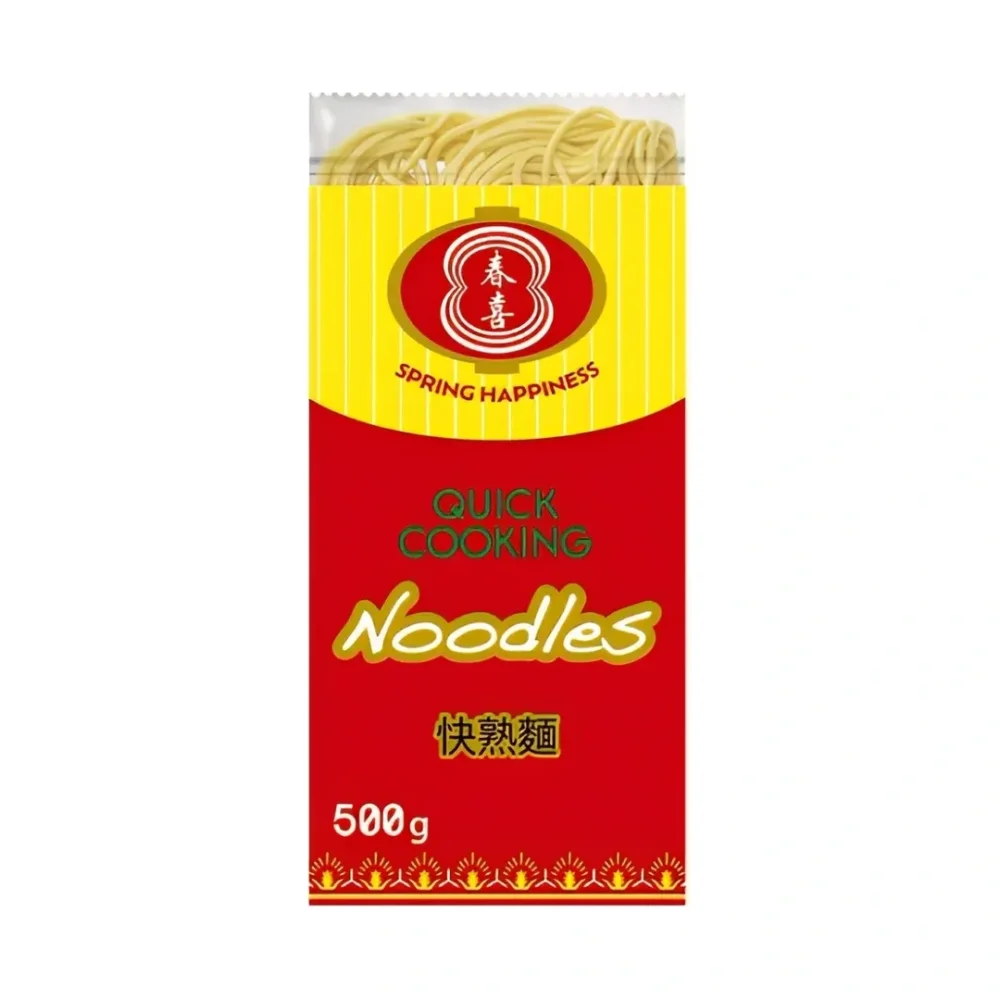
If you want a simple entry into the "wheat" part of Chinese cuisine, a practical choice are neutral noodles that absorb sauce and broth well – for example Spring Happiness quick egg-free noodles. It is important to count on the fact that noodles are not just a carrier: in many dishes, they are the main structure of the food and determine how much sauce and how intensely you need to season.
South: rice and other everyday dishes
Southern China is (again simplified) more "rice-based." This means not only rice as a side dish but also that dishes are built differently: satiety, sauce handling, and often what is considered "common home food" differ. For you as a cook, the main message is simple: if you cook a dish that should stand on rice, you usually want a sauce or juice that flavors the rice but does not overpower everything else.
Coast and inland: seafood changes cooking style more than it seems
A big difference in Chinese cuisine is made by the availability of seafood. Coastal and inland cuisines differ significantly in this – and the typical flavor logic changes with it.
For home orientation, it is enough to take a practical rule: if you cook a dish that relies on the "pure" taste of the ingredient (typically fish, seafood, tender vegetables), it often makes sense to keep seasoning precise and sparing. On the other hand, dishes based on meat, braising, or more intense sauces typically go deeper into umami and aromatic layers.
"Four traditions" and "eight great cuisines": a useful framework, not a geography test
In connection with Chinese cuisine, the "four great traditions" and "eight great cuisines" are often mentioned. For home practice, take it mainly as a reminder that differences are not cosmetic – and that under the word "Chinese," more individual styles hide.
A typical mistake is when someone takes one famous region as a universal template: for example, "Sichuan = all of China." It is not. Sichuan is very well known but still only one important branch. Likewise, in everyday speech, you encounter labels like Cantonese cuisine (Cantonese/Guangdong) or for example Shandong. More important than memorizing names is understanding that each such label usually means a different ratio of techniques (wok vs. braising vs. broth), a different base of ingredients, and different flavor emphasis.
🍳 How to start cooking "regionally" at home: a procedure that works even without a map
A China-oriented entry is practical for people who want quick meals, a pan and wok, and a good performance/time ratio – it will also teach you discipline in preparation (mise en place), working with temperature, and order of steps. To make it work at home, stick to these specific principles:
1) Start with technique: mise en place and cutting into small pieces
One of the most practical features of Chinese cuisine is cutting ingredients into small or thin pieces before heat treatment. It has clear reasons: faster and more even cooking, easier work with high heat, better connection with sauce or flavored oil, and more comfortable eating with chopsticks.
For home wok, convert it into a simple rule: cut everything so it can be finished within a few minutes. For meat, these are usually thin slices or strips; for vegetables, smaller pieces of similar size. And most importantly: have the seasoning ready before turning on the pan.
2) Build flavor on 1–2 axes, not "everything at once"
In Chinese cuisine, the combination of flavor layers (saltiness, umami, light sweetness, sourness, spiciness, aromatic "warmth" of spices) is important, but good food often doesn’t rely on excess – rather on precision. For a start, choose two main things you want to feel in each dish and leave the rest just as a subtle background.
3) Useful sauce “anchors” for home cooking
Although regions differ, at home you often solve a similar question: what to season with so the food has depth but is not "drowned." Here are three concrete anchors that work well:
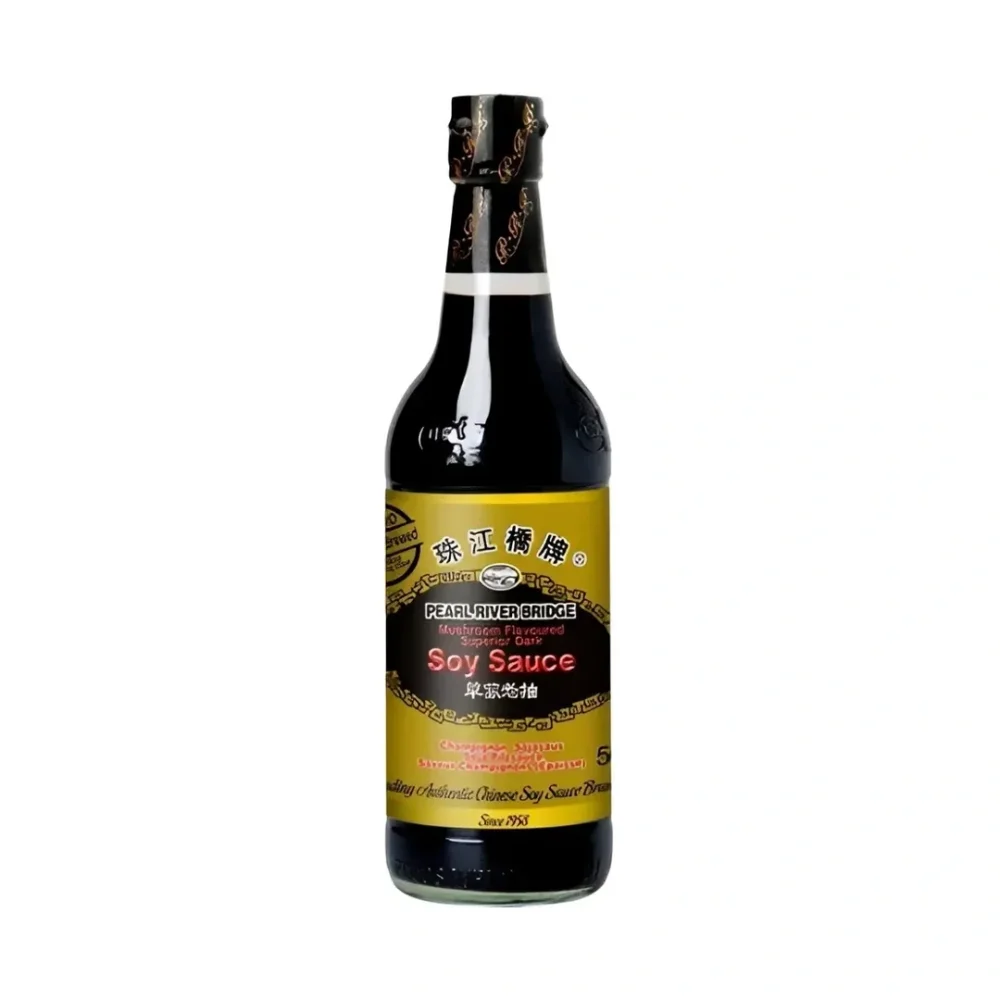
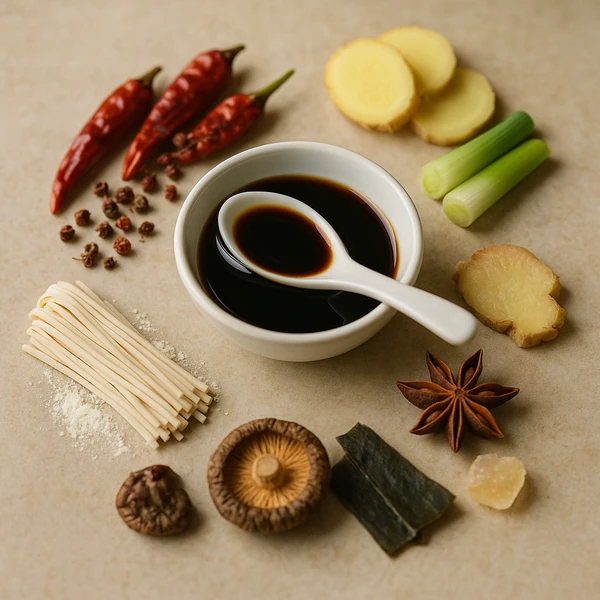
- Dark soy sauce: used in small doses mainly where you want a darker color and more prominent depth. A practical example to understand its role is P.R.B. dark mushroom soy sauce – add it gradually in small amounts because it easily dominates by color and taste.
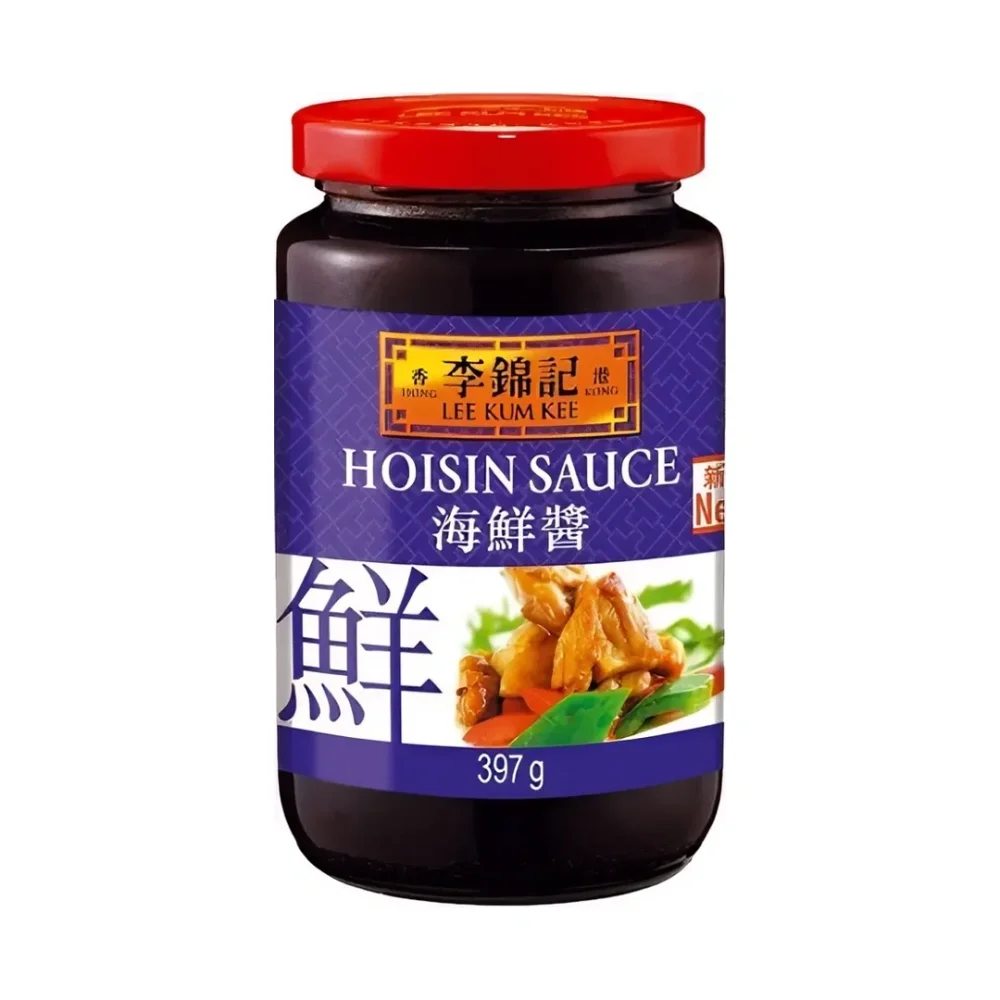
- Hoisin: suitable for sweet and salty seasoning, quick sauces, marinades or glazing (when you want a "sauce" effect without complicated cooking). A concrete example is Lee Kum Kee hoisin sauce. If you want to first understand the differences between hoisin sauces generally, the directory Hoisin saucescan help you.
- Rice vinegar: gentle acidity that can "open" flavor and balance sweetness as well as umami. A practical example is P.R.B. rice vinegar – add it in small amounts and taste frequently because acidity quickly intensifies in hot food.
In the same family of common sauce bases you encounter in Chinese-style cooking are oyster sauces (practical as another "flavor anchor" for some wok and sauce dishes).
4) The first three “projects” on which you quickly understand regional differences
- Quick wok dish: the goal is to learn the order and temperature. Have everything cut, heat the pan, ingredients go in quickly one after another, add the sauce when most of the work is done.
- Noodles as the main structure: take wheat noodles, a short sauce, and one protein + vegetable. Watch how the noodles "absorb" seasoning and why it is necessary to add sauce gradually.
- Broth / braised dish: even in Chinese cuisine, there are dishes that are not "fast food." Here you will practically verify that Chinese cooking is not only about stir-fry but also about patience and building flavor over time.
Most common misunderstandings about Chinese cuisine (and how to sort them out)
"Chinese cuisine is one."
It is not. If you take away only one thing, take this: Chinese cuisine is a collection of very different regional cuisines. In practice, this means that two "Chinese" dishes can have completely different logic of side dish, ingredient cutting, and seasoning.
"Chinese food = stir-fry and fried rice."
That is just a small section. Chinese cuisine includes a wide range of broths, noodles, dumplings, steamed dishes, braised dishes, fermented bases, and regional specialties. If wok cooking is difficult for you, it often helps to switch for a while to a "slower" style (broth, braising) and learn wok technique without stress later.
"Everything is very salty and saucy."
It is not. Many styles work with subtlety, lightness, and purity of flavors. For home cooking, the practical advice is: don't try to cook "Chinese" by putting a lot of everything into the pan. Instead, pick one main axis (e.g., umami + light sweetness, or umami + sourness) and keep others low.
"Sichuan = all of China."
It is not. It is a very famous regional style but still only one branch. If some recipe seems "too much" to you, it is not proof that "Chinese cuisine is too much" – maybe you just encountered a style that has a strong flavor emphasis (and you prefer another).
"Chinese cuisine is always very fast."
Some dishes are fast, but others are based on long broths, slow braising, or laborious shaping (dumplings, buns, steamed bread). When learning at home, take "speed" as a result of good preparation, not as an obligation.
Bonus misunderstanding: "Rice wine" means the same as mirin or vinegar
In European communication, "rice wine" sometimes hides all sorts of things (sake, mirin, Chinese cooking wine, sometimes even rice vinegar). For home cooking, it is useful to keep a simple logic: mirin has a sweeter balancing role, sake is a different kitchen alcoholic base, and Chinese cooking wine mainly targets marinades, wok, and braising. Rice vinegar is a completely different category (acidity), so it is not good to mechanically substitute these things.
What to take away from the article
- Regions in Chinese cuisine are not a detail for connoisseurs: they change the basic sides, available ingredients, and flavor emphasis.
- The strongest home compass is north vs. south (wheat vs. rice) and coast vs. inland (seafood vs. other ingredients).
- Chinese cuisine is not just wok: it also includes broths, steaming, dumplings, and slow dishes.
- Preparation is key for good results: mise en place and cutting into small pieces.
- Build flavor precisely: pick 1–2 main axes (e.g., umami + sourness) and add sauces gradually.

Read next
If you want to explore this topic further, continue with these related blog guides and articles:
