


 Česky (CZK)
 Slovensky (EUR)
 Deutsch (EUR)
 Austria
 Belgium
 Bulgaria
 Croatia
 Denmark
 Estonia
 Finland
 France
 Germany
 Greece
 Hungary
 Italy
Italy Latvia
 Lithuania
 Luxembourg
 Netherlands
 Poland
 Portugal
 Romania
 Slovenia
 Spain
Spain Sweden










Tom Yum vs Tom Kha: how they differ and which Thai soup to choose
Tom Yum and Tom Kha are two Thai soups that look similar at first glance – both are based on sourness, aromatic herbs, and strong seasoning. However, the difference is fundamental: changing the liquid base (clear vs. coconut) turns the entire character of the bowl upside down. In the article, we’ll translate the differences into practice: how to choose the soup, how to "set it" at home without a complicated recipe, and what to avoid.
Tom Yum and Tom Kha: two soups that show how much the base matters
In Asian cuisines, soup often isn’t just "something warm to start with" – it can be a full main dish, homemade comfort food, and quick street food. That’s why it pays off to perceive soup as a whole: the liquid base, aroma, seasoning, and final adjustment at the table.
With the pair Tom Yum and Tom Kha, this is particularly visible. Both soups are built on Thai balance of flavors, but one change (the presence of coconut milk) creates a completely different impression in the mouth from similar ingredients: a different "liveliness," a different smoothness, and a different way of handling spiciness and sourness.
It is useful to link this with a broader orientation in Asian soups: some families are sour and refreshing, others coconut-based and "curry" style. Tom Yum typically fits into the world of sour and refreshing soups, Tom Kha into the coconut ones.
Main taste differences: lively Tom Yum vs. rounded Tom Kha
👃 Tom Yum: sourness, spiciness, aromatic herbs, saltiness (and often also mild sweetness/bitterness)
Tom Yum is a classic soup to understand Thai balance. Several directions meet in one bowl at once: sourness, spiciness, aromatic herbs and saltiness, often also mild sweetness and bitterness as part of the whole impression. The result should be a soup that feels very lively but also “balanced” – no flavor is self-serving in the front, and others don’t flee.
Practically, this means: you usually don’t want to make Tom Yum “heavy” or too creamy. If it tastes sharp or salty, it often helps to bring back sourness and aroma – not just add more liquid.
Tom Kha: coconut milk softens, but sourness, galangal, and herbs remain key
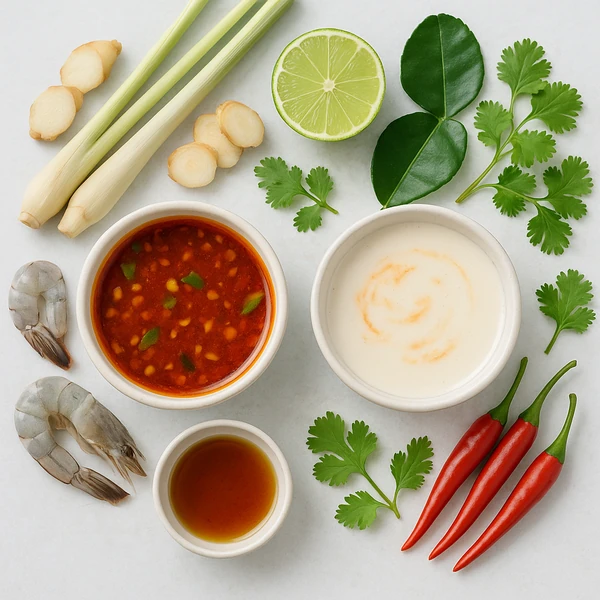
Tom Kha shows another side of Thai soup logic. Coconut milk adds smoothness and roundness, making the soup feel “softer” and creamier. At the same time, the goal is not just to make a sweet coconut bowl – sourness remains important, galangal (an aromatic relative of ginger) and aromatic herbs.
In other words: Tom Kha is gentler on the palate but shouldn’t be bland. When it lacks sour contrast, the coconut component may start to feel heavy and flat.
👃 Same aroma, different experience: why a “small change” changes the whole soup
Tom Yum and Tom Kha are a good pair precisely because they show a principle that applies across Asia: the liquid base is not just a filler, but a carrier of flavor, heat, texture, and the identity of the dish. Once coconut milk comes into play, the perception of spiciness, saltiness, and sourness changes – and along with it, how you season and adjust the soup.
How to choose and how to "set" the soup at home (practical onboarding, no recipe)
Quick decision based on taste and situation
- I want something bold, refreshing, and “lively” → Tom Yum.
- I want a gentler, rounder, and creamier bowl → Tom Kha.
- I’m not sure about the spiciness → Tom Kha is usually easier to start with since the coconut base visually and taste-wise softens the spiciness (but that doesn’t mean it has to be mild).
How to start at home: foundation first, then fine tuning
With both soups, it pays to proceed from the “least reversible” things to the “most reversible”:
- Build the liquid base so that it already gives direction (for Tom Yum more clear; for Tom Kha softened with coconut).
- Only then fine tune saltiness, spiciness, and sourness in small steps. In Asian cooking, small doses often decide, not one big "fix."
If you want to build Tom Kha truly coconutty, it makes sense to start with quality coconut milk and add it gradually until the flavor “rounds out.” As a practical reference: often it’s enough when the coconut component makes up about a quarter to a third of the liquid – more can easily overpower the sour contrast. For orientation on types of coconut milks, the guide Coconut Milkcan also be helpful.
A specific example of how to help yourself at home with ingredients that are easy to dose:
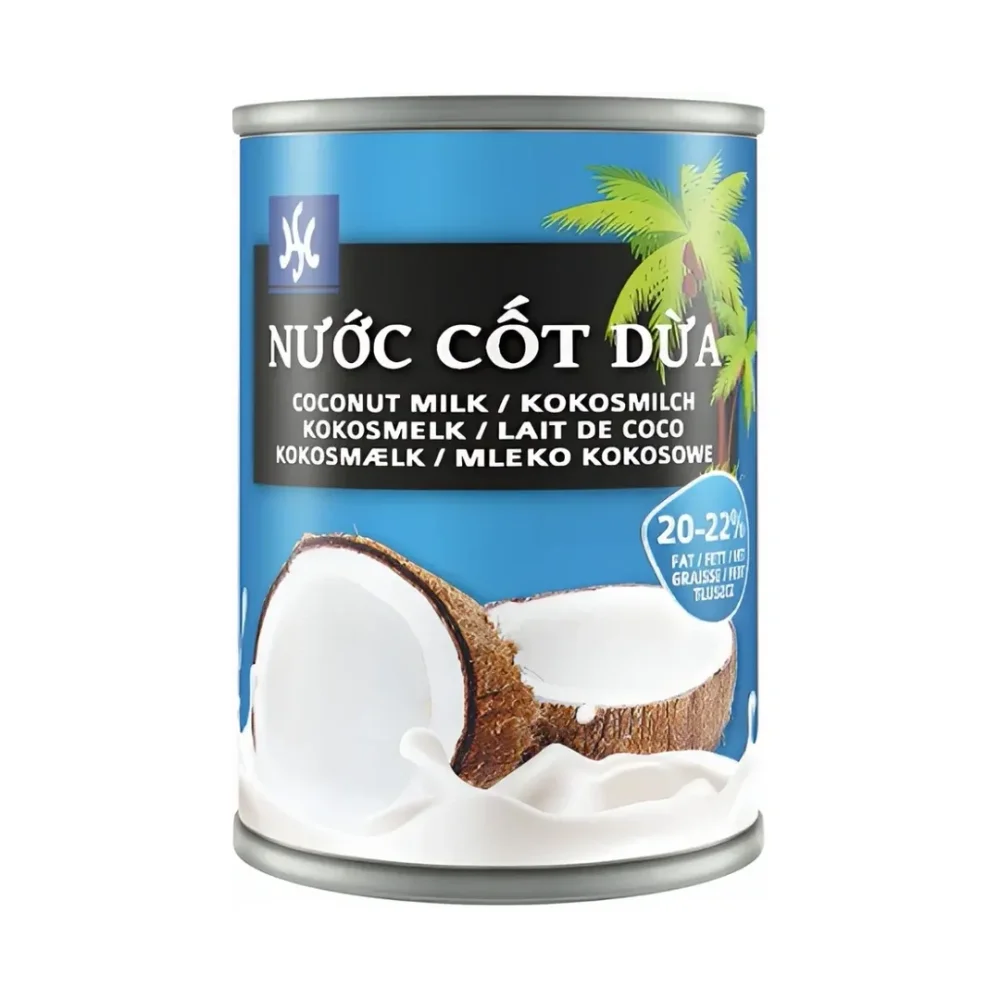
- Smoothness and roundness (Tom Kha): H&S Coconut Milk 20–22% 400 ml add in small portions so as not to flip the soup into “just coconut.”
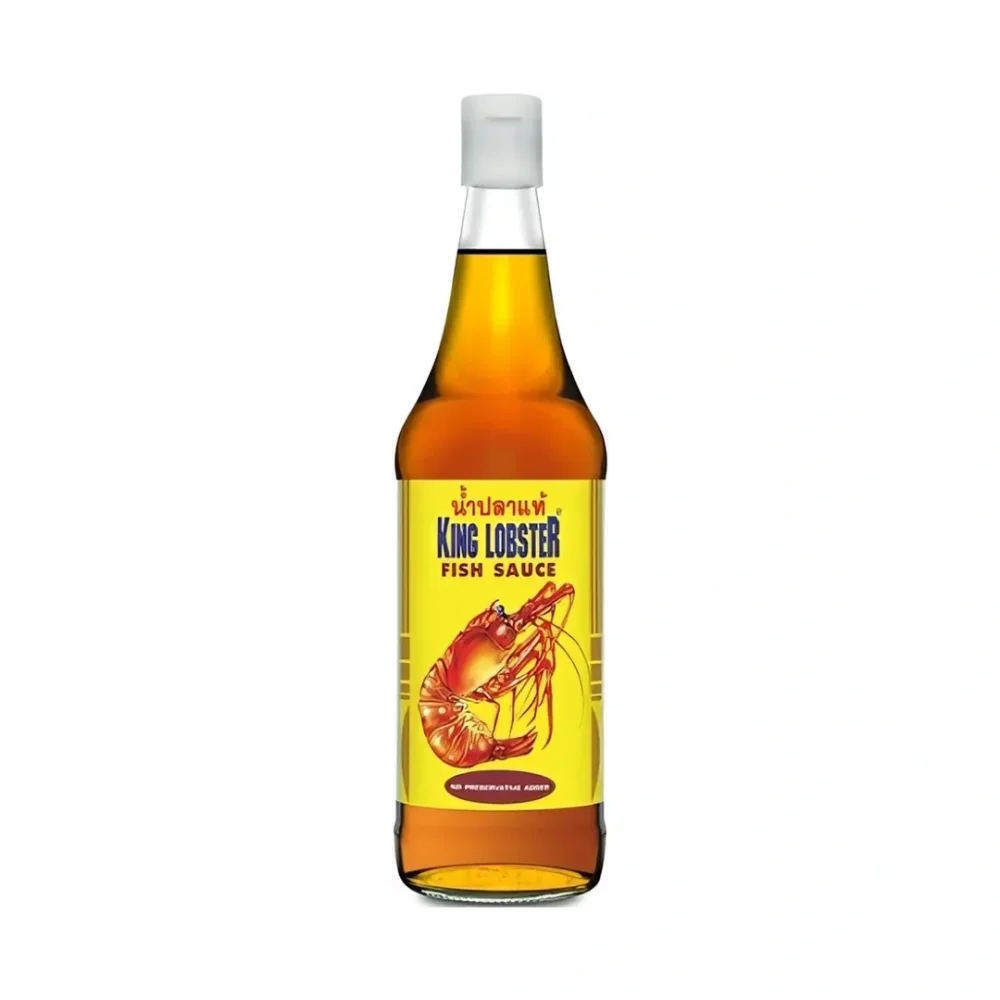
- Saltiness and umami: King Lobster fish sauce 700 ml works as a very concentrated seasoning – start with a few drops or a small spoon, stir and taste.
- Spiciness under your control: Royal Orient chili paste Sambal Oelek 200 g adds pure heat; add in small amounts because it’s easy to "overshoot."
- Sweet-sour balance (when the soup tastes flat): Thai Dancer tamarind 400 g can add a sweet-sour tone. Use a small amount, stir, and taste – the goal is contrast, not a dominant flavor.
Seasoning during cooking vs. final adjustment at the table
In Asian dishes, it is important to distinguish what belongs in the cooking base and what is final adjustment. The mistake of "throwing everything in at once" often leads to soup that feels either exaggeratedly heavy or underdone.
Practical rule: cook the base so that it is good by itself, then fine-tune in small steps. For spiciness and saltiness this applies doubly – it’s easy to add but almost impossible to take back.
💡 What to watch out for: typical mistakes in cooking and seasoning
- Mixing up the character of the soups: when you “cream” Tom Yum, it easily loses its characteristic liveliness. On the other hand, Tom Kha without sour contrast may taste just like a directionless coconut soup.
- Soup is salty, so I add more chili: spiciness often just highlights the problem. For both types, it is important to restore balance – typically sourness and aroma help, not more spice.
- Too much fish sauce at once: fish sauce is extremely concentrated. It’s better to dose by drops/spoons, always stir and taste.
- “I’ll fix it with tamarind” without tasting: sweet-sour components can easily become dominant. Always stir a small amount, taste, and only then add more.
- Mixing the cooking base and final seasoning: some things are meant to be subtle adjustments – if you use them as the main building block, the soup falls apart into incoherent extremes.
What to take away from the article
- Tom Yum is based on a lively balance of sourness, spiciness, aromatic herbs, and saltiness; it often also has a mild impression of sweetness and bitterness as a whole.
- Tom Kha is gentler and rounder thanks to coconut milk but still needs sourness, galangal, and herbs – without them, it feels heavy and flat.
- The difference between them is a great lesson that the liquid base is the carrier of the soup’s identity and a small change in the base changes the whole dish.
- In practice, the winning approach is: build the base and then fine-tune in small doses (salty, spicy, sour), because you can always add, but almost never take away.

Read next
If you want to explore this topic further, continue with these related blog guides and articles:
