


 Česky (CZK)
 Slovensky (EUR)
 Deutsch (EUR)
 Austria
 Belgium
 Bulgaria
 Croatia
 Denmark
 Estonia
 Finland
 France
 Germany
 Greece
 Hungary
 Italy
Italy Latvia
 Lithuania
 Luxembourg
 Netherlands
 Poland
 Portugal
 Romania
 Slovenia
 Spain
Spain Sweden










Phở: types, broth, and herbs
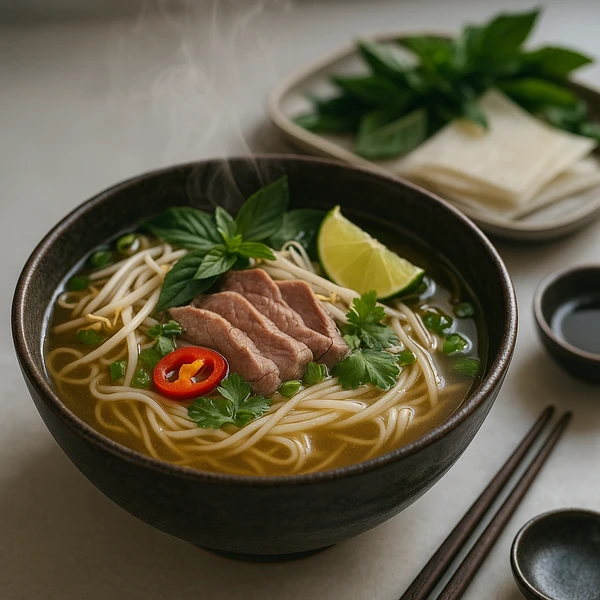
Phở (Vietnamese noodle soup) is a great example that "noodles in broth" can be a complete dish built on precision and lightness. The article will help you understand what makes phở phở, how regional styles differ, why the broth is the true center of the bowl, and the role of rice noodles and fresh herbs – including practical tips on how to assemble a balanced bowl at home without unnecessary mistakes.
Why phở is more than "noodles in soup"
In Asian cuisines, soups are often not just appetizers but common main meals (often even breakfast) – and phở is one of the most notable examples. Its strength typically does not rely on heaviness or extreme spiciness, but on a clear, aromatic, and balanced broth, which holds together the noodles, herbs, and other ingredients.
It is useful to change the perspective with phở: the goal is not to "make some soup," but to create a bowl, where the individual parts fit together. That is why so much is said about the clarity of the broth, the precise layering of flavors, and that fresh herbs are not decoration but a full part of the dish.
What exactly is phở: broth as the base, bowl as the result
One common inaccuracy (not only with phở) is confusing "broth" and "soup":
- Broth is the flavor base – the platform on which other ingredients are built.
- Soup is the finished dish – broth plus composition, textures, and final seasoning.
So phở is more than just liquid with noodles: the final bowl typically comes together by combining the broth, rice noodles, herbs and table seasonings. This "final combination" is important – when all ingredients cook long together in one pot, clarity of flavors and freshness can easily be lost.
"Types" of phở: regional differences and what to take home from them
Regional differences between northern and southern Vietnam are often mentioned in relation to phở. Regional differences between northern and southern Vietnam. In practice, this means mainly for home cooking that there is no single universal "correct" flavor template – the style may differ, but the basic principle remains: clear aromatic broth + rice noodles + fresh herbs + layering of flavors.
It is also useful to know that besides phở, Vietnam has other strong broth-based soups that work differently. For example, bún bò Huế – a more robust broth soup with a different logic (it is not a "phở variant" but a different soup dish). This contrast helps to understand that phở relies more on purity and balance than on "heaviness" or sharpness.
👃 Broth is the center: how to maintain clarity, depth, and "readable" aroma
In Asian soups, broth is usually not just the liquid in which "something floats." It is the core of the dish: it carries umami, connects the toppings, defines the character, and creates the overall aromatic impression. For phở, this is doubly true – a good bowl often stands or falls on whether the broth feels purposeful and clean.
What makes a good broth good (practically)
- Clear flavor role: with phở, you want the broth to be aromatic and deep, but not "loud" or chaotic.
- Flavor clarity: clear broth does not mean weak. It means the aroma and taste have direction and are not "muddy."
- Temperature control: a common problem is unnecessarily aggressive boiling. It's not only about appearance – vigorous boiling can dull the flavor and make the broth tired.
- Salt wisely: excessive saltiness often arises when it's forgotten that broth is the base and more salty ingredients will be added to the bowl.
- Timely ingredient addition: not everything should be in the pot for the same length of time – some ingredients give the best result with shorter contact.
How to avoid clouding the broth unnecessarily (when aiming for a clear style)
Cloudiness isn't always a mistake, but if you want a "clean" aesthetic and flavor for phở, typical causes are: too vigorous boiling, unremoved impurities at the beginning, poorly timed aromatics and unnecessary stirring. It's good to watch not only visual clarity but also "flavor clarity": broth can be visually clear and still dull – what matters is if it tastes purposeful.
For context: phở is often cited as the opposite of Japanese dashi. Not because one is "better," but because it's a different kind of broth thinking – phở typically works with longer building and aromatic layering, while dashi is another world of time, intensity, and texture.
Rice noodles and herbs: two things that decide if the bowl "lives"
Phở stands on broth, but the feeling of the bowl is often decided by two ingredients that are underestimated: rice noodles and fresh herbs and leaves.
Rice noodles are not one thing
There are several types of rice noodles and rice products in Vietnamese cuisine, differing in shape, elasticity, and how they carry broth or sauce. For a broth bowl, it’s good to choose those that keep a pleasant texture after cooking and don’t feel "falling apart."
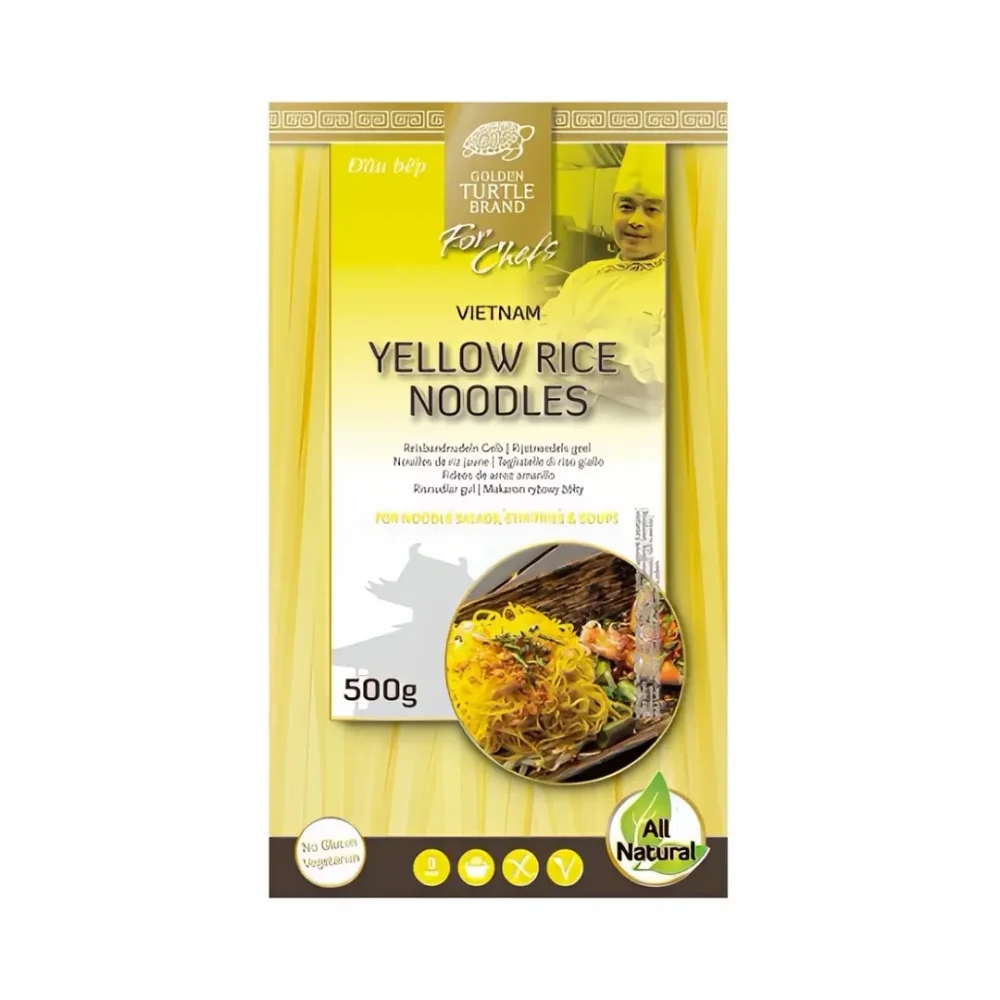
If you want a quick start and are looking for universal rice noodles usable also in soups, a practical example is Golden Turtle Chef rice noodles 3 mm. For broader orientation by shape and use, it’s useful to browse the rice noodle guide Rice noodles and pick the type that fits your broth bowls.
Herbs and leaves: not decoration, but part of the dish’s structure
Vietnamese cuisine is characterized by a strong role of herbs and leafy greens. In phở, herbs are key precisely because they balance the broth: they bring freshness, aroma, and "liveliness" that the warm liquid alone cannot create.
Commonly used herbs and greens include, for example, cilantro, Thai basil, mint, Vietnamese coriander, culantro, perilla, chives or spring onion. The point is not to have all of them – what’s important is that the herbs in the bowl are truly "present," not just symbolic.
How to start with phở at home: simple onboarding without a full "recipe"
Phở can be a many-hour project at home, but it can also be approached more practically: understand the principles and assemble the first bowl so it tastes balanced. The basic home strategy is to keep three certainties: the broth has direction, the noodles have good texture and the herbs come in only at the end.
1) Build your bowl as an "assembly," not as one pot
- Keep the broth hot and flavor-clear (without unnecessarily aggressive boiling).
- Prepare the noodles to be elastic and not overcooked. For broth bowls, it usually helps to cook the noodles just until done but still holding their shape.
- Add the herbs and leaves only to the finished bowl. You can rub some between your fingers to release aroma, but the goal is not to "cook" them.
- Handle the final seasoning at the end – phở typically stands on the fact that you tune the bowl to your taste (sourness, saltiness, spiciness, aroma).
2) Fish sauce: an umami tool, not an "extra fish flavor"
In Southeast Asia, fish sauce is one of the most important seasoning bases. In small amounts, it adds saltiness, depth, and a long umami aftertaste – it shouldn’t dominate as a fishy flavor. A practical rule: add it drop by drop and taste, especially if the broth is already partially salty.
Fish sauce typically works well combined with acidity (for example lime), a bit of sweetness, chili, garlic and fresh herbs – exactly the logic that gives Vietnamese bowls their "liveliness."
3) Want to move on with another Vietnamese dish? Use the same "rice world"
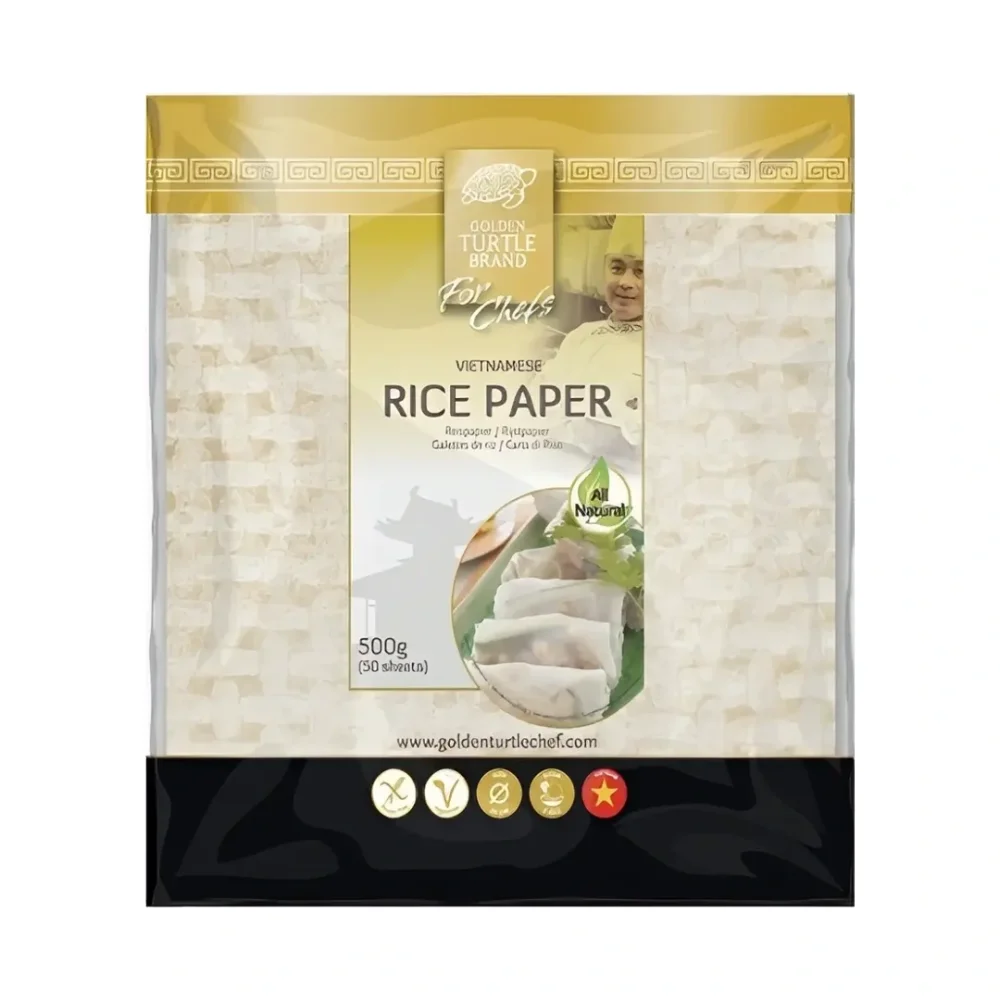
If you like the combination of rice products and fresh herbs on phở, a natural next step is fresh rolls (gỏi cuốn), where rice paper replaces noodles. For orientation by type, a useful guide is Rice paper; as a simple starter, for example you can use Golden Turtle Chef square rice paper.
Common mistakes with phở (and how to recognize them by taste)
1) Broth is "tired," heavy, or weak
It’s often not that the broth is "short," but that it was unnecessarily aggressively boiled, overly stirred, or flavor-chaotic. It helps to calm the temperature, focus on flavor clarity, and watch timing of ingredients that should give aroma but not cook endlessly.
2) Over-salting that cannot be fixed
Over-salting is often the result of forgetting the final assembly of the bowl: the broth is the base, and then other salty elements come into play. When seasoning, keep in mind: better less and adjust at the end (including fish sauce drop by drop).
3) Herbs are just symbolic – the bowl then lacks freshness
In phở, fresh herbs are not just a "sprinkle." If you add only a few leaves, the broth with noodles will seem flat. Add herbs so they can be sensed in the steam and in every bite – and always add them to the finished bowl, not for long cooking.
4) Trying to do everything with one pot cooking
Phở typically works best when the bowl is assembled: broth, noodles, herbs, and final seasoning come together only at the end. When you cook everything together for a long time, you easily lose the layering of flavors, textures, and aromas.
What to take away from the article
- Phở is a bowl-broth dish– the broth is central, but the finished flavor is created by assembling the bowl.
- “Types” of phở are best understood as regional styles (north vs south) and as a contrast to other Vietnamese broth soups (e.g., bún bò Huế), not as one fixed template.
- Broth clarity is as important in phở as depth: watch the temperature, salting, and timing of ingredients.
- Herbs and rice noodles determine freshness and texture – do not underestimate them and add herbs only at the end.
- Fish sauce is an umami tool: add drop by drop and adjust only in the bowl.

Read next
If you want to explore this topic further, continue with these related blog guides and articles:
