Česky (CZK)
 Slovensky (EUR)
 Deutsch (EUR)
 Austria
 Belgium
 Bulgaria
 Croatia
 Denmark
 Estonia
 Finland
 France
 Germany
 Greece
 Hungary
 Italy
Italy Latvia
 Lithuania
 Luxembourg
 Netherlands
 Poland
 Portugal
 Romania
 Slovenia
 Spain
Spain Sweden










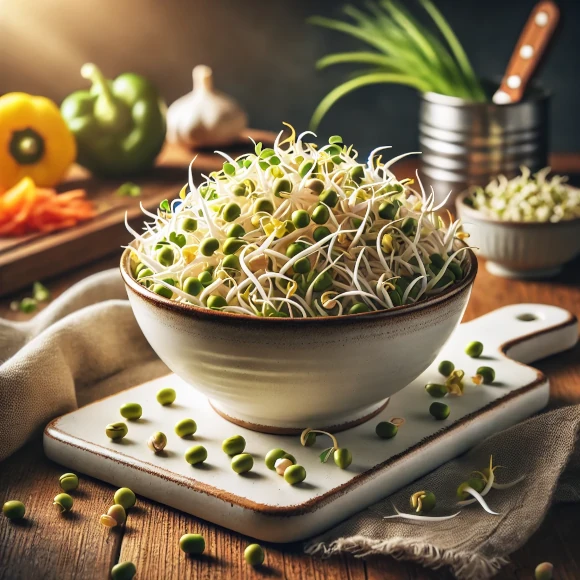
Mung bean sprouts
🌱 Mung bean sprouts: the crunchy finishing touch that makes a dish feel “complete”
Mung bean sprouts are a staple across Asian kitchens because they deliver freshness, a light juicy bite and that signature crunch you recognize from pho, pad thai and wok stir-fries. The best part: they cook in seconds.
Shop Asian ingredients at Taste Of Asia. Browse Vegetables & mushrooms or search mung bean sprouts.
💡 Tip: Want them crunchy? Add them last. 30–60 seconds is the sweet spot.
🕰️ Background
Sprouts are a practical ingredient: quick, affordable, and perfect for balancing rich broths, sauces and noodles with something fresh. In Southeast Asia they’re a common garnish and side, while in Chinese-style stir-fries they’re often tossed quickly with soy sauce and aromatics.
🧪 What they are (and the common mix-up)
Mung bean sprouts are grown by sprouting mung beans. They can be confused with soybean sprouts (often bigger and different in texture). The simplest rule: trust the label—mung vs soy.
You’ll find sprouts fresh/chilled or in shelf-stable forms. Fresh gives the best texture; shelf-stable is handy for pantry planning.
👃 Flavor profile
- 🌿 mild, clean, lightly vegetal
- 💧 fresh, juicy bite that lifts rich dishes
- 🔥 loves garlic, ginger, chilli and sesame oil
- 🥢 great texture contrast with noodles and rice
✅ Tip: Sprouts don’t shout flavor on their own. They shine as a texture + sauce carrier.
🍳 Best uses
🍜 Pho and noodle soups
Add them to the bowl at the end—either raw (they soften from hot broth) or briefly blanched if you prefer.
🍝 Pad Thai and fried noodles
Classic pad thai crunch comes from adding sprouts late. Seasoning options: soy sauces, vinegars and chilli sauces.
🔥 Wok stir-fries
The simplest approach: garlic + soy sauce + a few drops of toasted sesame oil at the end.
🥗 Salads and cold bowls
A quick blanch + chill works well, then dress with soy sauce, rice vinegar and sesame oil.
🥟 Spring rolls
Great for volume and freshness, especially with herbs and a bold dip.
🫶 Practical handling note
Sprouts are considered a sensitive food. If you want a safer, more predictable option, blanch briefly or toss quickly in a hot pan. Texture becomes a bit softer but still pleasant.
✅ How to choose and store
- Look: pale, firm, no dark/slimy parts
- Smell: clean and fresh
- Store: cold, sealed container
- Use: as soon as possible
- Cook: add at the end (30–60 seconds)
🛒 Our picks
🔥 Recipe: 5-minute wok mung bean sprouts
Ingredients
- 250–300 g mung bean sprouts
- 1–2 garlic cloves
- soy sauce 1 tbsp
- rice vinegar 1 tsp (optional)
- sugar 1 tsp (optional)
- toasted sesame oil 1–2 tsp (finish)
- neutral oil for frying (small amount)
- sesame seeds, chilli (optional)
Method
- Rinse sprouts and drain well.
- Heat a little oil, add garlic and stir 10–15 seconds.
- Add sprouts, toss 30–60 seconds on high heat.
- Add soy sauce (and optional vinegar/sugar). Toss briefly.
- Turn off heat, drizzle sesame oil. Top with sesame/chilli.
✅ Tip: Sesame oil goes in after the heat is off—this keeps the aroma clean and bold.

Recommended products1

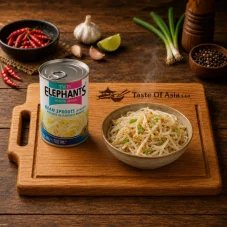
Twin Elephant Earth Pickled mung shoots 420 g
Read next
If you want to continue with the same topic, here are more related articles to explore: