


 Česky (CZK)
 Slovensky (EUR)
 Deutsch (EUR)
 Austria
 Belgium
 Bulgaria
 Croatia
 Denmark
 Estonia
 Finland
 France
 Germany
 Greece
 Hungary
 Italy
Italy Latvia
 Lithuania
 Luxembourg
 Netherlands
 Poland
 Portugal
 Romania
 Slovenia
 Spain
Spain Sweden










Hot, cold and seasonal Asian drinks: how to understand them and what to expect from flavor and texture
Asian drinks today include much more than just sweet lemonades with ice. Alongside the traditional tea culture, there are urban "café" drinks where the tea base, texture (pearls, jelly, pieces of fruit), work with aroma and color, and the option to customize sweetness and ice all play a role. In this guide, we will clarify what is typical for modern Asian drinks, how hot and cold variants differ, what “real tea” means, and what mistakes to watch out for.
Why modern Asian drinks are not just “something sweet with ice”
Modern Asian drinks are a broad world where traditional tea culture meets urban street food and café service. That is precisely why milk teas, fruit teas, bubble tea, matcha latte, or Korean fruit and syrup bases can stand side by side.
What is typical for them in practice:
- Strong connection to tea or a tea base (even if the drink is milky or fruity).
- Combining traditional ingredients with modern presentation – older principles are translated into "to-go" and modern combinations.
- A big role of texture: the drink is often not just a liquid but an experience (pearls, jelly, pieces of aloe or fruit, foams, shaved ice).
- “Drink as snack” – a drink that can also lightly satisfy and works as a small sweet reward with its own identity.
- Personalization: choice of sweetness, amount of ice, type of milk, and toppings.
🌶️ Basic orientation: tea as the pillar (and what is “real tea”)
Many modern drinks revolve around tea – and here a quick orientation helps. “Real tea” is made from the leaves of the Camellia sinensis plant. Differences between green, black, or oolong tea do not arise because they come from different plants, but mainly because of processing methods. At the same time, the same name on the package does not automatically mean the same taste or quality.
Major types of tea (simplified as a flavor map):
- White tea: delicate, more subtle, often floral or slightly fruity.
- Green tea: fresher profile; can taste grassy, seaweed-like, vegetal, or nutty.
- Yellow tea: rarer, often softer and “rounder” than many green teas.
- Oolong: wide range between green and black – from light floral to darker roasted and honey-fruity.
- Black tea: stronger and fuller; often serves as the base for milk teas.
- Dark/post-fermented tea: a specific category with its own character.
An important detail for flavor expectations: Chinese and Japanese green teas typically differ also because of different processing (in China often pan heating, in Japan typically steaming). This is one reason why “green tea” is not a single flavor.
How to read tea packaging so you don’t buy something different than you expect
Packaging really matters for tea. It’s practically worthwhile to watch for:
- Origin (country/region) – “Japanese green tea” means something different than “matcha-style.”
- Type of tea (green, oolong, black, dark, matcha, flavored).
- Composition – pure tea is usually simple; blends can include sugar, milk components, or flavoring.
- Form – loose leaf tea often offers greater control over preparation; bags are convenient but may hide smaller particles.
Hot drinks: when you want aroma, depth, and "warming"
Hot Asian drinks often rely on tea and aromatics. In a modern concept, milky variants or strong spiced and ginger bases naturally belong.
Matcha as a traditional base of a modern drink
Matcha today lives a double life: it is a traditional tea base but also one of the most visible “modern” drinks (typically as matcha latte). For practice, it is important that matcha is not just "green tea" in a general sense – it has its own character and works well in milky combinations, where the contrast of flavor and color stands out.
Masala chai: why “chai” isn’t automatically a spiced drink
In everyday speech, “chai” is sometimes used as a synonym for spiced Indian milk tea. In reality, chai simply means “tea”. What people often imagine is masala chai – black tea prepared with milk, sugar, and spices.
Ginger bases: simple hot and cold start
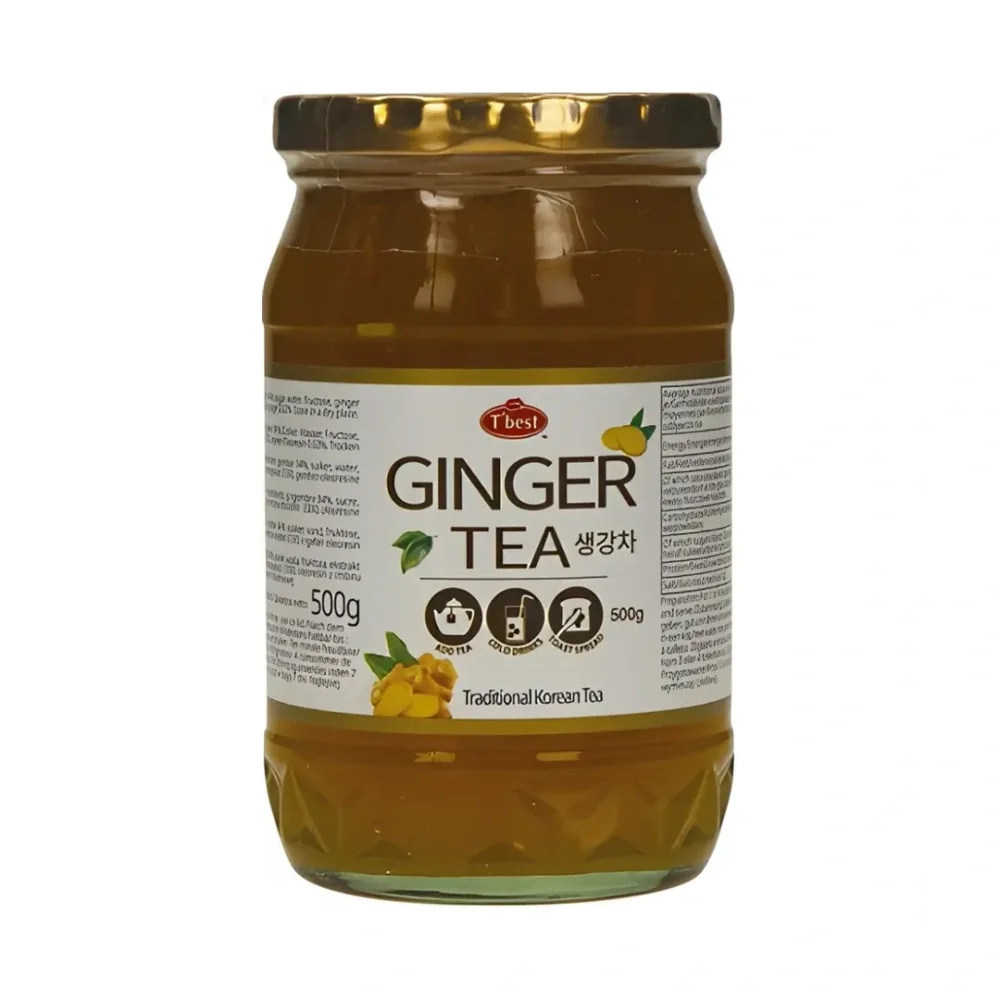
A practical “seasonal” evergreen is a ginger base, which you can prepare hot or iced depending on the weather. If you want an easy start without complicated cooking, a ready-made ginger base like T'best ginger tea – can be used as a strong ginger base and adjusted to taste (for example with citrus components or sweetness).
Cold and summer drinks: ice, citrus and “teaade” style
Cold Asian drinks often rely on freshness, aroma, and simple drinkability – while retaining the "Asian signature": tea base, distinctive citrus fruits, or syrupy fruit concentrates.
Korean fruit and syrup drinks: yuja (yuzu) and maesil
Korean beverage culture is not based solely on tea from tea leaves – an important role is also played by fruit and syrup bases. In traditional contexts, for example, cold citrus punch from yuja (often compared to yuzu/lemon citrus in a broader sense) and drinks from plum extract (maesil), which are diluted with water, appear.
For modern home use, this is especially important: such citrus or fruit bases transfer well into iced drinks – they work with ice, sparkling water, or in a "teaade" style (tea + citrus base as a lemonade variant).
Bubble tea and the "world of textures": when a drink is also fun
Bubble tea is not important just as a trend – it clearly shows what is specific about modern Asian drinks: texture, the possibility of choice, and the fact that the drink can function as a "snack."
But texture is not limited to tapioca pearls only. In modern Asian drinks, you may find:
- tapioca pearls,
- pieces of aloe,
- jelly elements,
- fruit pieces,
- milk foam or cheese foam,
- crushed ice,
- thicker tea or milk base.
Compared to "classic European" drinking, this is a fundamental shift: the drink is meant to quench thirst, but at the same time entertain with its structure and sometimes gently satisfy hunger.
In practice: how to choose at home between a hot and a cold Asian drink (and hit the taste and consistency)
The quickest way to a good result is to think of the drink as a combination of base, sweetness, temperature and texture. Then the rough idea of "I want something Asian" becomes a concrete choice you can replicate at home.
1) Choose the base: tea, milk, or fruit-syrup
- Tea base: ideal when you want a cleaner taste and aroma (hot or iced tea, fruit tea, "teaade").
- Milk base: typical for milk teas and latte variants (including matcha latte). Expect a "rounder" taste and the fact that milk smooths bitterness and astringency.
- Fruit-syrup base: a quick route to a summer drink (citrus, plum/maesil, etc.). Usually works great with ice and often also with sparkling water.
2) Dose the sweetness carefully: you can always add more
In modern Asian drinks, it is common to set the sweetness yourself. If you mix the drink at home, it is recommended to start with a smaller amount of the sweet component (syrup/concentrate) and adjust in small steps – the taste often "opens up" with ice but can also become diluted and flattened.
3) Temperature is not just "hot vs. iced"
For cold drinks, ice is important but can also be harmful. If the drink is based on a delicate flavor (tea, matcha), too much ice often means quick dilution and a tired impression. A practical compromise is a well-chilled drink (base prepared beforehand), so that ice is not the only cooling method.
4) Consider texture as a full-fledged "ingredient"
If you want the experience of an "Asian drink" and not just a flavored beverage, focus on texture. For bubble tea and related styles, a simple rule applies: the texture should be noticeable but not overpower the base. If the drink is "just pearls/jelly," it loses the tea or milk character that holds it together.
5) Visuals are not just for effect: they help you understand what you are drinking
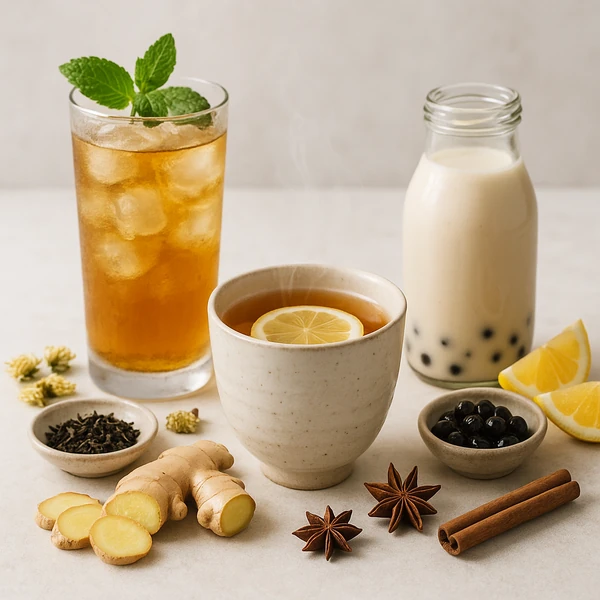
Modern Asian drinks often work with looking good: layering of colors, contrast of white milk and dark tea, vivid green matcha, dark pearls, clear ice, bright citrus tones. It's not just "marketing" – layers and color hint at what the taste and texture will be and support the drinking ritual.
Most common mistakes (and how to quickly fix them)
- "Asian drink = always oversweetened" – the modern style often allows you to choose the sweetness. If the result is too sweet, start next time with a smaller amount of the sweet component and adjust gradually.
- Too much ice and watery taste – if the flavor gets lost, chill the base itself and use ice more as the final step, not as the only source of cooling.
- Ignoring texture – when the drink tastes "flat," it often lacks structure (jelly, fruit pieces, foam) or the base is not strong enough.
- Confusion of terms with tea – "chai" is not automatically a spiced drink; "green tea" is not just one taste and often varies significantly by origin and processing.
- Matcha vs. matcha blends – in some products, a large part may be sugar and dried milk, not the matcha itself. If you expect a purer tea character, watch the type and composition.
What to take away from the article
- Modern Asian drinks are based on a tea base, texture, and the ability to customize sweetness, ice, and toppings.
- Hot variants often focus on aroma and depth (tea, matcha, spiced and ginger bases), cold ones on freshness (citrus, fruit/syrup concentrates, teaade).
- Bubble tea is a good example of a "textured drink," where drinking is both an experience and sometimes a small snack.
- Visuals (layers, colors, contrasts) are not accidental – they help understand how the drink will work in terms of taste and texture.
- The most common mistakes are too much sweetness, dilution by ice, and misreading tea terms; all can be easily fixed by better base choice and dosing.

Read next
If you want to explore this topic further, continue with these related blog guides and articles:
