


 Česky (CZK)
 Slovensky (EUR)
 Deutsch (EUR)
 Austria
 Belgium
 Bulgaria
 Croatia
 Denmark
 Estonia
 Finland
 France
 Germany
 Greece
 Hungary
 Italy
Italy Latvia
 Lithuania
 Luxembourg
 Netherlands
 Poland
 Portugal
 Romania
 Slovenia
 Spain
Spain Sweden










Chili sauces and chili pastes: how to understand them and use them correctly
"Chili" in Asian cuisine does not mean one universal sauce. Under the same word hide thin vinegar sauces for the table, thick fermented cooking pastes, fried and roasted mixtures with oil, chili oils, and coarse relishes. When you understand their role (not just spiciness), you will season more precisely and more often hit the flavor of a specific cuisine and dish.
🌶️ What are chili sauces and chili pastes (and what actually unites them)
Chili sauces and chili pastes are mainly united by chili pepper – the fruit of the genus Capsicum. Chili peppers originate from America and spread to Asia only after overseas contacts in the modern era. Today, however, they are so deeply rooted in many Asian cuisines that without them a large part of Thai, Korean, Chinese, Indonesian, Malaysian, and Filipino flavors makes no sense.
Spiciness is mainly associated with capsaicin and other capsaicinoids. But in finished sauces and pastes, it is equally important what else they bring with them: sweetness, acidity, saltiness, umami, a garlicky or smoky tone, or fermentation depth. That is why two "chili sauces" can behave completely differently in the kitchen – one will work as a table dip and the other as a sauce base.
Practical rule: consider chili sauces and pastes as tools with a specific function (base, thickening, glazing, finishing, table seasoning), not as one category "for spiciness."
Why choosing just by spiciness is not enough: the sauce’s role is more important than color and consistency
A common mistake is the idea that sauces and pastes can be interchanged by appearance: "dark and thick will be similar, light and thin will be similar." This is not true for Asian sauces – and especially for chili products.
Dark color can mean different things (longer fermentation, higher sugar content, caramelizing components, different texture, or regional style). Consistency also guarantees nothing: a thick chili paste can be sweet-salty and meant for sauces, but equally a fried mixture in oil intended mainly for finishing. Conversely, a thin sauce can be very concentrated and create a huge flavor effect in small amounts.
In home practice, it is safer to ask for each chili sauce/paste like this:
- What is the main source of saltiness? (salt itself, soy component, fish component…)
- What carries umami and depth? (fermentation, bean/soy components, fried aroma…)
- Is it rather a cooking base or finishing? (for the pan vs. "on the plate")
- How much sugar and acidity is in it? (will it work as a dip? Will it unintentionally sweeten the sauce?)
This perspective will often save you disappointment like "the food is spicy but bland" – which usually means a wrongly chosen sauce role, not "bad chili."
Basic groups of chili sauces and pastes: what to expect from them and where to use them
1) Thin chili sauces (table seasoning, dip, quick contrast)
They usually stand on a combination of chili, vinegar, salt, sometimes sugar and garlic. They are straightforwardly sharp and often mainly serve as table seasoning or dip.
- Sriracha exists in several styles: the original Thai style was thinner, more acidic, and garlicky (suitable, for example, for fish and seafood). In the Western environment, a thicker variant is also known – and it is not good to consider them identical products just because the label says "sriracha."
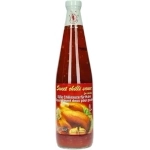
- Sweet chili sauce (nam chim kai) combines chili, garlic, sugar, vinegar, and water. The taste is "immediately understandable" (sweet, slightly spicy, slightly acidic) and typically associated with fried foods and snacks.
If you are looking for this type (from milder to stronger), the signposts sweet chili sauces and spicy chili sauceswill roughly help.
2) Thick fermented pastes (marinades, sauce bases, longer cooking)
These pastes are typically more complex: it is not just about spiciness but about linking chili with fermented grains, legumes, or soy components. They serve in the kitchen as a building block – for marinades, sauce bases, and dishes that need simmering for a while.
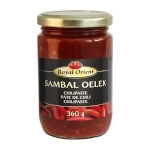
A representative example often cited is Korean gochujang. In Chinese cuisine, this category also includes chili-bean pastes (see below doubanjiang), which bring not only spiciness but also salt, umami, color, and fermentation depth.
For this type of product (including sambals and other pastes) the signpost sambal and chili pastesmakes sense.
3) Cooked, baked, or fried chili pastes (depth, roundness, often "finished flavor")
A large part of the flavor here is based on heat treatment – roasting or frying. These pastes often have a rounder profile and often combine chili with other ingredients (for example, garlic, shallot, possibly tamarind and other regional elements).
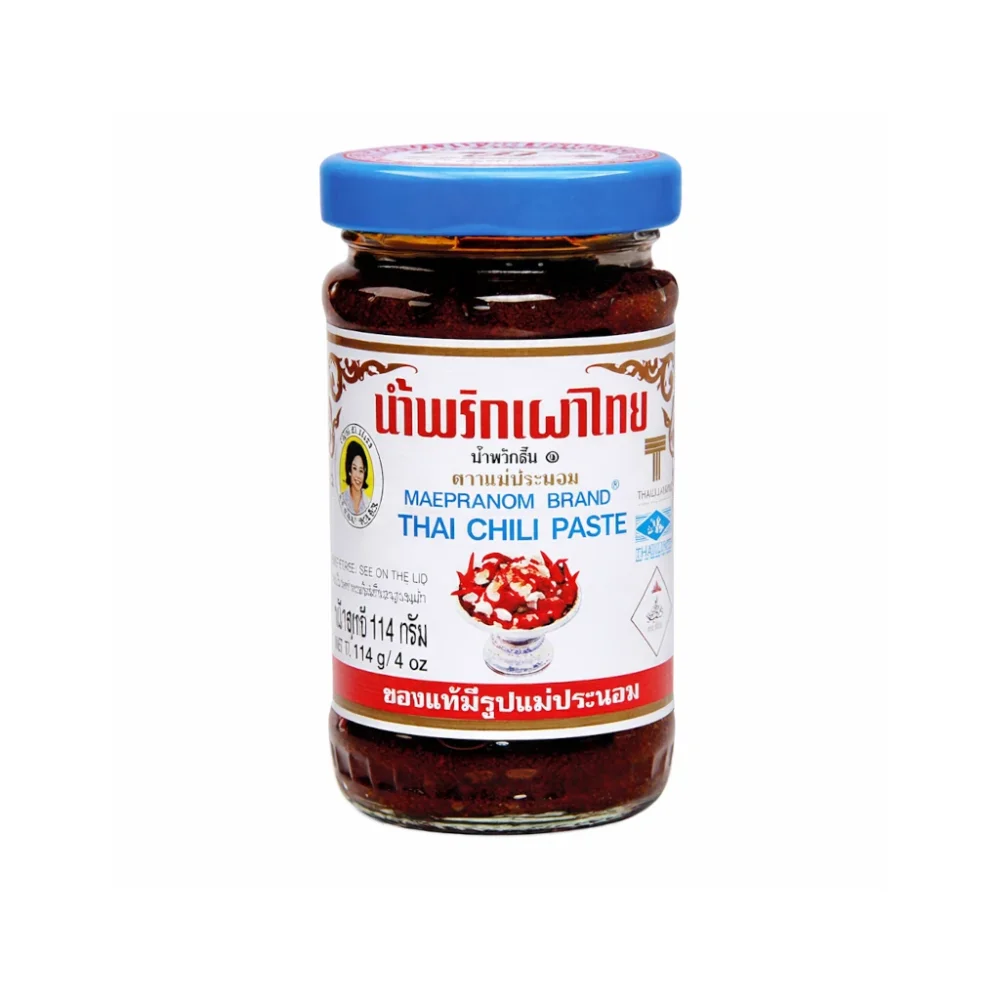
A typical example in Thai cuisine is nam prik pao – roasted/fried chili paste with higher complexity, which can be stirred into a sauce, used for seasoning, or as a stronger "flavor base" for a particular dish type.
👃 4) Chili oils (aroma oils, dosing by drops, finishing)
For chili oils, the aroma of the oil is often more important than the paste "mass" itself. They can be purely oily or with flakes and spices – sometimes even with crispy solid particles (the "chili crisp" style). Typically, they are used as final seasoning: on noodles, rice, tofu, in finished soups, or for finishing wok dishes.
A practical example of this direction is Maepranom chili paste in oil – a product type that doses well and makes sense even when you do not want to base the entire dish on spiciness but just add a sharp dot and aroma.
🍽️ 5) Fresh or coarse relishes (texture, direct serving)
This includes coarse chili mixtures intended for direct serving – they often have a pronounced texture and work as a "piece of flavor" on the plate. Many sambals (Indonesia/Malaysia) fall into this category – sometimes cooked or fried, at other times coarser and "livelier."
Regional orientation: China and Thailand show how different "chili" can be
China: fermented bean pastes, chili oils, and the ma la profile
The Chinese "chili world" is wide, but in home practice, you often meet two strong lines: fermented pastes and chili oils.
Doubanjiang is the best-known representative of chili-bean pastes (typically associated with Sichuan, especially the Pixian style). It is important to understand that it is not "just a spicy paste." It also brings salt, fermented depth, umami, and color and in dishes like mapo tofu often forms the flavor backbone.
Sichuan logic often relies on the combination of chili and Sichuan pepper – the ma la profile (spicy and numbing). This is a key difference from cuisines that mainly rely on direct "capsaicin" spiciness without a numbing component.
Thailand: one universal chili sauce does not exist – it is a family of functions
In Thai cuisine, chili often does not mean one bottle but a set of various sauces and pastes for different situations:
- Sriracha / Si Racha style as acidic, garlicky seasoning (and at the same time a good example that the same name does not mean the same style).
- Nam chim kai (sweet chili sauce) as a dip for fried foods and snacks.
- Nam prik pao as a more complex roasted/fried paste for dishes that should have deeper, "finished" flavor.
For Thai seasoning, it is also typical to combine chili with fish sauce – nam pla prik (or prik nam pla), i.e., fish sauce with chili, often with lime or garlic. It is not marginal but a practical everyday way to fine-tune food at the table.
How to choose and use chili sauces and pastes at home (specific start and dosing)
If you are starting and don't want to end up with five bottles that do the same thing, it is useful to build your "chili kit" according to the role:
- One thin chili sauce for the table (dip, seasoning finished dishes).
- One paste for cooking (fermented or roasted/fried – for sauce base, marinade).
- One oily chili mixture for finishing (finishing, aroma, dosing by drops).
Practically, the signposts chili sauces (for table and dip types) and sambal and chili pastes (for pastes and cooking) will guide you.
Dosing: start low but watch out for sugar and salt
- Thin chili sauces (vinegary, sweet): start roughly 1 teaspoon per serving as a seasoning or dip and adjust as needed. For sweet styles, keep in mind that besides spiciness, you also add sugar and acidity.
- Thick fermented pastes: a safe start for sauces or marinades 1/2–1 teaspoon, stir, taste, and add more if needed. These pastes often also contain salt and umami, so they can partially replace the "salting" component – or easily double it if you thoughtlessly add a lot of soy/fish sauce.
- Chili oils and chili blends in oil: consider them as finishing and start with a few drops up to 1/2 teaspoon. They often have a strong impact because the fat carries both aroma and heat, making it very pronounced in the finished dish.
Combining: chili is often only one part of the flavor
Chili products differ among themselves in whether they bring sweetness and acidity (typically sweet chili sauces), or umami and fermentation (fermented pastes), or roasted aroma (fried/roasted pastes, chili oils). In practice this means:
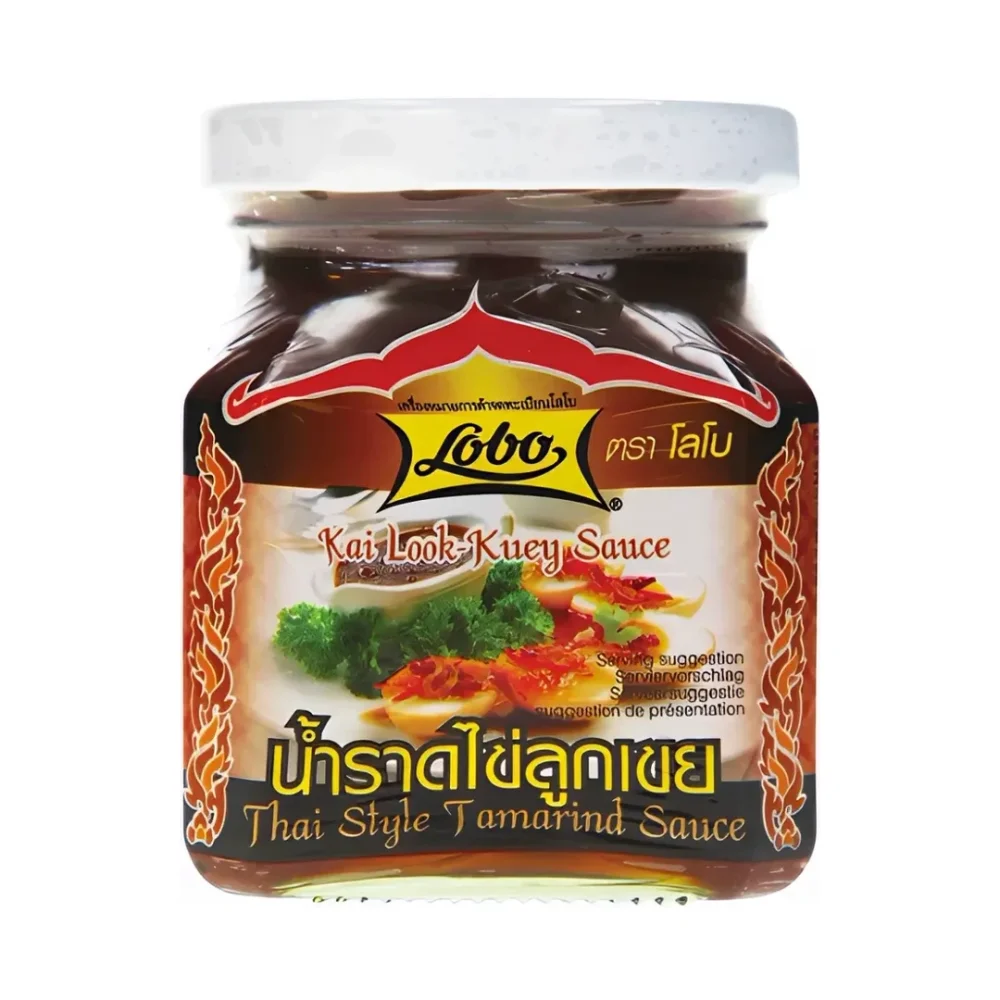
- When you have a chili paste that mainly brings depth and heat, you can “open” the dish with acidity or sweet-sour notes. In the Thai direction, tamarind is often used – as a practical shortcut for this type of balancing, tamarind sauce (Thai style).
- When using sweet chili sauce, be careful not to create an "unintended" sweet profile in the dish – it’s often best to stick to using it as a dip and use it in cooking only where the sweet-sour note makes sense.
- When relying on chili oil, it is usually enough to add it at the end. Its aroma can be unnecessarily lost during cooking and the result will taste flat.
And as a universal "testing platform" for chili seasoning, a neutral base works great – typically rice or rice sides (see rice and rice products), where you can clearly recognize what the sauce actually does.
Common mistakes with chili sauces and pastes (and how to avoid them)
- Confusing by color and thickness: dark and thick does not mean "same use." Always clarify whether it’s a cooking base, dip, or finishing.
- “All srirachas are the same”: they are not. Different consistencies and roles meet under the same name (from thinner, more acidic types to thicker variants).
- Using sweet chili sauce as a universal base: sweet chili sauces are great for dipping and quick snacks, but in cooking, they can easily outweigh with sugar and create a profile you didn’t want.
- Over-salting with fermented pastes: fermented chili pastes often contain salt and umami too. If you automatically add a “regular” amount of other salty sauces, you end up with excessive saltiness. The solution is simple: start with a smaller amount of paste, taste, and add other salty components only as needed.
- Chili oil as the "main flavor": chili oils and oil blends are typically strongest as finishing. Using them as a base in large quantity often overwhelms others and the dish will taste just greasy and spicy.
What to take from the article
- Chili sauces and pastes are not one category: they differ by role (dip, base, finishing), composition, and what they carry besides heat.
- Spiciness is just one parameter. Equally important is whether the sauce adds sweetness, acidity, saltiness, umami, roasted aroma, or fermentation depth.
- Do not confuse by appearance: dark/thick vs. light/thin does not tell you how it will behave in the dish.
- For a home start, three roles are enough: one table chili sauce, one cooking paste, and one oil blend for finishing.
- Dose from a small amount and taste continuously – especially with fermented pastes (because of salt) and oil blends (because of intensity).

Read next
If you want to explore this topic further, continue with these related blog guides and articles:
