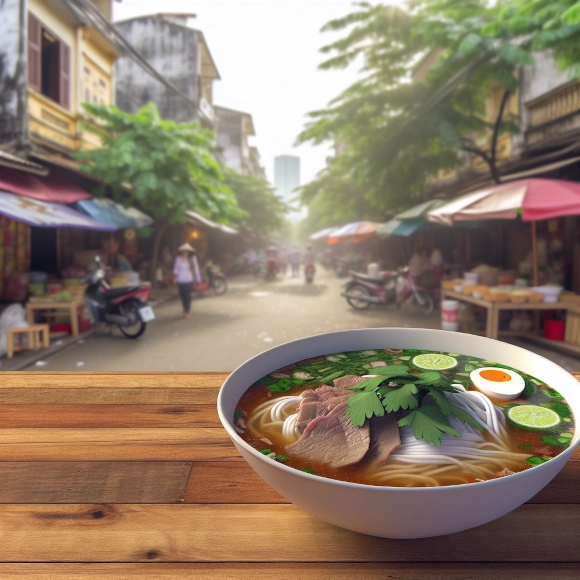
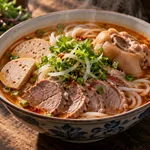
Pho isn’t meant to be heavy. The broth should taste clean, gently sweet from onions, warm from spices (star anise, cinnamon, clove), and savory from salt and fish sauce. The bowl comes alive at the table—each person adds lime, chili, herbs, and extra seasoning to taste.
This recipe gives you two classic paths:
Pho Bo (beef): deeper, longer-simmered flavor; perfect for weekends.
Pho Ga (chicken): lighter, faster; great for weeknights.
🕒 Quick overview
Servings: 4
Prep time: 25 minutes
Cook time: 60–150 minutes (chicken vs. beef)
Difficulty: Medium (mostly hands-off simmering)
Ingredients
For the aromatic broth (choose one)
Option A — Pho Bo (beef):
1–1.2 kg beef bones (marrow/knuckle) plus 300–400 g beef brisket or beef shank (optional but recommended)
2 medium onions, halved
80–100 g fresh ginger, sliced lengthwise
4 star anise
1 cinnamon stick
3 cloves
2–3 tbsp fish sauce (to taste)
1–1.5 tbsp salt (to taste)
1–2 tsp sugar (to taste)
2.5–3 liters water
Option B — Pho Ga (chicken):
1 whole chicken (about 1.2–1.5 kg) or 4–6 bone-in chicken thighs
2 medium onions, halved
60–80 g fresh ginger, sliced
3 star anise
1 small cinnamon stick
2 cloves
2 tbsp fish sauce (to taste)
1–1.5 tbsp salt (to taste)
1–2 tsp sugar (to taste)
2.5–3 liters water
For noodles & toppings 🌿
300–400 g dried flat rice noodles (pho-style)
200–300 g thinly sliced beef (sirloin/eye of round) for pho boor shredded cooked chicken for pho ga
3–4 spring onions, thinly sliced
Fresh herbs: cilantro, Thai basil (or regular basil), mint (mix and match)
Bean sprouts
1–2 limes, cut into wedges
Fresh chili, thinly sliced (or chili sauce)
Optional at the table: extra fish sauce, hoisin, sriracha
Method 🔥
1) Char the aromatics (big flavor, minimal effort) 🧅
Heat a dry pan (or use an oven broiler). Place onion halves and ginger cut-side down.
Char until you get dark spots and a roasted aroma (about 5–8 minutes). This step makes the broth smell “pho-like” rather than simply boiled meat.
2) Start the broth
Pho Bo (beef)
Blanch (for clarity): Cover bones (and brisket/shank if using) with water, bring to a hard boil for 5 minutes, then drain and rinse bones/meat under warm water. Quickly rinse the pot.
Return bones/meat to the pot and add 2.5–3 liters fresh water. Bring to a gentle simmer.
Skim foam for the first 20 minutes for a clear broth.
Add charred onion and ginger, star anise, cinnamon, and cloves. Simmer very gently (barely bubbling) for 1.5–2.5 hours.
If you added brisket/shank, remove it once tender (often 60–90 minutes), cool slightly, then slice thinly.
Pho Ga (chicken)
Place chicken in a pot with 2.5–3 liters water and bring to a gentle simmer. Skim foam for the first 15 minutes.
Add charred onion and ginger plus spices. Simmer gently until chicken is cooked through (about 35–50 minutes for a whole chicken, less for thighs).
Remove chicken, let it cool, then shred or slice the meat. Return bones/carcass to the pot if you want a slightly deeper stock (another 15–30 minutes).
3) Season and strain ✅
Season the broth with salt, sugar, and fish sauce. Aim for a broth that tastes slightly stronger than you want in the bowl (noodles dilute it).
Strain through a fine sieve. Taste again and adjust.
Keep the broth very hot for serving.
4) Prepare noodles
Cook rice noodles according to the package (usually a brief boil or hot soak).
Drain well. If they sit too long, rinse quickly with hot water right before serving to loosen.
5) Build bowls (the fun part)
Divide noodles between bowls.
Add spring onion and a small handful of herbs and bean sprouts.
Pho Bo: add paper-thin raw beef slices (or cooked brisket slices). Pour boiling-hot broth over to cook the raw beef in seconds.
Pho Ga: add shredded chicken, then ladle over the hot broth.
Serve with lime wedges and sliced chili. Let everyone balance sour, salty, and heat to their own taste.
Tips, variations & common mistakes
Keep it at a gentle simmer: a rolling boil makes broth cloudy and can mute aromas.
Don’t overdo the spices: pho should be fragrant, not “mulled.” If it gets too strong, remove spices earlier.
Raw beef safety: use very fresh beef, slice it thin (partially freezing helps), and make sure the broth is truly boiling hot when poured. Prefer it fully cooked? Blanch slices in the broth for 10–20 seconds before serving.
Make-ahead win: broth tastes even better the next day. Chill, remove any solidified fat if you like, then reheat.
Storage
Broth: 3–4 days in the fridge, or freeze up to 3 months.
Noodles: best cooked fresh; if storing cooked noodles, toss lightly with neutral oil and reheat with hot water.
Herbs & sprouts: keep separate, dry, and add at the table.
FAQ ❓
Can I make pho faster?
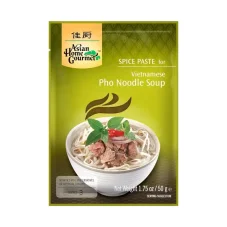
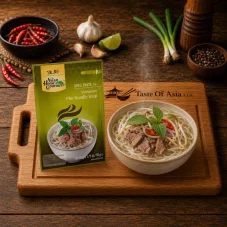
Yes—pho ga is naturally quicker. For an even faster option, you can use a ready seasoning base and focus on fresh garnishes and good noodles.
Why does my pho broth taste flat?
Usually it needs a bit more fish sauce (umami), a touch more sugar (roundness), or simply a squeeze of lime in the bowl. Also make sure you char the onion and ginger.
What are the “must-have” toppings?
Lime, herbs, and something spicy. Bean sprouts and spring onion add crunch and freshness but are optional.
This site uses cookies to provide services, customize ads, and analyze traffic. Your consent to the use of cookies will significantly help us to improve our services. More information



 Česky (CZK)
 Slovensky (EUR)
 Deutsch (EUR)
 Austria
 Belgium
 Bulgaria
 Croatia
 Denmark
 Estonia
 Finland
 France
 Germany
 Greece
 Hungary
 Italy
Italy Latvia
 Lithuania
 Luxembourg
 Netherlands
 Poland
 Portugal
 Romania
 Slovenia
 Spain
Spain Sweden