


 Česky (CZK)
 Slovensky (EUR)
 Deutsch (EUR)
 Austria
 Belgium
 Bulgaria
 Croatia
 Denmark
 Estonia
 Finland
 France
 Germany
 Greece
 Hungary
 Italy
Italy Latvia
 Lithuania
 Luxembourg
 Netherlands
 Poland
 Portugal
 Romania
 Slovenia
 Spain
Spain Sweden










How to cook in a wok: temperature, preparation and the discipline that makes a difference
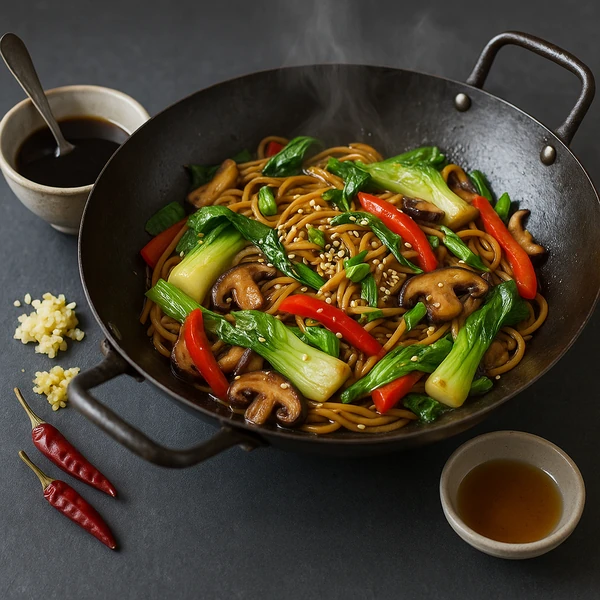
Cooking in a wok is not just “quick frying.” It’s work with high heat, timing and texture – and often the technique determines whether the food will taste Asian or just like a pan mixture. In this guide we’ll clarify what a wok is really for, what cooking style to expect at home and how to avoid the most common mistakes.
Why the wok is so important in Asian cooking (and why it’s not just about the “what” but mainly the “how”){
In many Asian cuisines dishes are defined not only by ingredients or sauces, but by the way heat, steam, fat, stock and texture are handled. The same ingredient can taste completely different depending on whether you quickly sear it in a wok at high heat or let it slowly simmer in stock. That’s why it makes sense to view the wok as a tool that creates a specific type of result: speed, seared aroma, juiciness inside and controlled crispness.
Typical for Asian techniques is, among other things: emphasis on precise temperature, combination of short intense processes with slow ones, and a big role for prepping ingredients in advance (cutting, sorting, pre-portioned). The wok supports this approach – but it also forces you into discipline.
🌶️ What a wok is and how it differs from a regular pan: temperature zones and movement
A wok is a vessel that concentrates the highest heat in the center and creates milder zones toward the sides. Because of this, under the right conditions you can quickly sear in the center and at the same time move or “park” ingredients to the side without immediately burning them. Another typical feature is the possibility of rapid movement of ingredients: tossing, flipping, short contacts with the hottest part of the vessel.
But it’s important to be realistic: a home stove (especially a weaker electric or induction) may not give a wok the performance you know from professional kitchens. In practice this means the result will be great if you adapt your working style – mainly portion size and expectations.
What a wok is used for: stir-fry is the best known, but not the only method
The wok is iconic primarily because of the technique stir-fry (quick sautéing while stirring at high heat). At the same time, in Asian kitchens it often functions as a versatile vessel for other things as well:
- quick frying and short sautéing (the basis for many home dishes),
- braising (when you add liquid after searing and let it finish briefly),
- some soups and quick stock bases,
- steaming (with an insert/steamer),
- combined techniques, where high heat alternates with short finishing.
This is useful to remember also because Asian cooking is not just quick wok work. The large world also includes long stocks and gentle simmering, where on the contrary you don’t want a fierce boil – for example dashi, Vietnamese broths like phở, ramen bases, Korean soups (tang, jjigae) or Chinese brothy soups and braised dishes.
Which wok makes sense at home: material, bottom, size and surface
A wok can work great, but only when it fits home conditions. At home it often makes sense to think practically, not “most professional.”
Material: why carbon steel is often recommended
For home cooking a very sensible choice often proves to be carbon steel: it reacts quickly to temperature changes and handles high heat well. It’s also good to know that such a wok usually expects that you will gradually build a protective layer (seasoning). It’s not a “design” thing but a practical one: the surface then tends to be more stable and more pleasant to use.
Shape of the bottom: when a flat bottom is better than round
A round wok is typical for professional burners where the flame wraps the bottom and the wok sits in a circular holder. At home, however, a flat-bottomed wok, often makes more sense because it has better contact with the hob and behaves more predictably. If your stove can’t send a lot of energy to a small area, a flat bottom can make a crucial difference.
Size: the wok must match the stove and the number of servings
Size is not just about “how much fits.” For stir-fry it matters whether the ingredients reach the hot center or just steam in their own juices. When the wok is too large for the heat source (or you cook too large a batch), the temperature outside the center can’t keep up and the result is soft and watery.
Surface and seasoning: what to expect and what not to overdo
With a working wok (typically made of carbon steel) it’s common for the surface to “wear in” over time. More important than perfection is consistency: cook, clean reasonably and don’t leave the wok wet for long. If you expect the wok to behave like a perfectly non-stick pan without any care, it’s often a source of disappointment.
Stir-fry in practice: a fast technique that requires discipline
Stir-fry is sometimes confused with sautéing in European kitchens, but the difference is usually pronounced: stir-fry typically works with higher heat, faster handling and a different volume of food. The basic mantra is: prepare in advance, cook quickly, don’t overload the wok.
🌶️ What is key for stir-fry: heat, order and small batches
- Heat: the wok must be well preheated before you put anything in it. If you start at low temperature, ingredients will release water and instead of searing they will “cook.”
- Order: in fast techniques it matters what goes into the wok first and what goes later. It makes sense to think about what needs more heat and time and what is done quickly.
- Portion size: the more food you cram into the wok, the more you lower the temperature. If you want searing and pronounced flavor, cook rather in several smaller batches.
- Texture: the goal is not to “overcook everything to the same tenderness,” but to keep differences – crunchier vegetables, juicy protein, a sauce that ties it all together.
Why cutting is so important (and why you can’t make up for it during cooking)
Asian techniques place a great emphasis on prepping ingredients in advance. For the wok this applies doubly: when you’re cooking in minutes, you can’t afford one item to be in large pieces and another in thin slices. The result then splits into two bad possibilities: either you burn the fine pieces or you undercook the large ones.
Practically this means:
- cut so that ingredients cook within the same time window,
- separate things that go into the wok at different moments (for example fast vegetables vs slower ones),
- have everything ready at the stove before you start (bowls are not a “useless luxury” but part of the technique).
Pan as a realistic alternative: when it can be better than a wok
If you have a weaker heat source or a wok that can’t heat outside the center, a good wide panmay deliver more predictable performance. It allows quick sautéing, searing meat and tofu, working with sauces and preparing noodle and rice dishes with better and more even contact with the heat source.
The important attitude: there’s no shame in cooking “Asian-style” on a good pan. The shame is expecting miracles from a wok and then using it for batches that steam instead of sear. Adapting equipment is part of the technique.
Most common mistakes when cooking in a wok (and how to fix them)
- Too full wok: when there’s a heap of food in the wok the temperature drops. Fix: cook in smaller batches and temporarily set finished items aside, then combine at the end.
- Starting at low temperature: ingredients release water and instead of searing you get a soft mixture. Fix: preheat the wok, work faster, don’t dawdle between steps.
- Poor preparation (no mise en place): you don’t chop “on the fly” with a wok. Fix: prepare your ingredients, measure/mix, have everything at the stove.
- Uneven cutting: some parts are done, others are hard. Fix: unify thickness and length, or separate ingredients into groups by cooking time.
- Confusing stir-fry with regular sautéing: European sauté can tolerate longer time and lower heat; stir-fry usually cannot. Fix: raise the temperature, speed up, reduce the batch, accept the “minute” dynamic.
- Unrealistic expectations from the type of wok and stove: a round wok on an unsuitable hob often won’t deliver what people imagine from a restaurant. Fix: choose a more suitable bottom shape, or switch to a wider pan.
- Mixing similar techniques in general: steaming is not cooking in water (different texture), braising is not the same as stewing (different liquid ratio and work with searing), grilling is not baking (different character of heat). Fix: name your goal (searing, tenderness, clear stock, crispness) and choose the technique accordingly.
🍳 First home stir-fry: a simple “operational” procedure that works
To improve quickly with a wok, it helps to repeat a simple framework and tune it according to your stove.
- Prepare everything in advance (⚡): chopped ingredients, separated by timing, and everything within reach.
- Preheat the wok/pan: heat the vessel first, then the ingredients.
- Work in a logical order: what needs the most heat and little time (searing) goes to the hot center; delicate items and quick vegetables go in later.
- Watch the texture: the goal is for each component to remain “itself,” while the whole is unified.
- Serve immediately: wok dishes change texture quickly when they stand.
If your result keeps “steaming” it’s not proof that you “can’t do it.” Often it’s a signal that you need to reduce the batch, heat the vessel more, or choose a wider pan that behaves more predictably at home.
What to take away from the article
- In Asian cooking technique often determines a dish’s identity – with the wok this is doubly true.
- The wok is powerful because of temperature zones and rapid handling, but at home you must work realistically according to your stove’s performance.
- Stir-fry is not just “sautéing”: it needs high heat, small batches, a fast tempo and prepped ingredients.
- Cutting and prep in advance are not details – they are part of the technique.
- A good wide pan can be better at home than a wok that can’t heat beyond the center.
- The most common problems (sogginess, wateriness, lack of flavor) are usually fixed by temperature, batch size and order, not “more sauce.”

Read next
If you want to explore this topic further, continue with these related blog guides and articles:
