


 Česky (CZK)
 Slovensky (EUR)
 Deutsch (EUR)
 Austria
 Belgium
 Bulgaria
 Croatia
 Denmark
 Estonia
 Finland
 France
 Germany
 Greece
 Hungary
 Italy
Italy Latvia
 Lithuania
 Luxembourg
 Netherlands
 Poland
 Portugal
 Romania
 Slovenia
 Spain
Spain Sweden










Bún bò Huế and other distinctive broth soups: how to understand them and enjoy them at home
In Asian cuisines, soup is often not just "something to start with," but a full meal – a morning bowl, a quick street food lunch, homemade comfort food, and a festive part of dining. Bún bò Huế is among well-known Vietnamese broth soups and opens well the topic of "strong" bowls: what makes the broth intense, what role noodles, herbs, and final seasoning play – and why a similar principle appears across Asia in various forms.
Why broth soups in Asia are often a main dish (not an appetizer)
The most important reference point: in many Asian cuisines, soup is not just a first course. It can be a main meal, a morning meal, a quick street lunch, a shared "pot" at the table, a light supplement to rice, or a dish people perceive as warming and comforting.
Practically, this means that a good broth soup is not built only on liquid. It works as a bowl where broth, noodles or rice, toppings, and final seasoning meet. And this very combination explains why a soup can feel light, yet be flavorfully intense.
How to navigate Asian soups
- Type of liquid base (broth or aromatic base)
- Role of noodles or rice (main carrier of satiety and texture)
- Lightness vs richness (clear and "clean" bowls vs fuller stew style)
- Method of seasoning (what happens in the pot vs what is done at the table)
- Situation when it is eaten (breakfast, main meal, sharing)
What makes broth "strong": liquid base as a carrier of flavor and the identity of the dish
In Asian cooking, broth often does not function just as "liquid under the noodles." It is a carrier of flavor, warmth, texture, and dish identity. It can be the main flavor of the whole dish, the environment for cooking ingredients, or a supporting base that with a different ratio and seasoning becomes the basis for a sauce.
Important detail: broth is not automatically soup. Broth is a building element; soup is a finished bowl where the liquid base connects with noodles/rice, additional ingredients, and final adjustments.
👃 Two useful opposites: dashi vs long aromatic broths
One part of Asian "soup thinking" relies on dashi – a quicker, precise, and clean base that determines the direction of the whole bowl. At the other end of the spectrum are long aromatic broths, which are built by longer simmering and aromatic layering. A typical example often given is phở because it shows that:
- broth is the center of the dish,
- spices should be readable but not "loud",
- cleanness is as important as depth,
- the final bowl emerges only by combining broth, noodles, meat (or other protein), herbs, and table seasoning.
Bún bò Huế: Vietnamese broth bowl in the context of Vietnam's regions
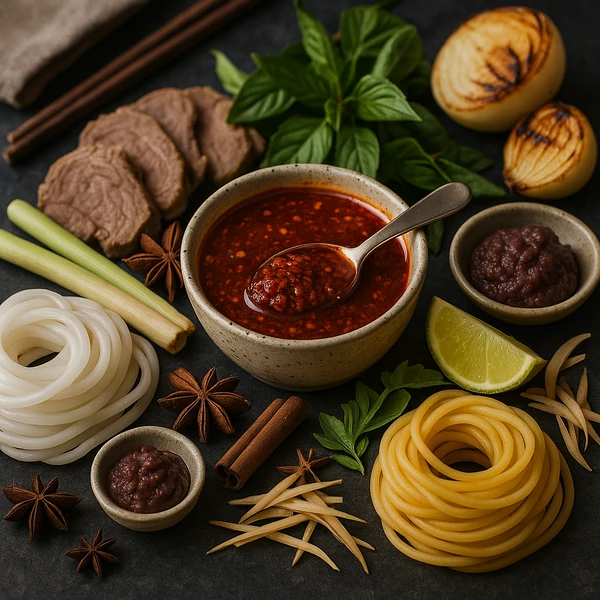
Bún bò Huế is one of the typical Vietnamese dishes, and its name is commonly used for the broth soup associated with the city of Huế. Huế lies in central Vietnam – and central Vietnam (especially the area around Huế) is often connected in cuisine with bolder flavor, greater intensity, and richer visual composition.
This comparison is helpful even if you are not dealing with a specific recipe: Vietnamese soups are not "one thing." Regional differences influence how strong and pronounced the broth can be expected, how herbs are used, and how "lively" the final seasoning should be.
What "bún" means in practice
Rice products are fundamental in Vietnamese cuisine. Besides phở (rice noodles for soups like phở), there is also the category bún – rice noodles used in various dishes. For home cooking, this is important mainly because of texture: different noodles suit lighter, herbaceous broths, and others need to hold up in a richer, "stronger" bowl.
Other "strong" soup worlds: when intensity does not come only from long simmering
The "strength" of a soup in Asia is not just about how long something is simmered. Sometimes it is created by acidity, peppery sharpness, work with texture, or the very way the meal is eaten.
👃 Phở: long aromatic broth as the center of the dish
Phở is a useful reference point for all long aromatic broths: it shows that the bowl stands on the broth but feels complete only when combined with noodles, herbs, and final seasoning. In other words: the broth is the base, but the whole dish is the final composition.
China: hot and sour soup and fine broths (plus hotpot as a "social broth")
The Chinese soup world is not just one "hot and sour" soup. Hot and sour soup is a great example of how a balance of acidity, pepper sharpness, broth, and texturecan work.
Besides that, many Chinese regions also work with light, clear broths, which highlight the main ingredients. Then there's hotpot (huoguo): it is not soup in the European sense but belongs to the broader soup world as a table-side cooking system in broth, where the broth functions not only in flavor but also socially – it is a "space" where everyone creates their bite.
Philippines: sinigang and acidity as the center of the soup
Sinigang shows a different type of intensity: acidity is not marginal but forms the center of the whole dish. The connection to rice and the "homemade" layer is also important – the soup can be sharp, sour, yet comforting at the same time.
Hot vs cold: soup does not have to be only a winter dish
The image of Asian soups also includes cold or chilled variants: for example, Korean naengmyeon, some Japanese summer soups and broths, light seasonal versions with ice or chilled bases, or cold dipping soups for noodles. It's a good reminder that "soup" in Asia is not automatically a heavy winter meal – it can also be refreshing.
Practically at home: how to choose noodles and assemble a broth bowl without a complete recipe
If you want to start stress-free, it is useful to think of the bowl as a puzzle. Soups in Asia often stand on simple logic: liquid base + noodles/rice + toppings + herbs + final seasoning. In practice, most mistakes happen with noodles and timing.
1) Choose noodles based on what needs to hold up in the broth
Noodles ideal for soup are those that keep their shape even after contact with hot broth and don’t immediately tear or fall apart. Generally, noodles with higher elasticity tend to be better for richer broths. Rice versions often work well in lighter and herbaceous broths.
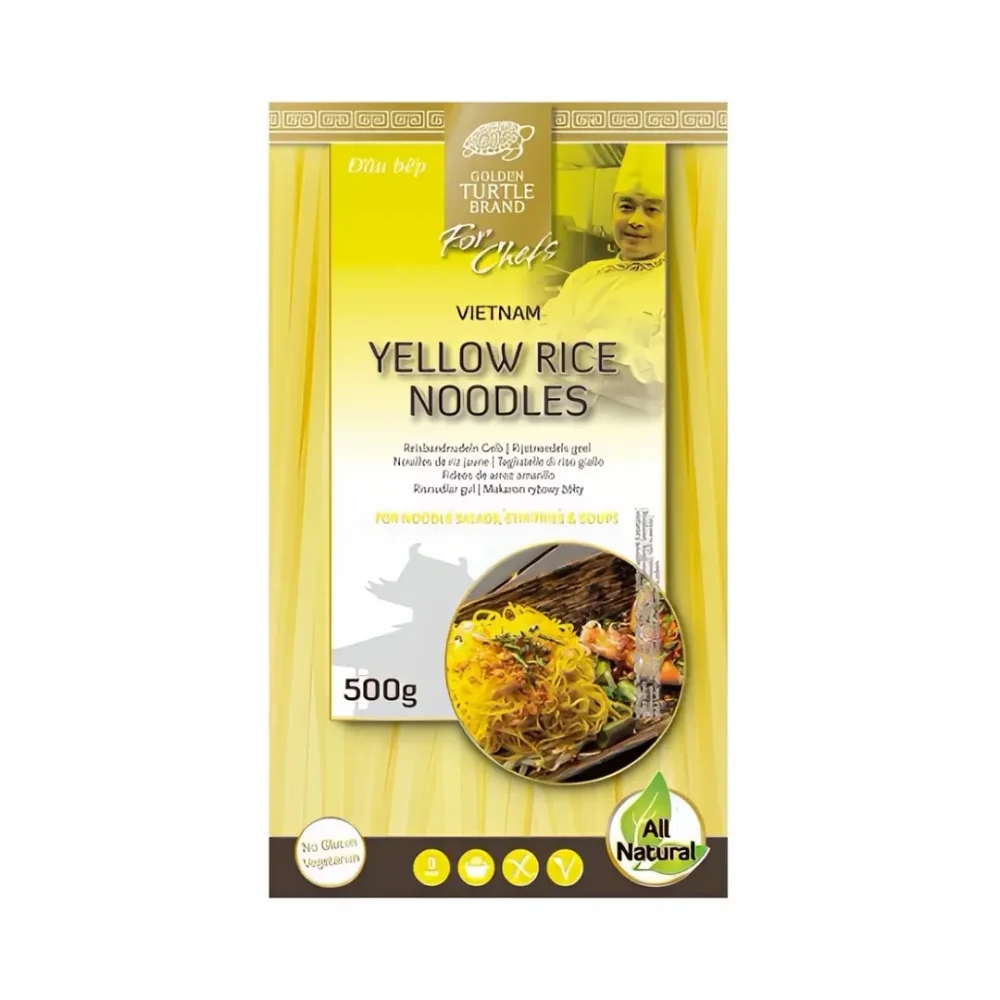
A practical guide can be the category rice noodles – rice noodles are typical for soups like phở and many dishes with "bún" noodles. If you want a universal width suitable for soup and stir-fry, a typical example is 3 mm rice noodles.
2) Keep in mind that noodles continue to soften in the broth
For some noodles, timing is key: for example, with ramen it is explicitly expected that they easily overcook and continue to soften in broth. This principle is useful generally: if the bowl is to be "ready" in a few minutes at the table, plan so the final texture of the noodles is not mushy.
👃 3) The "strength" of the bowl is often made by the final layer: aroma, herbs, and table seasoning
Asian soups typically feature a big role for aroma, fresh herbs, and final seasonings. For long aromatic broths (phở is a classic model), the bowl only comes together when the broth is combined with noodles and other ingredients, and space is given for seasoning at the table. If you feel "it doesn’t taste like at the bistro," it’s often not about adding more salt to the pot but understanding that part of the flavor and aroma is added at the end.
4) What to serve with soup when you want something light "to go"
In some cuisines (Vietnam is a good example), lighter accompaniments often function alongside noodle dishes. A typical dish is fresh spring rolls (gỏi cuốn) – and if you’re interested in exploring this part of dining, a practical base is rice paper.
💡 What to watch out for: common mistakes with distinctive broth soups
- Treating soup only as an appetizer – in the Asian context, this often doesn’t make sense; the bowl should be full and "assembled."
- Expecting the broth alone to do everything – in many soups, the finished impression is a combination of broth, noodles, herbs, and final seasoning.
- Confusing broth and soup – broth is a building element; soup is a finished bowl with noodles/rice and other ingredients.
- Overcooking "strength" at the cost of clarity – in long aromatic broths, spices should remain readable but not overpowering.
- Overlooking noodle texture – broth calls for noodles that hold up; and it’s necessary to watch that they continue to soften in the hot liquid.
- Thinking soup must always be hot and heavy – the Asian soup world includes cold and refreshing variants.
What to take away from the article
- In Asia, soup is often the main meal – the bowl stands on broth but works only with noodles/rice, toppings, and final adjustments.
- A "strong" soup is not just a long-simmered broth: intensity can also arise from acidity, pepper sharpness, texture, or way of eating (hotpot).
- Bún bò Huế makes sense to understand in the context of Vietnam’s regions: central (around Huế) is often associated with a bolder, more intense cuisine.
- For home success, two things are key: the right type of noodles for the broth and working with the final layer (aroma, herbs, table seasoning).

Read next
If you want to explore this topic further, continue with these related blog guides and articles:
