


 Česky (CZK)
 Slovensky (EUR)
 Deutsch (EUR)
 Austria
 Belgium
 Bulgaria
 Croatia
 Denmark
 Estonia
 Finland
 France
 Germany
 Greece
 Hungary
 Italy
Italy Latvia
 Lithuania
 Luxembourg
 Netherlands
 Poland
 Portugal
 Romania
 Slovenia
 Spain
Spain Sweden










How to Prepare Asian Teas at Home: From "True Tea" to Modern Iced Drinks
Preparing Asian teas at home is not about a single correct procedure, but about knowing, what type of tea you are holding and what to expect from it. Once you get oriented with the main tea categories, the differences between Chinese and Japanese styles, and learn to read the packaging information, even modern drinks like bubble tea, matcha latte, or citrus iced drinks will start to make sense.
Why "Asian Tea" is Not One Thing
The word tea in the Asian context encompasses several major traditions that differ in origin, processing, taste, aroma, and also how they are commonly served. At home, disappointment often doesn’t arise because the tea is "bad," but because we expect a different style (for example, strong power instead of delicacy), or we mistake pure tea for a blend with aroma or sugar.
The first step to a good cup is therefore orientation: understanding what "true tea" is, what the basic types are, and what role origin and form (loose vs. bags, pure tea vs. blend) play.
🌶️ What is True Tea (and why it matters when preparing at home)
True tea is made from the leaves of the plant Camellia sinensis. The key point is that the main differences between white, green, oolong, black, and dark tea don’t come from different plants, but primarily from the processing method.
This has a practical impact: two packages with the same word "green" on the label may not taste similar – and the same applies across styles and countries. The same name doesn’t automatically mean the same quality or taste either.
Basic major tea types: what to expect in taste and expression
The following overview is useful as a home "map." You don’t need to know everything – just clarify if you want a delicate, fresh, or conversely a full and pronounced profile.
White Tea
White tea is among the least processed. It is usually delicate, light, sometimes floral or sweetly fruity. An important clarification: it’s not automatically a "weak tea", just generally more subtle than a pronounced black or dark tea.
Green Tea (China vs. Japan)
Green tea is characterized by early oxidation stopping. As a result, it tends to have fresher, grassy, seaweed, vegetable, or nutty notes. In China, the leaves are often heated in a pan, while in Japan they are typically steamed – and this is one of the reasons why Chinese and Japanese green teas don’t taste the same.
If you are starting with green tea, the Chinese style might be friendlier for you: Chinese green teas are often milder, nuttier or chestnut-like, while some Japanese styles can taste distinctly "marine" and umami.
Yellow Tea
Yellow tea is rarer. Simply put, it stands between green tea and a more smoothly rounded profile. It usually isn’t as grassy as many green teas and feels softer.
Oolong
Oolong is a big and diverse category between green and black tea. It can be light, floral, and creamy, but also darker, roasted, mineral, or honey-fruity. The variability of oolongs is precisely why it's worthwhile to read the type and origin clearly on the packaging, not just rely on the general word "oolong."
Black Tea
Black teas are often associated with a fuller, richer impression and are a typical base for stronger infusions and milk teas. In the Asian context, it’s good to be aware of regional styles – for example India.
Dark / Post-fermented Tea
Dark (post-fermented) teas form a separate world. At home, they often feel "deeper" and different than classic black teas. If you are transitioning from regular black teas, it may be useful to set your expectations: dark tea is not just "black tea under a different name."
China and India as key tea worlds: what this tells you for home preparation
When choosing tea at home, it's helpful to know that some countries are not just "origin" but entire tea universes.
China: the cradle of tea and six major categories
China is historically and culturally crucial for tea: it’s where the oldest documented tea tradition originated and from where tea spread to Japan and other parts of Asia. The Chinese tradition works with six major tea categories: green, yellow, white, oolong, black, and dark.
Besides these, there are also aromatized or processed teas, for example, jasmine tea. For jasmine tea, it is useful to know that in a higher-quality approach it is not just a "blend with simple aroma," but tea leaves that have absorbed the scent of jasmine flowers.
India: Assam, Darjeeling, and why "chai" is often confused
India is crucial to the tea world mainly due to black teas. Two iconic directions are Assam and Darjeeling:
- Assam is known for a full, malty, rich profile. It’s suitable for morning teas, stronger infusions, and milk teas. When someone looks for "strong tea," they often mean the Assam style.
- Darjeeling is more delicate, aromatic, and distinctly terroir-driven. It is often called "the champagne of teas," but it’s better not to take this literally – the important thing is that it is a tea with protected origin and a specific profile that cannot be simply swapped with common black tea.
Also important is the word chai: in common speech, it’s used as a synonym for spiced Indian milk tea, but in reality it just means "tea." What Europeans usually mean is masala chai: black tea prepared with milk, sugar, and spices (for example cardamom, cinnamon, ginger).
How to read tea packaging: a quick home check before first preparation
Packaging is often half the orientation for teas. If you want to prepare Asian teas at home with confidence, it’s worth reviewing four things – and not just following pictures or general names.
- Country and region of origin
Origin makes a lot of sense for tea. "Japanese green tea" means something different than "matcha-style tea." For some teas (like Darjeeling), origin is a crucial part of authenticity and expected profile.
- Type of tea
Look for whether it’s green tea, oolong, black, dark, matcha, genmaicha, or flavored tea. One word on the packaging often matters more than the marketing name.
- Composition
For pure tea, the ingredient list should be simple. For blends, check whether it’s tea with flowers, natural aroma, sugar, or dairy component. This is important especially for "modern" variants: matcha latte-type blends often have large amounts of sugar and dried milk, not pure matcha.
- Form
Loose tea usually offers better space for whole leaf and finer control of preparation. Tea bags are convenient but often contain smaller particles. This doesn’t automatically mean lower quality – just good to know what you’re buying and why.
A practical start at home: traditional cup vs. modern Asian tea drinks
Modern Asian drinks are not just "something sweet with ice." They combine traditional tea culture, urban street food, emphasis on aroma and color, and often texture as an experience. At home, it’s surprisingly simple to get a handle on them if you set a reasonable minimum.
A simple rule to start: base, texture, direction, and sweetness
For initial home attempts, you don’t need tons of syrups. A sensible start according to modern beverage logic:
- one good tea base (for example black tea for milk and "bubble" directions, or green tea for fresher profiles),
- one textural element (tapioca, jelly, etc.),
- one characteristic aromatic direction (for example citrus),
- and sweetness control (better to start moderately and adjust than to overpower the tea).
Three home directions that make sense (without turning it into a "recipe")
- Bubble tea with black tea and tapioca
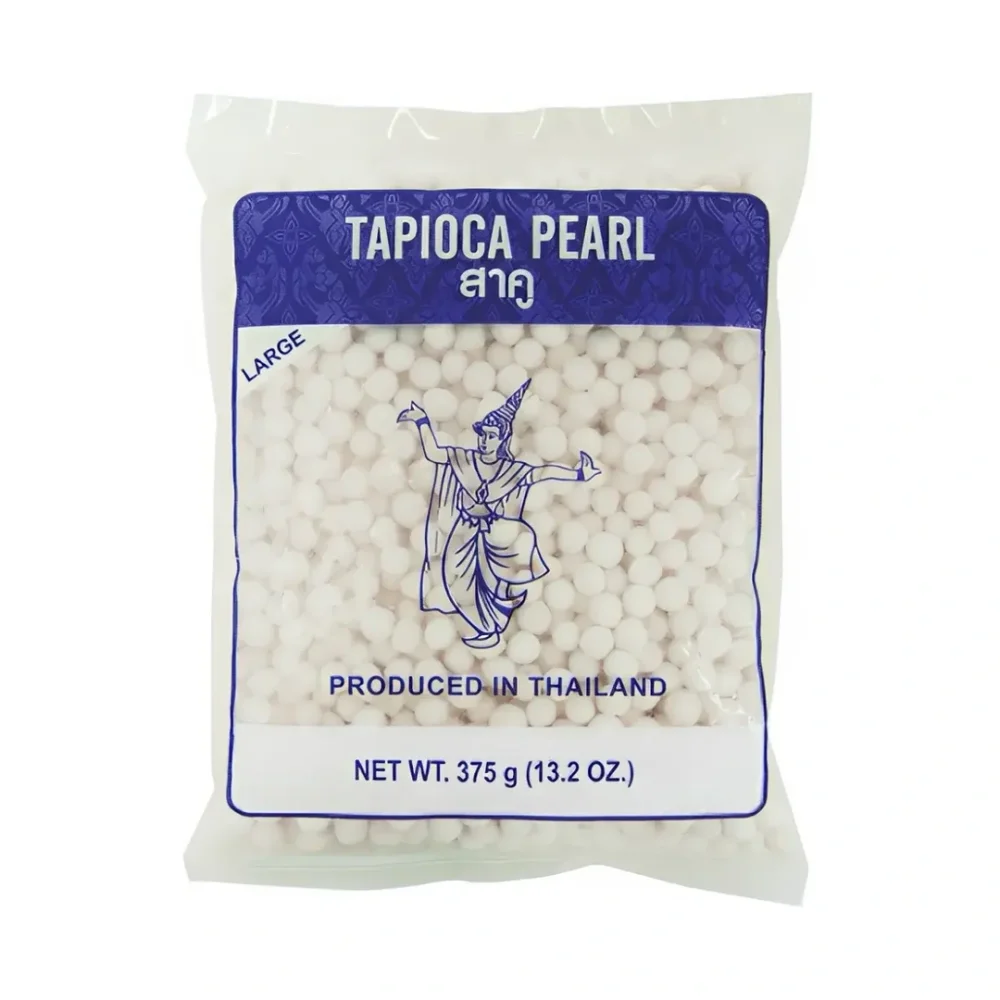
Bubble tea is a typical "textural drink" – the crucial thing is the combination of tea base and a chewy element. If you want to start simply, stick to black tea as the base and one texture. Tapioca pearls used at home include, tapioca pearls Thai Dancer "L".
tapioca pearls Thai Dancer "L" OPEN PRODUCT - Iced Matcha Latte
Matcha works in modern drinks also because it has a strong color and clear identity. When choosing, distinguish whether you buy pure matcha or a "matcha latte blend" – these blends often have a significant role for sugar and dried milk, which fundamentally change the result in the cup.
- Citrus and fruit iced lines: yuzu/yuja and maesil
In Korean beverage tradition, alongside "tea from tea leaves," fruit bases and syrups are also commonly used. For modern use, for example yuzu/yuja (citrus direction) or maesil-cha (drink from diluted plum extract) are mentioned. If you are attracted to a fruit base, the category fruit and fruit productsis a practical guide, because that’s usually where concentrates and fruit components for iced drinks fall.
Visuals and layering are not just "for effect"
In modern Asian drinks, it is common that they are built to look good: layering colors, contrast of white milk and dark tea, bright green matcha, dark tapioca pearls or clear ice cubes. It’s not just marketing – the visual relates to how the drink functions: layers show texture, color signals taste, and the overall impression supports the drinking ritual.
Practical impact at home: when you prepare and layer individual components "separately" (tea base, milk, ice, texture), it’s easier to keep an eye on sweetness and the final profile.
Common mistakes in home preparation of Asian teas (and how to recognize them early)
- Same name ≠ same tea
With teas, the same name on the packaging doesn’t necessarily mean the same taste or quality. In practice, it helps to go back to the tea type (green/oolong/black…) and origin.
- Mistaking "pure tea" for a sweet blend
This typically happens with modern variants. For blends, watch the composition: if tea is supposed to play the main role, it’s good to know if the result isn’t actually mostly sugar and dairy.
- Unclear expectations: am I looking for delicacy or strength?
White and some green teas tend to feel more delicate, while "strong tea" is often imagined in the Assam style. When you clarify what you want (delicacy vs. richness), it greatly simplifies the choice and satisfaction with preparation.
- Too many components at once
For modern drinks, it’s easy to add several syrups and toppings and lose the tea’s flavor. Stick to the starter rule: one tea base, one texture, one aromatic direction, and sweetness in control.
What to take away from the article
- Asian teas are several distinct traditions – and home preparation becomes simple once you know what type of tea you are drinking.
- True tea is Camellia sinensis; differences between types are mainly due to processing, not "different plant."
- Basic types (white, green, yellow, oolong, black, dark) should be remembered as a taste map: from delicate and fresh to rich and deep.
- Read the packaging: origin, type, composition, and form tell you more than the marketing name.
- Build modern drinks easily: tea base + texture + aromatic direction + sweetness control.
Read next
If you want to explore this topic further, continue with these related blog guides and articles:
