

 Česky (CZK)
 Slovensky (EUR)
 Deutsch (EUR)
 Austria
 Belgium
 Bulgaria
 Croatia
 Denmark
 Estonia
 Finland
 France
 Germany
 Greece
 Hungary
 Italy
Italy Latvia
 Lithuania
 Luxembourg
 Netherlands
 Poland
 Portugal
 Romania
 Slovenia
 Spain
Spain Sweden










Yuzu Paste
🍋 Yuzu paste: citrus “umami” for dressings, glazes and quick sauces
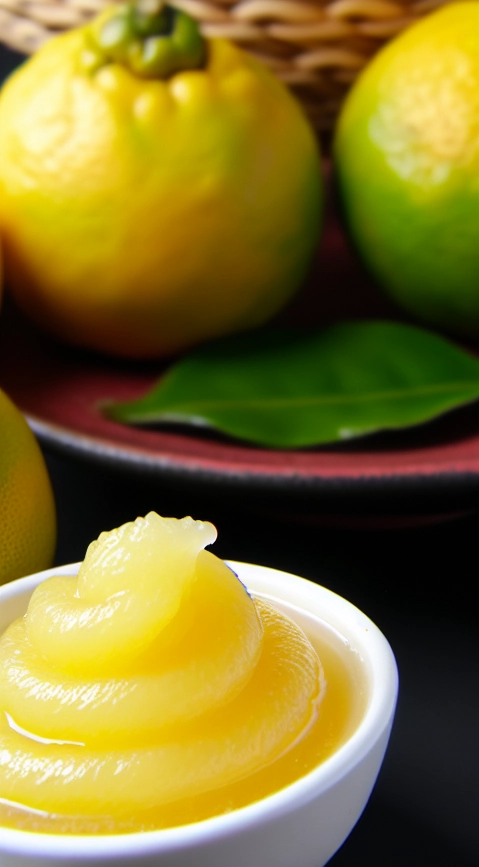
Yuzu paste is a concentrated seasoning built around the aroma of yuzu citrus. In cooking it is used mainly for fragrance, freshness and a clean citrus lift that lightens richer ingredients and sharpens savoury, umami flavours in sauces. It is a practical way to get a “Japanese citrus profile” without sourcing fresh yuzu.
Ingredients for Asian cooking are available at Asian Food Shop
💡 Note: Yuzu paste is often dosed like citrus zest. A small amount is usually enough because the main strength is aroma.
🕰️ Origin and background
Yuzu is closely linked to Japanese food culture and seasonality. Fresh fruit is prized for zest and juice, but the season is short, so preserving yuzu in longer-lasting forms such as juices, sauces and pastes is common.
Trivia
Yuzu is also associated with winter in Japan. A well-known custom is “yuzuyu”, a bath with yuzu fruits around the winter solstice, valued mainly for fragrant oils from the peel. In cooking the same principle applies: citrus oils deliver most of the impact.
🧪 Making, types and ingredients
Products sold as “yuzu paste” can differ in style. What they share is concentration: both in taste and aroma.
Common styles
- citrus yuzu paste focused on fragrance and freshness, suitable for dressings, dips, glazes and quick sauces
- yuzu kosho style a mix of yuzu, chilli and salt with a sharper, saltier profile, often used as a finishing seasoning
- yuzu in flavoured sauces for example in chilli sauces, where citrus brightens flavour and lightens the heat
Related items are often found in Other pastes and, for chilli versions, in Chilli sauce.
👃 Flavour profile
- 🍋 intensely citrusy and aromatic, often more peel-like than lemonade-like
- 🌿 a light floral impression
- ⚡ quickly boosts perceived freshness
- 🧂 depending on the style it can be mildly salty or spicy
✅ Note: In warm sauces, yuzu is usually added at the end to preserve aroma.
🍳 How it is used
🥗 Dressings and cold sauces
Yuzu paste works as a fast base for a citrus dressing. Combined with Light soy sauce, a touch of sweetness and a little oil, it creates a profile close to a ponzu-style dressing.
🍜 Noodles and wok seasoning
In small amounts, yuzu paste can lighten stir-fried noodles or rice. It pairs well with Wheat noodles and sesame oil.
🐟 Fish and seafood
Citrus is a classic match for fish. Yuzu is used in glazes, marinades and as a finishing touch on cooked dishes.
🍗 Meat glazes
In glazes, yuzu is often combined with soy sauce and a sweet component, producing a glossy finish and a balanced sweet-savoury profile.
🥟 Dips for fried food
In mayonnaise-based dips or simple sauces, yuzu paste adds a citrus accent that keeps heavier fried food tasting brighter.
🫶 Wellness notes
Yuzu paste is primarily a seasoning. A practical benefit in cooking is that citrus aroma increases perceived freshness, so sauces can feel more balanced with less salt or sugar. If acidity is a concern, dosing in small increments helps.
✅ How to choose yuzu paste
- use case cold sauces and dressings versus glazes and warm cooking
- ingredients pure citrus paste versus chilli and salt in a kosho style
- intensity concentrated products are best dosed by small spoonfuls
- storage keep chilled after opening and use a clean spoon
🛒 Product picks
- S&B Yuzu paste 43 g a compact option as a citrus accent for dressings, dips and finishing
- Flying Goose Chilli Sauce Sriracha Yuzu 455 ml a mix of heat and citrus freshness for glazes, dips and street-food style
- T'best Citrus Yuzu Tea 500 g a sweet yuzu profile for drinks and desserts, useful when a marmalade-style citrus note fits
🍜 Recipe: Chilled wheat noodles with a yuzu-soy dressing and sesame
A light, Japanese-leaning idea where yuzu provides the main aromatic layer and soy sauce carries the savoury base. Suitable as a quick lunch or a side for fish.
Ingredients
- wheat noodles 300 g
- yuzu paste 1 to 2 tsp
- light soy sauce 1.5 tbsp
- rice vinegar 1 tbsp
- sesame oil 1 to 2 tsp
- sugar 1 tsp
- ginger 1 tsp finely grated
- garlic 1 small clove finely grated
- spring onion 2
- cucumber 1 small
- carrot 1 small
- sesame 1 to 2 tsp to finish
- water and ice for chilling
Method
- Cook noodles according to the pack and rinse immediately under cold water. Chill briefly in ice water, then drain very well.
- Mix yuzu paste, light soy sauce, rice vinegar, sesame oil, sugar, ginger and garlic. Taste and adjust with a little more yuzu paste or sugar.
- Julienne cucumber and carrot. Slice spring onion on the bias.
- Toss noodles with the dressing, then add vegetables and spring onion.
- Serve immediately and finish with sesame.
✅ Note: Thorough draining is key for chilled noodles. Excess water dilutes the dressing and mutes yuzu aroma.

Recommended products1
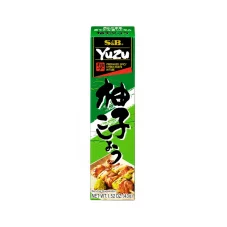
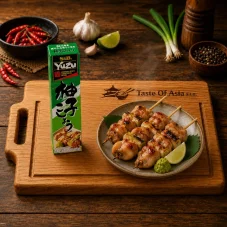
S&B Yuzu paste 43 g
Read next
If you want to continue with the same topic, here are more related articles to explore: