

 Česky (CZK)
 Slovensky (EUR)
 Deutsch (EUR)
 Austria
 Belgium
 Bulgaria
 Croatia
 Denmark
 Estonia
 Finland
 France
 Germany
 Greece
 Hungary
 Italy
Italy Latvia
 Lithuania
 Luxembourg
 Netherlands
 Poland
 Portugal
 Romania
 Slovenia
 Spain
Spain Sweden










Papaya: How to Pick It, Prep It, and Use Ripe vs Green Papaya in Asian Cooking
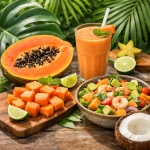
🥭 Two papayas in one: ripe fruit vs green “vegetable”
If you’ve only eaten papaya as a breakfast fruit, you may be surprised by how often it shows up in Southeast Asian savory dishes. The key is ripeness:
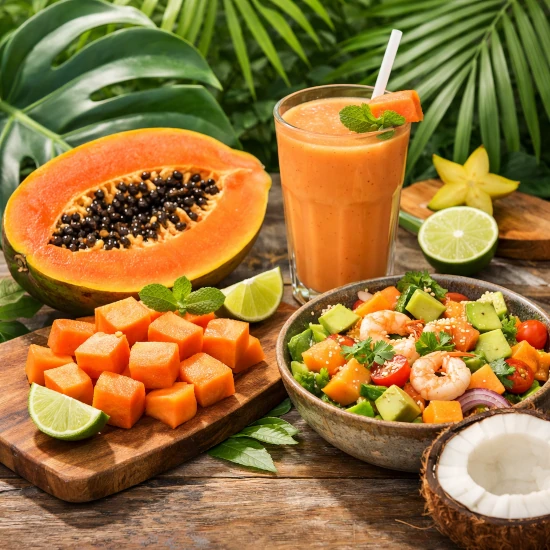
- Ripe papaya: orange flesh, soft and juicy, gently sweet with a melon-like character and light floral notes.
- Green papaya: unripe, pale flesh, crisp and neutral. It soaks up dressings and sauces and brings crunch to salads and stir-fries.
That “mild” taste in green papaya is a feature, not a flaw—it’s a blank canvas for lime, chili, and salty umami seasonings.
🕰️ Where papaya fits in Asian food culture
Papaya originated in the Americas, but it’s now deeply woven into everyday cooking across tropical Asia. Thailand made green papaya globally famous through som tam (spicy green papaya salad). Vietnam uses shredded green papaya in light salads and pickles. In parts of the Philippines and Indonesia, ripe papaya often appears with coconut-forward desserts or as a cooling side next to bold, spicy meals.
🥗 What it tastes like (and why it balances spicy food)
- Ripe papaya is mellow and sweet—use it to soften heat and acidity in a meal.
- Green papaya is crunchy and refreshing—use it to lighten richer foods and carry punchy dressings.
Quick fix for bland ripe papaya: add a pinch of salt and a few drops of lime. It often makes the fruit taste “more papaya.”
🧰 How to cut and prep papaya without frustration
- Wash the skin before cutting (your knife passes through it).
- Halve lengthwise and scoop out the seeds with a spoon.
- Peel with a vegetable peeler or knife.
- For green papaya, shred into thin matchsticks (a julienne peeler or grater works well).
Sticky sap note: Green papaya can release a slightly sticky latex-like sap, especially near the peel. If it bothers you, rinse your knife and hands, and consider kitchen gloves.
🔥 Best ways to use papaya in the kitchen
1) Crisp salads and quick sides (green papaya)
Shredded green papaya shines in a sweet-sour-salty-chili dressing. Add cherry tomatoes, green beans, cucumber, or carrots, then finish with roasted peanuts for crunch. Keep marinating short—too long and you lose the crisp bite.
2) Fast stir-fries (green papaya)
Treat green papaya like a crunchy vegetable: quick heat, high flame, minimal cooking time. Toss with garlic, chili, and your sauce of choice until just warmed through. If you cook with a wok regularly, a dedicated pan makes the high-heat texture easier to nail.
3) Grill or roast (ripe papaya)
Ripe papaya caramelizes quickly. Cut into thick wedges, grill briefly, then finish with lime and a pinch of salt. It’s excellent next to grilled meats, tofu, or as an unexpected warm dessert with yogurt.
4) Smoothies, bowls, and “cooling” sides (ripe papaya)
Blend ripe papaya with coconut milk or yogurt. Or dice it and serve as a quick side dish alongside spicy meals—the sweetness helps tame chili heat.
5) Quick pickles (green papaya)
For a simple fridge pickle, toss shredded green papaya with salt, sugar, and lime or rice vinegar. Let it sit 15–30 minutes, then serve with rice dishes or grilled foods.
✅ How to choose papaya: a practical checklist
Ripe papaya (for sweet uses)
- Color: look for yellow to orange skin (some green patches are fine).
- Feel: it should yield slightly under gentle pressure, similar to a ripe avocado.
- Aroma: a fruity, tropical smell near the stem end is a good sign.
- Avoid: deep wrinkles, large sunken bruises, or a fermented smell.
Green papaya (for salads and savory cooking)
- Firmness: should be hard and heavy for its size.
- Skin: mostly green, unyielding to pressure.
- Goal: maximum crunch—don’t buy one that’s already softening.
🧊 Storage and ripening tips
- To ripen: keep papaya at room temperature. A paper bag can speed it up.
- Once ripe: refrigerate and eat within 2–3 days for best flavor and texture.
- Cut papaya: store covered in the fridge; the flesh dries out quickly when exposed.
- Green papaya: store cool and dry; shred right before serving for the best crunch.
🥣 A simple som tam-style dressing formula (no special tools)
Use this as a flexible blueprint for green papaya salads:
- Salty: fish sauce or light soy sauce
- Sour: lime juice
- Sweet: palm sugar or brown sugar
- Heat: fresh chili (add gradually)
Start with a balanced taste (salty–sour–sweet), then adjust chili last. If the salad tastes flat, it usually needs either more lime (brightness) or a pinch more salt (depth).
Common mistakes (and how to avoid them)
- Buying the wrong ripeness: green papaya won’t become sweet overnight, and ripe papaya won’t shred nicely for salad.
- Over-marinating green papaya: long soaking softens it—dress close to serving time.
- Overcooking green papaya: treat it like a quick-cook vegetable; it should stay slightly crisp.
- Expecting strong flavor from green papaya alone: it’s designed to carry dressing.
Our picks (useful tools)
- Japanese chopper Nakiri 20 cm – great for clean, fast slicing and shredding prep for salads.
- Japanese knife Santoku 20 cm – an all-rounder for peeling, trimming, and portioning ripe papaya.
Related categories
- Fruit and fruit products – for ripe papaya and fruit-based pairings.
- Vegetables and mushrooms – for salad add-ins and crunchy companions to green papaya.
- Wok pans – for quick, high-heat stir-fries with green papaya.
FAQ
Can I eat papaya seeds?
They’re technically edible and peppery, but they’re usually removed because their flavor is intense and can overpower the fruit. For most dishes, scoop them out and discard.
Why does my papaya taste “soapy” or odd?
Variety and ripeness make a big difference. Try chilling ripe papaya, then adding a pinch of salt and lime. If the aroma is fermented or overly musky, the fruit may be past its best.
What’s the easiest first dish with green papaya?
A simple shredded salad with lime, a salty seasoning, a bit of sugar, and chili—then add tomatoes and peanuts. It delivers the classic sweet-sour-salty-crunchy experience with minimal effort.

Read next
If you want to continue with the same topic, here are more related articles to explore: