

 Česky (CZK)
 Slovensky (EUR)
 Deutsch (EUR)
 Austria
 Belgium
 Bulgaria
 Croatia
 Denmark
 Estonia
 Finland
 France
 Germany
 Greece
 Hungary
 Italy
Italy Latvia
 Lithuania
 Luxembourg
 Netherlands
 Poland
 Portugal
 Romania
 Slovenia
 Spain
Spain Sweden










Fermented spirit vinegar
🧴 Fermented spirit vinegar: clean acidity that saves a dip, pickles and a sauce
Fermented spirit vinegar is the vinegar you reach for when you need one thing: clean, straightforward acidity. It’s not as aromatic as rice vinegar and it’s not as deep as aged dark vinegars. That’s exactly why it’s so useful. A small splash can cut richness, balance sweetness and instantly wake up flavour.
Get your Asian pantry staples at Asian Food Shop
💡 Tip: When a sauce feels heavy or too sweet, a few drops of vinegar often bring it back into balance
🕰️ Background and origin
Vinegar has always been tied to fermentation. Fermented spirit vinegar is the practical, consistent style: stable, predictable and flavour-clean. In Asian cooking it’s used when you want acidity without extra aroma, especially for quick pickles, sharp dips and sweet-and-sour sauces.
🧪 What it is and how it’s used
Fermented spirit vinegar is produced by fermenting alcohol into acetic acid. In the kitchen that means:
- a clean taste with minimal side notes
- fast impact in brines and sauces
- easy, predictable dosing
If you want to browse similar items, see Vinegars
👃 Flavour profile
- 🧴 punchy, direct, clearly acidic
- ⚡ quickly pulls back sweetness and lifts flavour
- 🥒 perfect for quick pickles when you don’t want extra aroma
✅ Tip: Add it in small steps. With clean vinegars it’s easy to overshoot
🍳 Best uses in the kitchen
🥒 Quick pickles and crunchy sides
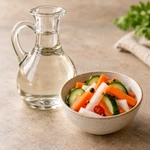
Fermented spirit vinegar is excellent for quick pickles because the acidity is clear and clean. It works with cucumber, radish, carrot and onion.
🥟 Dumpling dips
Use a few drops in a dip with Soy sauces and a pinch of sugar. Add heat from Chilli sauce if you like.
🍜 Sweet-and-sour sauces
If a sweet-and-sour glaze turns out too sweet, this vinegar brings it back fast. It’s also great to cut richness in oil-forward sauces made with Oils.
🔥 Hot dishes
Add vinegar closer to the end so the acidity stays bright and doesn’t taste cooked.
🫶 Everyday note
Think of it mainly as a flavour tool. It can make sauces taste brighter and often helps you use less salt. If you’re sensitive to acidity, start small and adjust to taste.
✅ How to choose
- clean profile: best when you want acidity without added aroma
- purpose: ideal for pickles and fast balancing
- dosing: less is more
- storage: keep it well closed after opening
🛒 Our picks
- Otoki Fermented Spirit Vinegar 500 ml clean acidity for pickles, dips and sweet-and-sour sauces
- Golden Mountain Distilled vinegar 1 l a larger bottle for frequent pickling and everyday use
- Rice vinegar 300 ml a milder option for dressings and lighter sauces
🥒 Recipe: Vietnamese quick-pickled carrot and daikon for banh mi
A classic Vietnamese pickle that makes a banh mi taste right. Clean vinegar gives quick tang, sugar rounds it out and the vegetables stay crunchy.
Ingredients
- carrot 2
- daikon 1 small piece or half a large one
- fermented spirit vinegar 150 ml
- sugar 2 to 3 tbsp
- salt 1 tsp
- water 150 ml
- sesame optional to finish
Method
- Cut carrot and daikon into thin matchsticks.
- Mix vinegar, water, sugar and salt until dissolved.
- Place vegetables in a jar or bowl and pour over the brine so they are submerged.
- Rest at least 30 minutes, ideally 2 hours for best flavour and crunch.
- Drain before serving and finish with sesame if you like.
✅ Tip: For a stronger banh mi vibe, drain well and add fresh herbs and a touch of chilli

Read next
If you want to continue with the same topic, here are more related articles to explore: